 中文简体
中文简体 عربى
عربى Tiếng Việt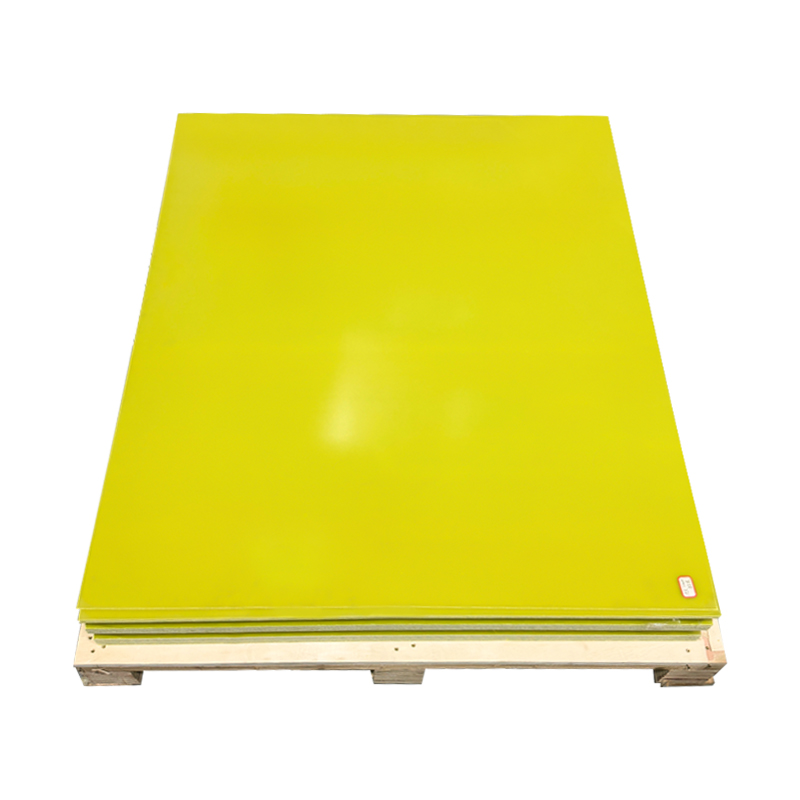
Two rolls of aramid-carbon cloth labelled 200 g/m2 can land on the same dock at 194 g/m2 and 218 g/m2, and both mill certificate...
READ MOREWelcome to visit the website of Jiangyin Dongli New Materials Technology Co., Ltd.
 Get In Touch
 English

Welcome to visit the website of Jiangyin Dongli New Materials Technology Co., Ltd.
Get In Touch English
It can be used in building decorative panels, display cabinets and other fields.
information to be updated
Two rolls of aramid-carbon cloth labelled 200 g/m2 can land on the same dock at 194 g/m2 and 218 g/m2, and both mill certificate...
READ MOREEpoxy fiberglass sheet is the default engineered solution for mechanical support parts that must also provide electrical insulat...
READ MOREA production supervisor once found 30 % of his FR-4 stock warped after a three-week stretch of 85 % humidity, because the sheets...
READ MOREFor a 400V battery pack control box, the epoxy fiberglass sheet is not a single material - its grade determines whether it survi...
READ MOREAs a Carbon Fiber Construction Engineering Parts Suppliers, we match product configuration to the application, operating limits, interfaces and acceptance criteria defined for each project.
We are Jiangyin Dongli New Materials Technology Co., Ltd., a China-based manufacturer and supplier of carbon fiber construction engineering parts. Our factory in Jiangyin, Jiangsu, integrates weaving, prepreg production, and advanced molding processes under one roof, allowing us to deliver complex-shaped composite components for architectural and structural applications. From decorative panels and display cabinets to load-bearing profiles, our parts combine the strength-to-weight advantages of carbon fiber with the design freedom needed for modern construction projects.
Our production environment includes climate-regulated workshops and 100,000-grade purification zones, ensuring consistent material quality. We offer a range of molding technologies—autoclave, RTM, RMCP, PCM, WCM, and spraying—so we can match the process to your part geometry, production volume, and performance requirements.
Our construction engineering parts are used in both aesthetic and structural roles. The table below outlines typical applications and the most suitable molding processes we employ.
| Part Type | Typical Applications | Recommended Process |
|---|---|---|
| Decorative Panels | Building facades, interior cladding, display cabinets | Hot pressing, RTM |
| Structural Profiles | Beams, columns, reinforcement elements | Autoclave, PCM |
| Custom Shaped Components | Architectural features, complex curves, sharp corners | RTM, WCM, hand lay-up |
Our engineers work with your drawings or samples to optimize fiber orientation and layer count based on the stress profile of each part. For areas under high tensile load, we increase fiber layers and align them with the load direction. For shear-critical zones, we adjust the ply angles to improve resistance. This tailored approach ensures that the part is not only geometrically accurate but also structurally sound under wind, seismic, and gravitational forces.
We also consider the connection method with the main structure—whether adhesive bonding, mechanical fastening, or a hybrid—and provide recommendations based on the part’s function and the substrate material. Our adhesives are selected for compatibility with carbon fiber and the expected environmental conditions.
We use high-performance carbon fiber fabrics, including plain, twill, and satin weaves, as well as unidirectional reinforcement fabrics. Our in-house prepregs—epoxy and cyanate-based—ensure consistent resin content and tack for reliable lay-up. For construction parts, we typically recommend epoxy prepregs for their balance of mechanical properties and environmental resistance. We also offer aramid-carbon hybrid fabrics where impact resistance is required.
Critical specifications we can control include fiber areal weight, resin content, curing cycle, and final part dimensions. We provide material certificates and test reports from our in-house mechanical testing equipment, including a 10KN microcomputer-controlled testing machine for composite materials.
Our factory is equipped with looms that can produce up to 4,000 square meters of fabric per day, supported by automated tension control. For molding, we operate hot presses up to 800 tons and autoclave systems, allowing us to handle both large panels and small intricate parts. Normal production lead time for volume orders is within 20 days, depending on complexity and quantity.
We follow ISO 9001:2015 quality management practices. Each batch of parts undergoes dimensional inspection using bridge CMM and visual checks for surface defects. Mechanical properties such as tensile, flexural, and impact strength are verified on sample coupons. We also perform environmental resistance tests where required, ensuring that parts withstand UV exposure, moisture, and temperature cycling typical in construction environments.
We offer ODM services, meaning we can develop parts from concept to production. Whether you provide a CAD model, a physical sample, or just a sketch, our team can design the mold, select the material system, and produce prototypes for approval. We also support integration with your existing assembly process, providing parts with drilled holes, inserts, or surface finishes as specified.
For large-scale construction projects, we coordinate packaging and delivery to site, ensuring parts are protected during transit. We can also provide installation guidance, though final installation is typically handled by your team.
To prepare a precise quotation and manufacturing plan, we need the following details:
Yes. Our RTM and autoclave processes allow us to mold intricate shapes that are difficult with traditional materials. We use precise lay-up techniques and CNC-machined molds to achieve tight tolerances.
For standard volumes, delivery is within 20 days after mold approval. Prototypes may take longer depending on complexity. We confirm exact timelines during quotation.
Yes, we provide material certificates and test reports for each batch, including mechanical properties and resin content. We can also perform third-party testing if required.
Our hot presses and autoclaves can accommodate panels up to several meters in size. We have produced large decorative panels for architectural projects.
MOQ depends on the part size and process. For small custom parts, we can start with low volumes for prototyping. For production, we discuss MOQ based on your forecast.
Explore our full range of composite products or see how we apply these technologies in special-shaped parts for other industries. For more on our materials, visit our carbon fiber woven cloth and prepreg pages.
©Jiangyin Dongli New Materials Technology Co., Ltd. All rights reserved.
Wholesale Carbon Fiber Construction Engineering Parts Suppliers

 +86-13961668677
 No. 61, Xingyuan Road, Jiefang Village, Gushan Town, Jiangyin City, Jiangsu Province, China.