 Get In Touch
 English
  中文简体
中文简体 عربى
عربى Tiếng Việt
Content
For a 400V battery pack control box, the epoxy fiberglass sheet is not a single material - its grade determines whether it survives 40,000 hours of thermal cycling or fails in the first month.
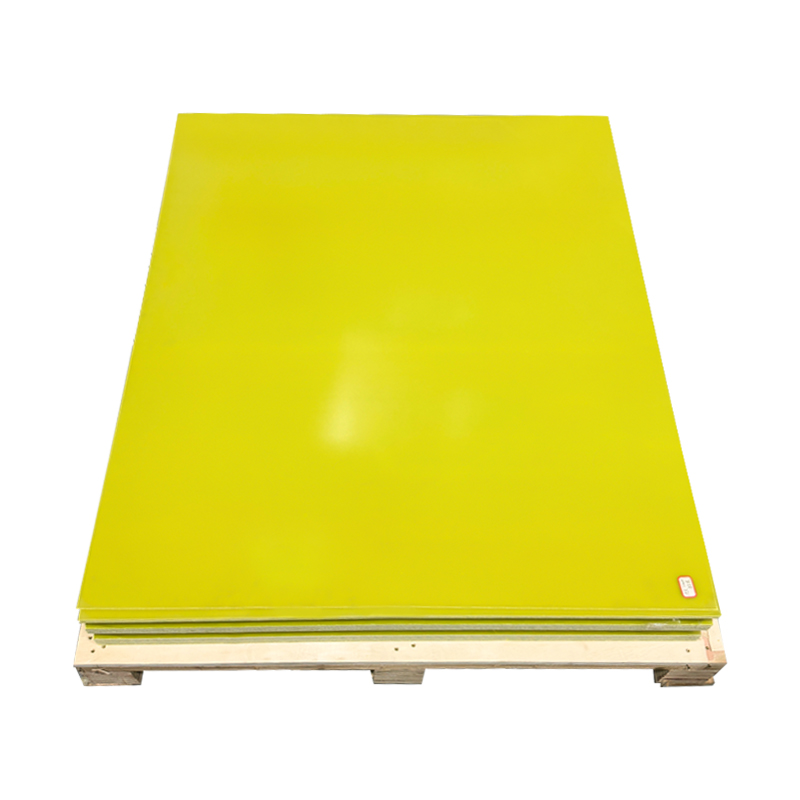
Epoxy fiberglass sheet, also called epoxy glass cloth laminate, is made by stacking layers of woven fiberglass cloth impregnated with epoxy resin and pressing them under heat and pressure. The result is a rigid insulation board used in lithium battery packs, electrical equipment, PCB fixtures, and transformer components. But not every sheet performs the same. The NEMA grade - G10, FR4, G11, or FR5 - defines the resin system, maximum continuous temperature, and flame retardancy.
What Defines an Epoxy Fiberglass Sheet Grade?
Epoxy fiberglass sheet grades are defined by the resin system, glass transition temperature (Tg), thermal class, and dielectric performance.
NEMA designations like G10 and FR4 are not branding terms. They are standardized ratings that specify how a laminate behaves under heat, flame, and voltage stress. The three parameters that matter most:
Continuous Operating Temperature
The thermal class sets the maximum temperature at which the sheet can run indefinitely. G10 supports 105°C (Class A), FR4 supports 135°C (Class B), G11 supports 150°C (Class F), and FR5 supports 170°C (Class F).
UL94 Flammability Rating
UL94 measures how quickly a material extinguishes after ignition. FR4 and FR5 carry a V-0 rating, meaning they self-extinguish in under 10 seconds. G10 and G11 are only HB rated.
Dielectric Strength
This is the voltage at which the material breaks down. High-voltage insulation requires values above 10 kV/mm. The higher the resin content consistency, the more reliable the dielectric path across the sheet.
At Dongli New Materials, the epoxy glass fiber insulation board is manufactured with tightly controlled resin content and a monitored pressing thermal profile. This reduces internal voids that could act as electrical breakdown paths in high-voltage applications.
The Four Main Grades at a Glance
The four most common epoxy fiberglass sheet grades are G10, FR4, G11, and FR5, each standardized to different temperature, flame-retardant, and mechanical requirements.
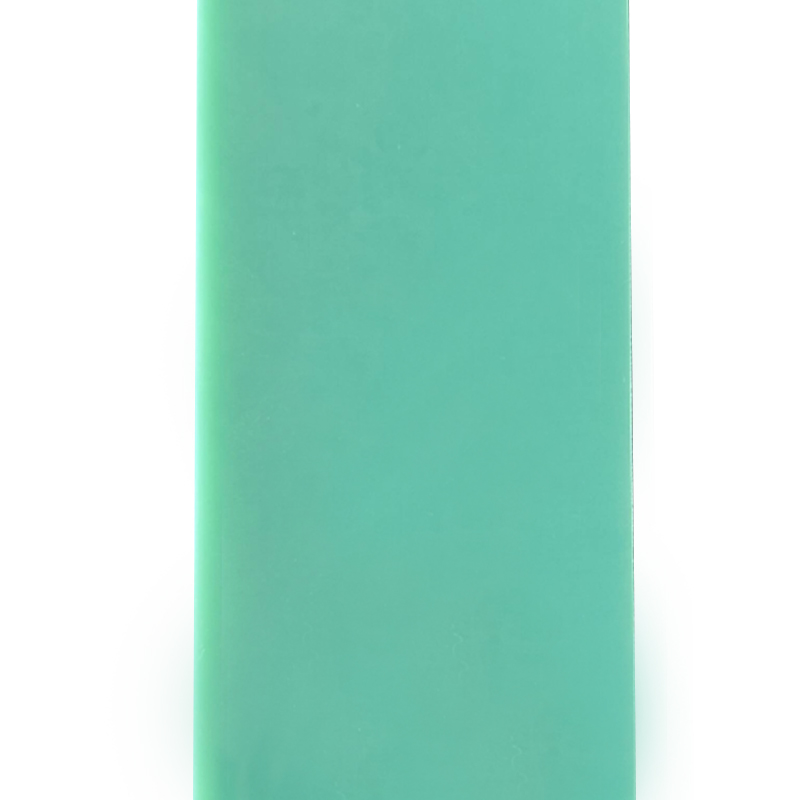 Epoxy Resin Glassfiber Insulation BoardArc resistance: 180+ seconds without tracking (ASTM D495), specified for high-voltage switchgear and contactors.View Product →
G10 and its IEC equivalent EPGC201 are general-purpose grades rated for 105°C continuous service. They offer strong mechanical performance but only a UL94 HB rating, which limits them in applications requiring self-extinguishing behavior.
FR4 is the most widely specified grade for electrical and electronic insulation. It carries a UL94 V-0 rating and remains dimensionally stable at 135°C. FR4 is the default choice for PCB insulation, battery pack separators, and control board mounting plates.
G11 is a high-temperature, high-strength grade rated for 150°C. It delivers superior flexural strength and is used in aerospace and heavy industrial equipment where heat resistance matters more than flame retardancy.
FR5 combines G11's thermal performance with FR4's flame retardancy. It tolerates continuous operation at 170°C and is specified in traction inverters and high-power electronics.
| Property | G10 | FR4 | G11 | FR5 |
| Continuous temp | 105°C | 135°C | 150°C | 170°C |
| UL94 rating | HB | V-0 | HB | V-0 |
| Dielectric strength | 10 kV/mm | 12 kV/mm | 12 kV/mm | 14 kV/mm |
| Water absorption | 0.50% | 0.30% | 0.40% | 0.30% |
| Flexural strength | 400 MPa | 450 MPa | 430 MPa | 460 MPa |
While G10 is still common in low-cost insulation parts, FR4 has largely replaced it in PCB fixtures and battery pack components because of the V-0 requirement. G11 and FR5 are reserved for applications where heat is the primary constraint - typically aerospace, traction inverters, or welding equipment.
How to Choose the Right Grade
Choose the epoxy fiberglass sheet grade by comparing three constraints: continuous operating temperature, UL94 flammability requirement, and moisture exposure.
- Start with continuous temperature. A sealed enclosure with power resistors can easily reach 110°C air temperature. That removes G10 and forces you toward FR4 or higher.
- Check the UL94 requirement. Consumer electronics, vehicle electrical systems, and many industrial standards mandate V-0. Only FR4 and FR5 satisfy it.
- Consider moisture exposure. FR4 absorbs 0.30% water after 24 hours immersion, G10 absorbs nearly 0.50%. A humid plant floor calls for lower absorption.
- Weight machining behavior. FR4 and FR5 chips are more abrasive than G10, so drill bushing wear runs about 20% higher. Plan for carbide tooling.
A lithium battery pack manufacturer switched from G10 to FR4 after thermal testing showed the insulation surface reached 145°C during 2C fast charging, exceeding the 105°C continuous rating. The FR4 board passed the same test with a 12°C margin.
Quality Control and Processing
The key quality markers for epoxy fiberglass sheet are resin content consistency, void content, and dimensional stability after machining.
A well-made epoxy glass cloth laminate holds resin content within ±2% across the sheet surface. Off-spec resin distribution creates local hotspots, non-uniform dielectric strength, and warping after CNC milling. The resin-to-fiber ratio matters because it directly controls the bond quality between layers and the material's ability to withstand thermal cycling. This technical guide to epoxy prepreg resin-to-fiber ratios covers the same control parameters in prepreg form.
When sourcing insulation sheet, verify these production controls:
- Density between 1.85 and 2.0 g/cm³ depending on glass content.
- Void content below 0.5% for high-voltage insulation. Microscopic air pockets are the leading cause of dielectric breakdown.
- Edge quality after machining. Delamination or micro-cracks on cut edges are a common failure mode in insulation components.
 Epoxy Carbon Fiber PrepregCurrently, 70% of advanced composite products are made of prepregs that are stacked and cured. Prepregs are semi-finished products that are stored and prepared after f...View Product →
Dongli New Materials operates a 32,000 m² facility with constant-temperature workshops and a 100,000-class cleanroom. The cleanroom environment helps prevent particulate contamination on the laminate surface during layup and pressing.
FAQ
What is the difference between G10 and FR4?
G10 is rated for 105°C continuous service with UL94 HB flammability, while FR4 supports 135°C and meets UL94 V-0. For electrical equipment under thermal stress, FR4 is the safer choice.
Can epoxy fiberglass sheets be used outdoors?
Epoxy laminates are not UV-stable and will degrade at the surface after prolonged direct sunlight. Use them indoors or apply a UV-resistant protective coating.
What does FR4 stand for?
FR4 stands for Flame Retardant grade 4 in the NEMA system. It uses epoxy resin with brominated flame-retardant additives and is the standard material for PCB base insulation.
How do I know which grade my application needs?
Compare three numbers: your highest continuous air temperature at the part, your UL94 requirement, and moisture exposure. Then match them against the grade table. A material manufacturer can run dielectric strength tests on samples to confirm the choice.
 +86-13961668677
 No. 61, Xingyuan Road, Jiefang Village, Gushan Town, Jiangyin City, Jiangsu Province, China.