 Get In Touch
 English
  中文简体
中文简体 عربى
عربى Tiếng Việt
Content
- 1 What Areal Weight Really Controls in a Carbon Aramid Cloth
- 2 Weave Architecture: Plain, Twill and Satin Compared
- 3 Aramid-to-Carbon Ratio: The Number That Sets Impact and Stiffness
- 4 Tolerances, Test Methods and Incoming Inspection
- 5 Visible Weave, Colour and Yield on Cosmetic Parts
- 6 Bulk Terms That Decide Landed Cost per Square Metre
- 7 Specification Questions Bulk Buyers Ask
Two rolls of aramid-carbon cloth labelled 200 g/m2 can land on the same dock at 194 g/m2 and 218 g/m2, and both mill certificates can be perfectly accurate. Dry areal weight on a woven hybrid is a target with a tolerance, and that tolerance decides how many plies you cut, how much resin the laminate absorbs, and what the cured part weighs. Above a few hundred square metres per order, weight and weave move landed cost per part further than any negotiation on yarn price.
What Areal Weight Really Controls in a Carbon Aramid Cloth
Areal weight sets ply thickness, resin uptake and the cost of every square metre you cut, but it does not set laminate strength. Strength comes from fibre type and cured fibre volume fraction, which are laminate variables rather than fabric variables.
Definition
Areal weight is the mass of a defined area of dry woven fabric, measured per ASTM D3776/D3776M and reported in g/m2 or oz/yd2, with weave and yarn count fixed at the moment of sampling.
Convert weight into ply thickness before quoting a part. The working formula is ply thickness (mm) = [fabric areal weight / (1 - resin weight fraction)] / (1000 x laminate density in g/cm3). A 200 g/m2 hybrid laid up at 40% resin by weight gives (200 / 0.6) / 1550 = 0.215 mm per ply at a laminate density of 1.55 g/cm3, which sits between 0.21 mm and 0.23 mm across the 1.45-1.60 g/cm3 range typical of hybrid laminates.
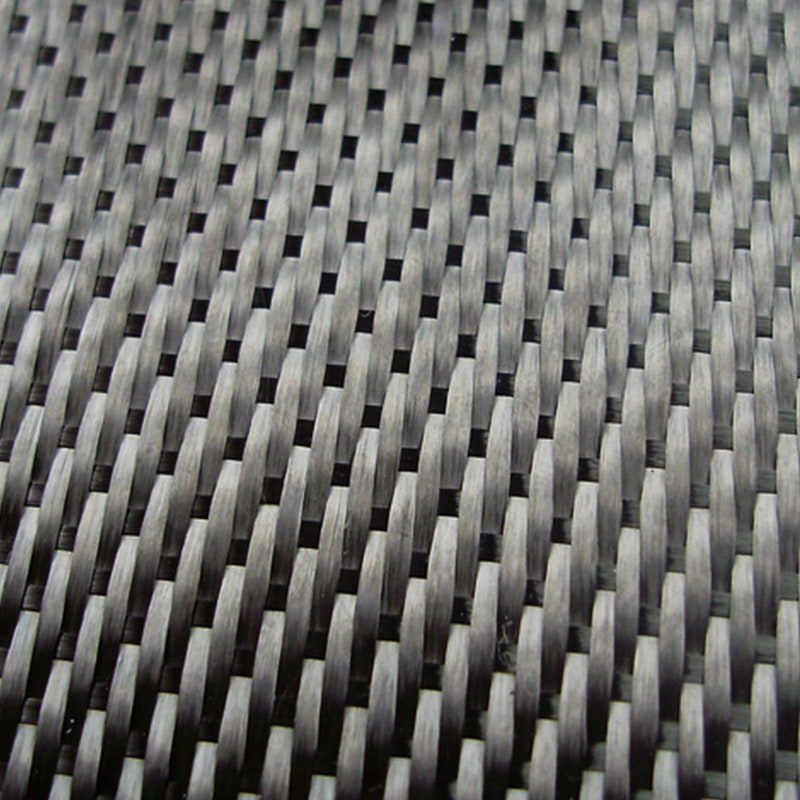
Tows change the surface, not just the number on the label. A 200 g/m2 plain weave built from 12K tows carries fewer, thicker yarns than the same weight built from 3K tows: it wets out faster and leaves a coarser crimp texture. 3K constructions deliver finer cover factor at identical areal weight, which is why visible-weave parts are quoted in 3K.
5%
Common tolerance window on nominal areal weight, per ASTM D3776/D3776M
0.21-0.23 mm
Cured ply from a 200 g/m2 hybrid at 40% resin by weight
1.44 vs 1.78
Density in g/cm3: para-aramid versus standard-modulus carbon
Cost follows the same arithmetic. Mills quote hybrid cloth per kilogram, but you consume it per square metre, so cost per square metre = price per kg x areal weight in g/m2 / 1000. At USD 60 per kg, a roll averaging 208 g/m2 instead of 200 g/m2 costs 4% more per part before a single ply is cut.
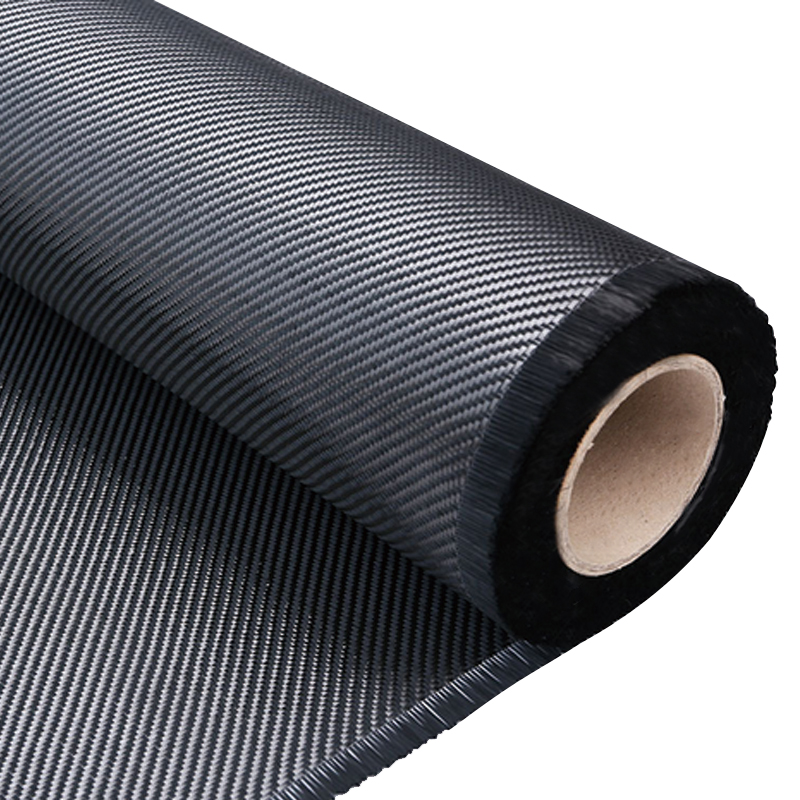
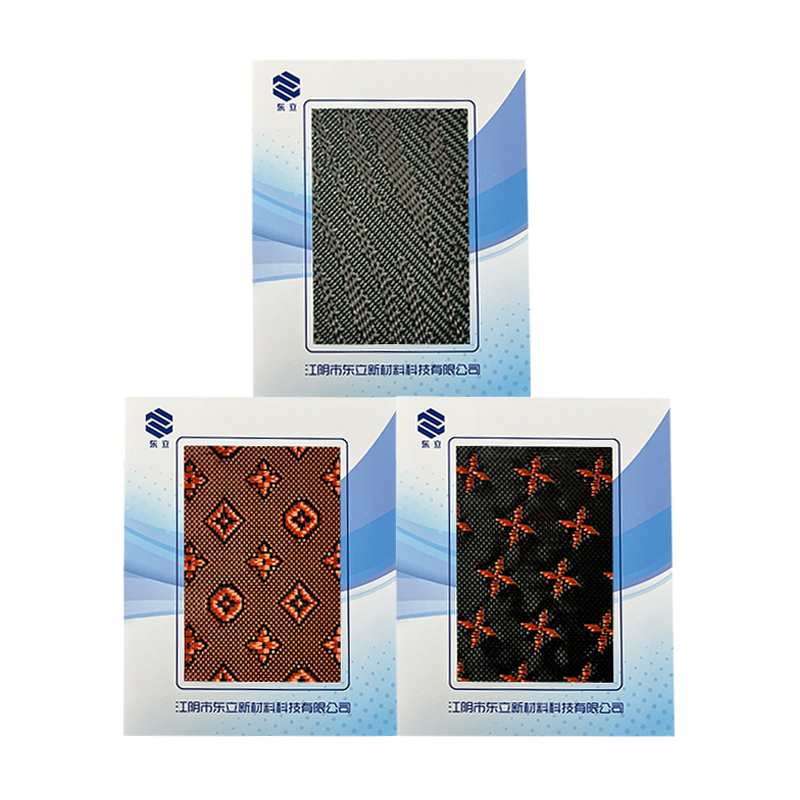 3k 1000d/1500d Plain/Twill Aramid Carbon Mixed Carbon Fiber Woven Fabric3K 1000D/1500D plain/twill aramid mixed carbon fiber woven fabric is made of aramid fiber and carbon fiber. Aramid fiber provides impact resistance and toughness, whil...View Product →
Weave Architecture: Plain, Twill and Satin Compared
Weave pattern changes crimp, drape and surface flatness far more than it changes fibre tensile properties. Plain weave interlocks every yarn for maximum stability, 2x2 twill is the default for contoured parts, and 8-harness satin delivers the flattest surface with the highest drape and the least resistance to yarn shift during cutting.
| Weave | Interlacement | Drape | Surface | Typical dry weight | Best fit |
| Plain 1x1 | Alternates every pick | Lowest | Crimp texture | 180-210 g/m2 | Flat plates, tight thickness control |
| Twill 2x2 | Floats over two | Moderate | Diagonal line | 200-240 g/m2 | Curved shells, visible trim |
| 4H satin | Floats over three | High | Very smooth | 210-240 g/m2 | Deep draws with wrinkle risk |
| 8H satin | Floats over seven | Highest | Flattest | 220-260 g/m2 | Cosmetic double curvature |
Specify plain weave when
- Thickness control matters more than drape.
- Panels are flat or single-curvature.
- Cutting stability matters, because plain weave resists yarn shift.
- You want the lowest cost per square metre at a given weight.
Specify twill or satin when
- Parts carry double curvature with radii under roughly 100 mm.
- Wrinkles, not fibre choice, are the main scrap risk.
- The weave stays visible under a clear coat.
- The laminate can absorb a slightly thicker ply.
Hybrid cloth adds one more variable. Para-aramid has a density of 1.44 g/cm3 against 1.78 g/cm3 for standard-modulus carbon, so a 50/50 blend by weight occupies more volume than pure carbon at the same areal weight, with roughly 5% to 10% more resin demand per ply.
Aramid-to-Carbon Ratio: The Number That Sets Impact and Stiffness
Commercial hybrid ratios run from 30/70 to 50/50 aramid-to-carbon by areal weight. Moving from 30/70 to 50/50 cuts axial stiffness by roughly 20% to 28% while raising impact energy absorption and shrinking delamination area.
- Stiffness. Rule-of-mixtures arithmetic on 230 GPa carbon and 100 GPa para-aramid puts a 50/50 blend near 165 GPa axial modulus, about 28% below pure carbon.
- Impact. Para-aramid elongates 2.4% to 3.6% before failure against 1.5% to 1.8% for standard-modulus carbon, so aramid plies absorb energy through fibre pull-out rather than brittle fracture.
- Thermal. Para-aramid does not melt; it chars near 500 C with a limiting oxygen index around 29%. In an epoxy laminate the resin, with a glass transition of 120 C to 190 C for standard systems, sets the real ceiling.
- Moisture. Aramid takes up 3% to 7% moisture by weight at 65% relative humidity, while carbon stays below 0.1%, so dry the cloth before layup or accept void content.
Stacking order matters as much as the ratio. Put aramid plies on the impact-facing side and carbon plies on the load path for drone housings and motorsport panels; reverse that for paddles and bike frames, where stiffness dominates. The modulus arithmetic behind hybrid ratios is worked through in this analysis of aramid-to-carbon ratio and modulus. Aramid yarn also sits at or above standard-modulus carbon in most grades, so a richer aramid blend is a performance decision rather than a saving.
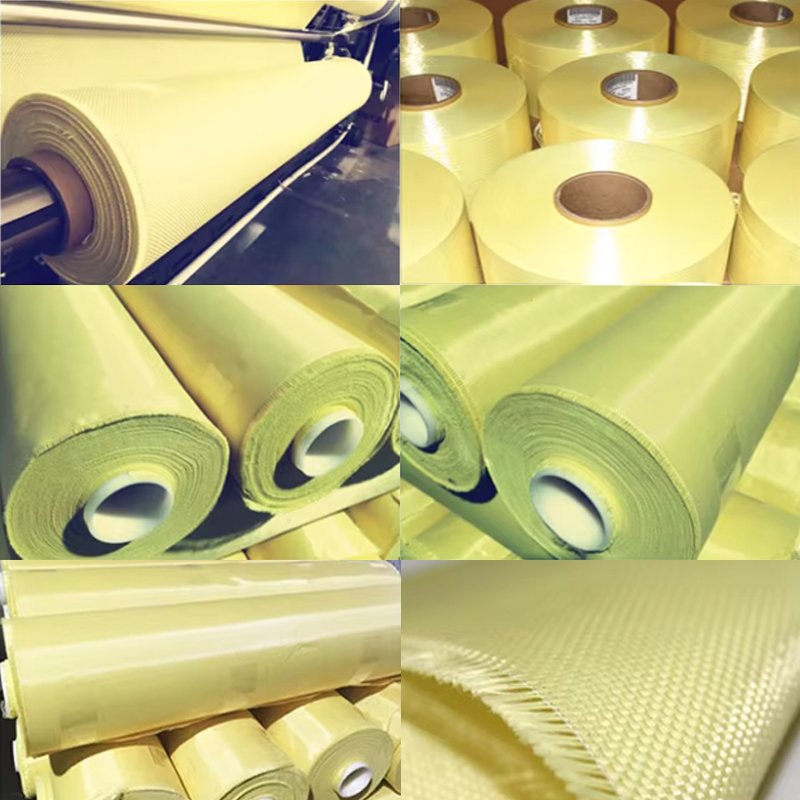 High Temperature Resistant And Flame Resistant Aramid Woven FabricThe High Temperature Resistant And Flame Resistant Aramid Woven Fabric is an industrial-grade textile engineered from synthetic para-aramid or meta-aramid fibers. This...View Product →
Tolerances, Test Methods and Incoming Inspection
Four numbers belong in every purchase specification: areal weight within 5% of nominal per ASTM D3776/D3776M, yarn count within 3% per ISO 7211-2, thickness within 0.03 mm per ASTM D1777, and width measured at three points per roll.
| Property | Standard | Common window | What it protects |
| Areal weight | ASTM D3776/D3776M | 5% of nominal | Ply count and laminate thickness |
| Yarn count, warp and weft | ISO 7211-2 | 3% of nominal | Cover factor and wet-out |
| Thickness | ASTM D1777 | 0.03 mm | Ply bulking in a closed mould |
| Width | Three-point per roll | Plus 1 cm, minus 0 cm | Trim loss and nesting efficiency |
| Fibre volume and voids | ASTM D3171 | 55-60% autoclave, 50-55% infusion | The number that sets strength |
A five-step receiving routine catches most disputes before material reaches a mould.
- Condition before measuring. Unroll 1 m and condition it at 21 C and 50% relative humidity per ASTM D1776, because moisture held in the aramid yarn moves the weight reading.
- Cut three specimens per roll. Take 100 cm2 from the start, middle and end, weigh on a 0.001 g balance, convert to g/m2 and compare all three against nominal.
- Count yarns per 10 cm in warp and weft and log the result against the ordered construction.
- Press a four-ply witness laminate and run ASTM D3171 for fibre volume and void content.
- Reject the roll, not the batch. One out-of-window roll is a put-up problem, and isolating it is cheaper than re-cutting a cured panel.
Visible Weave, Colour and Yield on Cosmetic Parts
Colour in a carbon aramid cloth comes from dyed aramid yarn rather than a coating, so pattern repeat and shade consistency belong in the same tolerance list as areal weight. A red-black checker or football pattern is woven to a fixed repeat, and every metre trimmed for pattern alignment is paid for at hybrid prices.
Two practical consequences follow. Specify whether the aramid is dope-dyed or stock-dyed, because shade variation between rolls shows up on large panels that must match. Then protect the surface: para-aramid degrades under ultraviolet light and yellows before it loses strength, while carbon does not, so exposed cosmetic parts need a clear coat carrying UV inhibitors instead of relying on the fabric alone.
Typical dry areal weight by construction, g/m2
Bars show nominal dry fabric weight for common commercial constructions. Acceptance limits are set in the purchase specification, not by these nominal values.
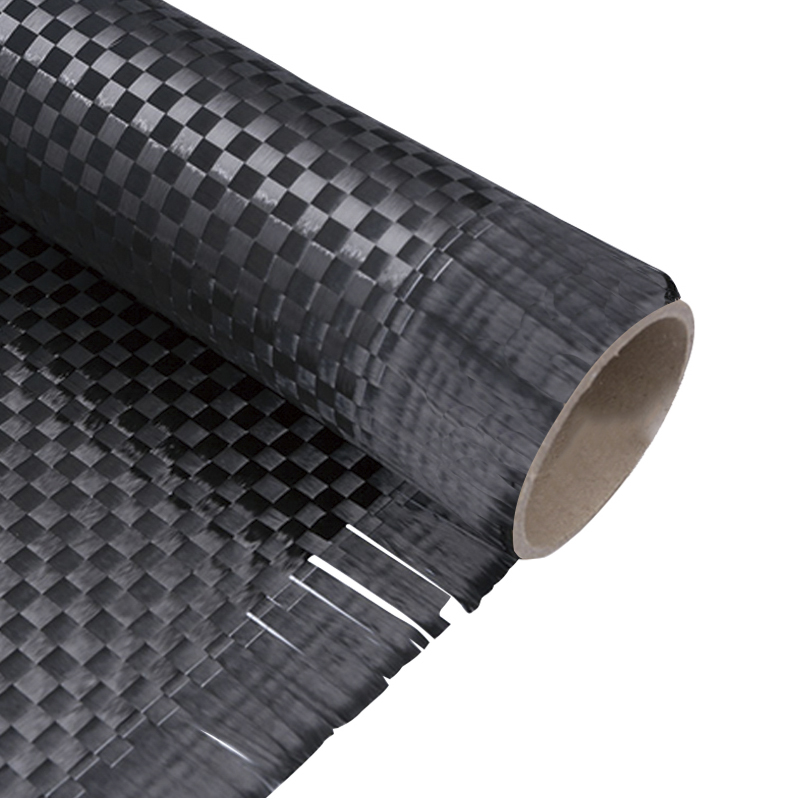
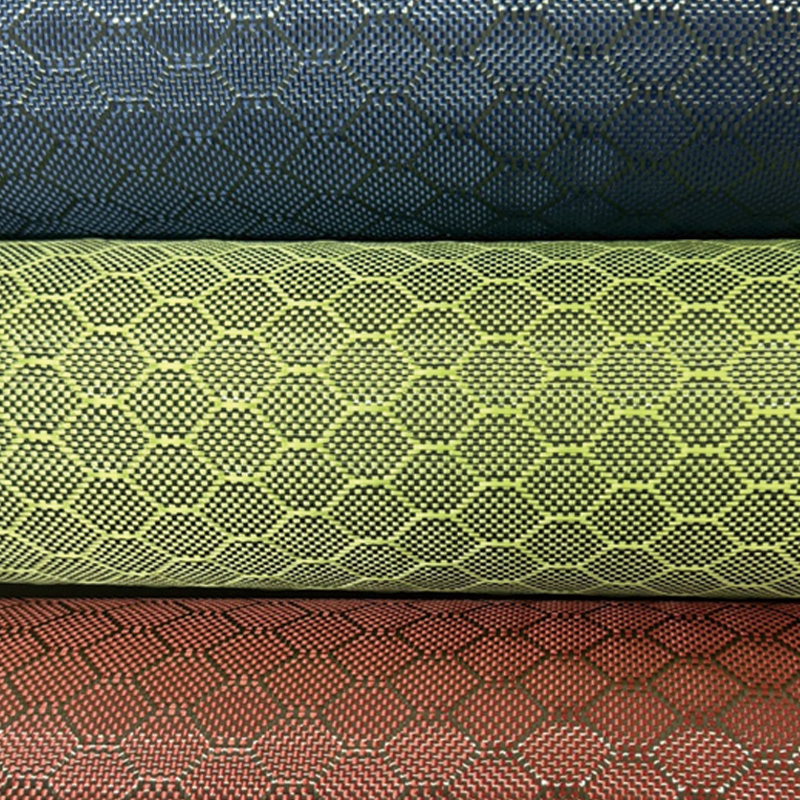 Football Pattern Aramid Carbon Blended Fiber ClothThe football pattern aramid-carbon blended fiber cloth combines two good fiber materials, aramid, and carbon fiber. The unique football pattern design on the surface e...View Product →
Bulk Terms That Decide Landed Cost per Square Metre
Roll width, put-up length and minimum order quantity shift landed cost per square metre more than a 5% price concession does. Width decides trim loss, put-up decides handling loss at the roll ends, and MOQ decides whether you or the mill carries the inventory.
- Width. 100 cm and 127 cm are the standard hybrid roll widths, and a 3 cm shortfall on a 100 cm roll costs you 3% of every panel you nest.
- Put-up. 50 m and 100 m rolls on a 76 mm core are common; longer rolls lower unit cost but raise the risk of edge damage in transit.
- MOQ. Custom weaves usually start at a few hundred square metres, so ask whether the minimum applies per colour, per weave or per order.
- Lead time. Weave-to-shipment for hybrid cloth runs from a few weeks to over a month, so schedule the witness laminate before the production run, not after.
Roll pricing and schedule risk are unpacked further in this breakdown of bulk pricing and lead times on carbon fibre fabric rolls.
Jiangyin Dongli New Materials Technology Co., Ltd. covers weaving, prepreg and moulding under one roof in a 32,000 square metre facility with 10 production lines, a constant-temperature weaving workshop and a Class 100,000 clean area. That single-site chain shortens the loop between a weave trial and a witness laminate, and it removes the finger-pointing that follows a weight dispute or a delamination claim.
Specification Questions Bulk Buyers Ask
What areal weight tolerance should a bulk buyer accept?
A window of 5% either side of nominal, measured per ASTM D3776/D3776M on three specimens per roll, is the working standard. Anything wider than 7% breaks ply-count arithmetic on thin laminates, where one extra ply changes part thickness by roughly 0.2 mm.
Is a heavier aramid-carbon weave stronger?
No. Strength tracks fibre volume fraction and fibre type, not dry fabric weight. A 200 g/m2 hybrid consolidated to 55% fibre volume outperforms a 240 g/m2 cloth that only reaches 45% volume, because voids and resin-rich zones fail first.
Which weave suits a part with tight radii?
Twill 2x2 or 8-harness satin. Plain weave bridges on double curvature once local radii fall under roughly 100 mm, which produces wrinkles, resin pockets and a measurable loss of interlaminar strength.
How do I verify the aramid content of a hybrid cloth?
Request a per-roll certificate covering areal weight, yarn count and width, then verify independently by resin digestion under ASTM D3171 or by density separation, using 1.44 g/cm3 for para-aramid and 1.78 g/cm3 for standard-modulus carbon.
 +86-13961668677
 No. 61, Xingyuan Road, Jiefang Village, Gushan Town, Jiangyin City, Jiangsu Province, China.