 Get In Touch
 English
  中文简体
中文简体 عربى
عربى Tiếng Việt
Content
- 1 What Is Epoxy Fiberglass Sheet?
- 2 Mechanical Properties That Matter for Support Components
- 3 Epoxy Fiberglass vs. Alternative Support Materials
- 4 How Laminate Construction Affects Load Capacity
- 5 Selecting a Grade for Mechanical Support Components
- 6 Machining Epoxy Fiberglass Sheet Without Damaging the Laminate
- 7 Sourcing and Supply Considerations
- 8 Frequently Asked Questions
Epoxy fiberglass sheet is the default engineered solution for mechanical support parts that must also provide electrical insulation. Inside a 48 V battery module, for example, a mounting plate has to hold a busbar in position, survive a 300 N clamp load, and resist electrical tracking at 600 V. Steel conducts, nylon creeps under sustained pressure, and cast phenolic cracks on impact. Epoxy fiberglass sheet solves exactly this class of problem: it carries mechanical load, insulates electrically, and keeps dimensional tolerance at temperatures where engineering thermoplastics begin to soften.
What Is Epoxy Fiberglass Sheet?
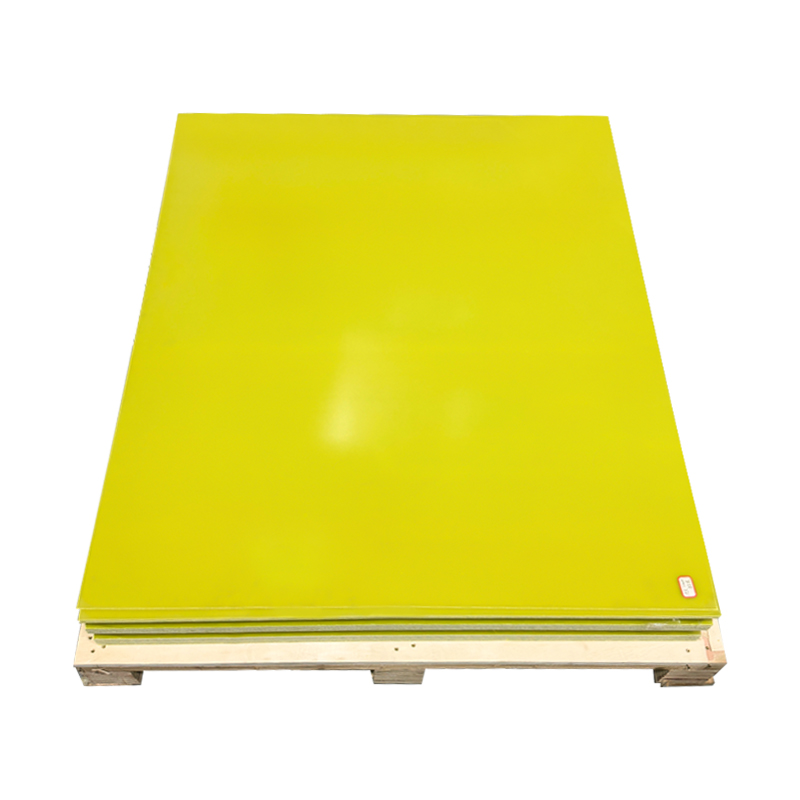
Epoxy fiberglass sheet is a rigid thermoset laminate made by stacking layers of woven E-glass fabric impregnated with epoxy resin and curing them under heat and pressure. Each fabric layer uses a balanced plain-weave or twill-weave construction that delivers tensile and flexural strength in two directions. The epoxy resin binds the layers into a dense composite and provides chemical resistance, electrical insulation, and thermal stability. After hot-press consolidation, the laminate has a resin content typically between 40 and 50 percent by weight and is available in standard thicknesses from 0.2 mm to 60 mm.
Where Support Parts Appear
Typical mechanical support components made from this material include insulating spacers and standoffs, flat washers beneath bolted busbar joints, PCB fixture plates, transformer mounting blocks, and structural brackets inside switchgear and battery enclosures. Every part does two jobs at once: it transfers mechanical load and provides electrical isolation.
What Makes It Different from Ordinary Fiberglass
Unlike decorative fiberglass panels or short-fiber molding compounds, epoxy glass laminate is a fully consolidated structural material. Its flexural strength of 350-500 MPa and flatwise compressive strength of 400-550 MPa place it in a different performance class from cast resins and unreinforced thermoplastics.
Mechanical Properties That Matter for Support Components
Epoxy fiberglass sheet earns its place in support components because it combines high flexural and compressive strength with creep resistance that unreinforced thermoplastics cannot match. Engineers rely on four behaviors: it holds bolt clamp load without relaxing, resists bending on unsupported spans, avoids permanent deformation under continuous pressure, and retains useful stiffness at elevated temperature.
| Property | Typical value | Impact on support design |
| Flexural strength | 350-500 MPa | Carries bending loads on unsupported spans |
| Flatwise compressive | 400-550 MPa | Sustains bolted clamp forces without crushing |
| Tensile modulus | 20-25 GPa | Limits deflection at low thickness |
| Dielectric strength | 15-20 kV/mm | Allows thin sections to isolate high voltage |
| Continuous service | 130-180°C | Retains load capacity in hot compartments |
| Water absorption | 0.05-0.2% | Keeps dimensions stable in humid environments |
For a support bracket under continuous load, flatwise compressive strength matters more than raw tensile strength, because the failure mode is through-thickness crushing of the laminate rather than fiber rupture.
Epoxy Fiberglass vs. Alternative Support Materials
Compared with metals and unreinforced plastics, epoxy fiberglass sheet balances electrical insulation, stiffness, dimensional stability, and machining economy better than either material family alone.
Epoxy Glass vs. Aluminum
Aluminum 6061 offers higher yield strength and thermal conductivity. Epoxy glass provides electrical isolation, weighs roughly 40 percent less at equal volume, and does not develop galvanic corrosion at bolted interfaces. For a support plate under a 5 kN compressive load, a 6 mm epoxy glass panel deflects similarly to an 8 mm aluminum panel while adding no conductive path.
Epoxy Glass vs. Nylon 66
Nylon 66 is cheaper per kilogram and easy to injection mold, but it creeps. A bolted nylon spacer relaxes over time and loses clamp load. Epoxy glass retains clamp load for years at room temperature and holds dimensional tolerance to roughly 0.1 percent under humidity.
Values are typical for comparative design only; always verify with the supplier's documented test data for the chosen grade.
How Laminate Construction Affects Load Capacity
Load capacity is set by fabric style, resin content, and cure cycle, not by sheet thickness alone. During prepreg production, the resin-to-fiber ratio directly controls the balance between insulation and stiffness; excess resin improves dielectric strength but lowers compressive modulus, while insufficient resin leaves voids that weaken the laminate.
- Plain-weave E-glass gives balanced in-plane properties, which matters for brackets loaded from several directions.
- A full post-cure raises glass transition temperature and reduces creep under sustained load.
- Internal voids from incomplete consolidation act as crack initiators under cyclic loading.
- A dense laminate without delamination is essential for parts that are repeatedly clamped and released.
Fabricators who consolidate their own sheets should start from prepreg with documented resin content. Jiangyin Dongli New Materials Technology Co., Ltd. supplies epoxy prepreg with controlled resin content, giving laminators direct control over cure behavior and final laminate properties.
 Custom Epoxy Carbon Fiber Prepreg Manufacturers, FactoryWe Offer Custom Epoxy Carbon Fiber Prepreg, Jiangyin Dongli New Materials Technology Co., Ltd Is China Epoxy Carbon Fiber Prepreg Manufac...View Product →
Selecting a Grade for Mechanical Support Components
Choose an epoxy fiberglass grade on three criteria: maximum operating temperature, required insulation class, and the mechanical load the part must carry. Ask the supplier for documented glass transition temperature and interlaminar shear strength testing data, because these values predict behavior under sustained heat and load.
- Continuous service temperature at least 20°C below the resin Tg; typical grades run 130-150°C, high-Tg grades 170-180°C.
- UL94 V0 rating for parts near ignition sources; CTI of 600 V or higher for high-voltage tracking resistance.
- Standard thickness tolerance of plus/minus 5-10 percent; specify machined tolerance of plus/minus 0.05 mm for precision spacers.
- Flatness of 0.1-0.3 percent of panel length for large plates that must hold alignment.
- Fine-weave grades for small parts that need clean edge finish after machining.
For electrical and mechanical support parts, Dongli manufactures an epoxy glass fiber insulation plate with UL94 V0 flame resistance and good machining character, cut to custom sheet sizes.
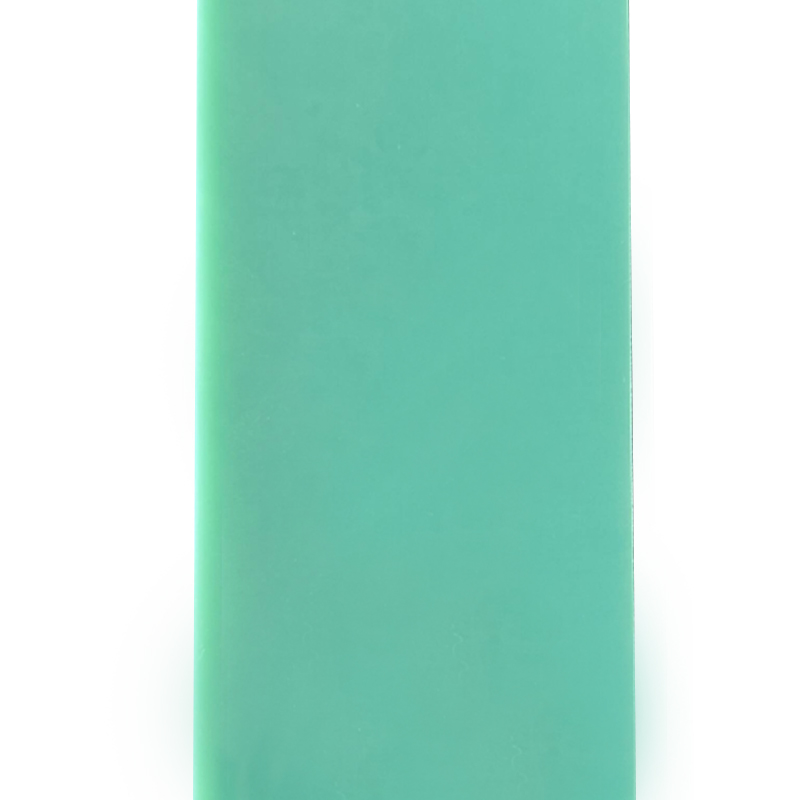 Custom Epoxy Resin Glassfiber Insulation Board Manufacturers, FactoryWe Offer Custom Epoxy Resin Glassfiber Insulation Board, Jiangyin Dongli New Materials Technology Co., Ltd Is China Epoxy Resin Glassfibe...View Product →
Machining Epoxy Fiberglass Sheet Without Damaging the Laminate
Epoxy glass laminate machines cleanly when you use carbide tooling, support the material fully, and keep feed rates high enough to avoid heat buildup. Glass is abrasive, so standard HSS tooling dulls quickly and produces burnt edges.
- Use carbide or diamond-coated tooling for drilling, sawing, and milling.
- Back up the exit side with a sacrificial plate when drilling through holes.
- Climb milling produces cleaner edges than conventional milling.
- Waterjet cutting suits complex profiles because it creates no heat-affected zone.
Sourcing and Supply Considerations
Reliable sourcing depends on consistent resin content, documented cure data, and a supplier who controls the process from glass fabric to finished laminate. A full-process manufacturer can cut custom sheet sizes, machine parts to tolerance, and supply prepreg for in-house lamination.
- Request test certificates for Tg, dielectric strength, flexural strength, and water absorption.
- Confirm that thickness tolerance and flatness are measured on every production batch.
- Check lead times for large-format sheets and machined components.
Once the target performance is defined, apply the same sheet selection criteria used for other composite panels: weave style, thickness tolerance, and process compatibility.
For teams that prefer finished components, the same material logic extends to enclosures. Dongli's composite battery pack enclosures rely on rigid laminate panels to isolate cells and carry mounting loads.
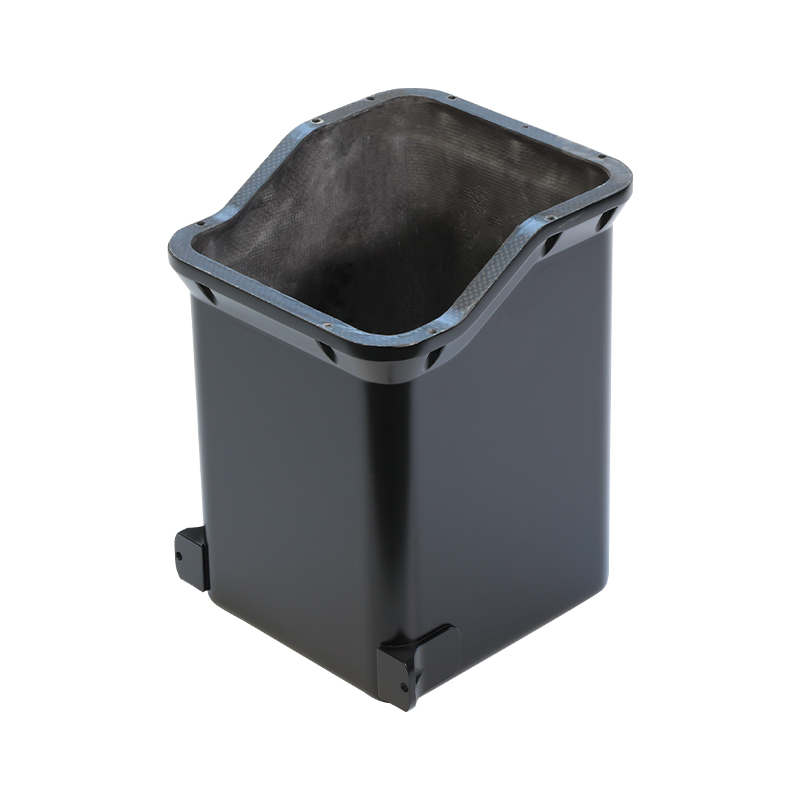 Custom Carbon Fiber Battery Box Manufacturers, FactoryWe Offer Custom Carbon Fiber Battery Box, Jiangyin Dongli New Materials Technology Co., Ltd Is China Carbon Fiber Battery Box Manufacture...View Product →
Frequently Asked Questions
Can epoxy fiberglass sheet replace steel brackets in load-bearing support applications?
Yes, where the load and deflection limits fall within the laminate's modulus range: flexural strength up to roughly 500 MPa and tensile modulus of 20-25 GPa. For long spans or high-impact loads, verify deflection and consider a thicker panel or metal reinforcement.
What is the maximum continuous operating temperature for epoxy fiberglass sheet?
Standard epoxy glass grades sustain continuous service at 130-150°C. High-Tg epoxy systems with a post-cure extend that to 170-180°C. Above 180°C, move to cyanate ester or another high-temperature resin system.
Does machining weaken the laminate?
Machining removes fiber continuity only at the cut edge. Clean cuts with supported tooling preserve structural capacity; burnt edges, fuzzing, or delamination reduce interlaminar strength. Specify a deburred edge finish for load-bearing parts.
How is epoxy fiberglass sheet different from FR4?
FR4 is a flame-retardant epoxy glass laminate standardized for printed circuit boards; the same material family is often supplied as sheet stock for mechanical parts. The practical difference is grade selection: FR4 uses brominated resin for flammability, while general-purpose grades may offer lower cost or better hot-wet performance.
 +86-13961668677
 No. 61, Xingyuan Road, Jiefang Village, Gushan Town, Jiangyin City, Jiangsu Province, China.