 Get In Touch
 English
  中文简体
中文简体 عربى
عربى Tiếng Việt
Content
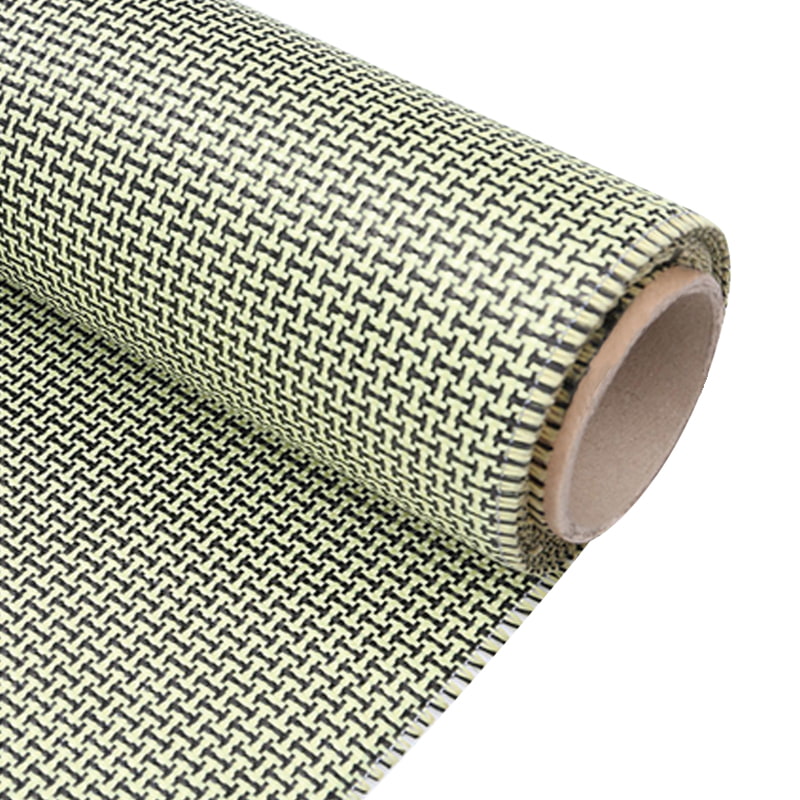
In the evolving landscape of structural engineering, the requirement for materials that combine extreme rigidity with high energy absorption has led to the rise of hybrid textiles. carbon aramid fabric represents a sophisticated synergy between carbon fiber's high modulus and aramid fiber's (commonly known as Kevlar) exceptional toughness. Jiangyin Dongli New Materials Technology Co., Ltd. operates a 32,000-square-meter industrial complex specialized in the R&D and manufacturing of these high-performance fiber composite materials. By utilizing climate-regulated workshops and 100,000-grade purification zones, we provide high tensile strength carbon aramid hybrid solutions for aerospace, automotive, and sports equipment sectors through advanced processes like autoclave and RTM. For B2B procurement, understanding the mechanical interaction of these fibers is critical for selecting the right material for impact-prone environments.
1. Synergistic Toughening and Impact Resilience
The primary advantage of a hybrid weave is its ability to mitigate the brittleness inherent in pure carbon fiber. While carbon fiber provides the structural stiffness required for precision engineering, it can shatter under sudden impact. Aramid fibers, on the other hand, possess high elongation at break, allowing the composite to absorb kinetic energy without catastrophic failure. Technical standards updated in 2024 highlight that impact resistant composite materials utilizing hybrid weaves show a 40% increase in puncture resistance compared to pure carbon laminates. Industry statistics for 2025 suggest a growing shift in automotive safety cell construction toward these hybrids to meet new stringent crash-test protocols.
Source: SAE International: AMS3824 - Cloth, Carbon and Aramid Fiber, Hybrid Weave Performance Standards 2024
Comparison: Mechanical Response Under High-Velocity Impact
Pure carbon fiber tends to exhibit brittle fracture, whereas hybrid carbon kevlar cloth maintains structural integrity by plastically deforming and diffusing the force across the aramid filaments.
| Material Property | Pure Carbon Fiber (3K) | Carbon Aramid Hybrid (3K/1500D) |
| Failure Mode | Brittle Splintering | Ductile Tearing / Energy Absorption |
| Vibration Damping | Low | High (Due to aramid's internal friction) |
| Weight-to-Strength Ratio | Excellent | Optimized for Toughness |
2. Vibration Damping and Fatigue Life
For applications such as high-speed rotors or aerospace fuselage components, vibration management is essential to prevent fatigue crack propagation. Aramid fibers have high internal damping characteristics that complement the acoustic properties of carbon. Wholesale carbon aramid fabric for aerospace is often chosen because it can dampen harmonic resonance much faster than metal or pure carbon. Recent 2024 research in aerospace materials science indicates that hybridizing these fibers extends the fatigue life of wing components by reducing the amplitude of vibrations during turbulent flight conditions. This makes custom weave carbon aramid prepreg a preferred choice for manufacturers looking to reduce noise, vibration, and harshness (NVH) levels.
Source: ISO 21746:2024 - Aerospace Series: Fiber Reinforced Plastics - Fatigue Testing
3. Chemical Stability and Abrasive Resistance
Beyond mechanical strength, carbon aramid fabric provides a significant barrier against environmental degradation. Aramid fibers are inherently resistant to organic solvents and display high thermal stability. When combined with carbon in a durable carbon aramid fabric for automotive body panels, the resulting composite is less susceptible to abrasion from road debris or chemical exposure. At Jiangyin Dongli, our full-process control ensures that the inter-fiber bonding remains stable under thermal cycling, utilizing RTM (Resin Transfer Molding) and WCM (Wet Compression Molding) to achieve void-free laminates that exceed international durability benchmarks.
Comparison: Environmental and Surface Durability
Carbon fiber provides chemical inertness but is prone to surface scratching, while the hybrid construction leverages the high abrasion resistance of aramid to protect the structural core.
| Durability Feature | Standard Composite | Carbon Aramid Hybrid Composite |
| Abrasion Resistance | Moderate | Exceptional |
| Chemical Resistance | Good (Resin dependent) | Enhanced (Fiber + Resin synergy) |
| UV Stability | High | Moderate (Aramid requires UV-stable resin) |
4. Advanced Manufacturing and Engineering Precision
Manufacturing a successful hybrid composite requires more than just weaving two fibers together; it requires precision in the "wetting" of dissimilar materials. Jiangyin Dongli New Materials uses autoclave and RMCP (Rapid Molding Compression Process) to ensure that the resin matrix encapsulates both fiber types uniformly. Our 100,000-grade purification zones prevent contamination that could lead to interlaminar shear failure. By focusing on high tensile strength carbon aramid hybrid production, we serve technical sectors with a one-stop factory model that maintains engineering expertise from the initial weaving phase through to final spraying and PCM (Prepreg Compression Molding) processing.
Conclusion: The Future of Hybrid Composites
The performance advantages of carbon aramid fabric in high-impact applications are undeniable. By balancing the stiffness of carbon with the energy-dissipating qualities of aramid, engineers can design components that are lighter, safer, and more durable. Jiangyin Dongli is committed to advancing this field through continuous material innovation and full process control, providing the global market with high-performance fiber composite solutions that meet the challenges of 2026 and beyond.
Frequently Asked Questions (FAQ)
- Why choose a hybrid over pure carbon fiber? Hybrid carbon aramid fabric prevents brittle failure, offering a "safety net" where the aramid fibers hold the structure together even if the carbon fibers crack under impact.
- Is hybrid carbon kevlar cloth difficult to cut? Yes, because of aramid's high toughness, specialized serrated shears or CNC ultrasonic cutting tools are required compared to standard carbon fiber.
- Can it be used for marine applications? Absolutely. The high corrosion resistance and impact strength make it ideal for hulls and racing boat components.
- How does custom weave carbon aramid prepreg improve production? Prepreg ensures an optimal resin-to-fiber ratio, reducing weight and ensuring consistent mechanical properties across large production runs.
- What industries benefit most from impact resistant composite materials? Aerospace (for containment rings), Automotive (for crash structures), and Sports (for helmets and protective gear) are the primary beneficiaries.
 +86-13961668677
 No. 61, Xingyuan Road, Jiefang Village, Gushan Town, Jiangyin City, Jiangsu Province, China.