 Get In Touch
 English
  中文简体
中文简体 عربى
عربى Tiếng Việt
Content
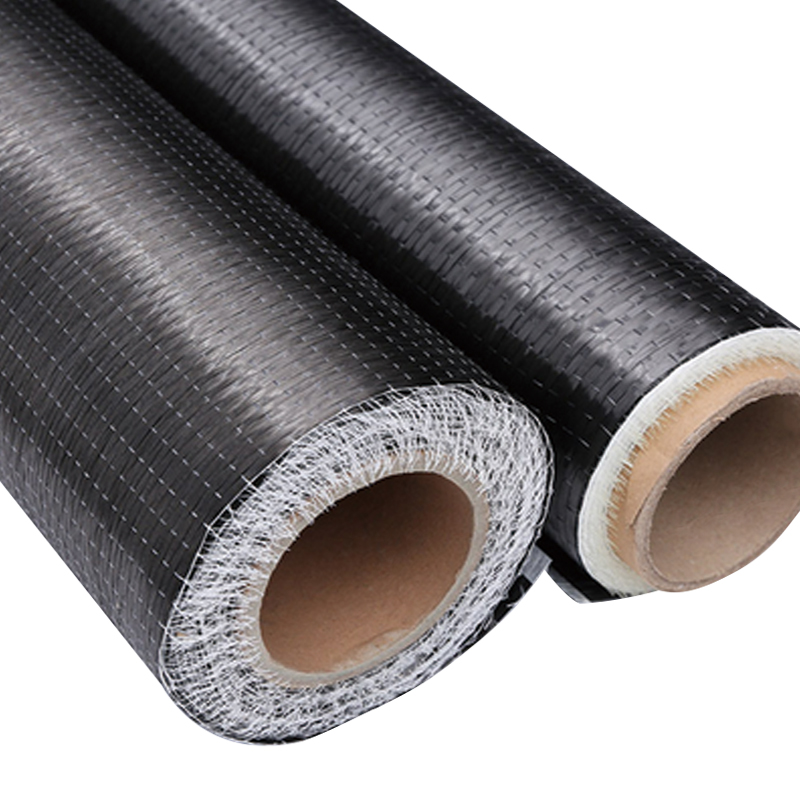
Woven carbon fiber cloth does not wear out in the traditional sense — it does not fray, rot, or degrade under normal mechanical stress the way organic textiles do. However, it can suffer structural damage from impact, UV exposure, or improper resin bonding. Woven carbon fiber fabric resists shrinking and stretching far better than conventional fabrics, owing to its rigid fiber structure. Understanding these properties helps engineers, fabricators, and buyers make smarter decisions about material selection and long-term use.
Does Carbon Fiber Wear Out?
Carbon fiber itself is one of the most durable engineering materials available. Its tensile strength exceeds 3,500 MPa — roughly 10 times stronger than structural steel by weight — and it does not corrode, rust, or absorb moisture. In a properly laminated part, the fibers are locked in epoxy resin, which shields them from abrasion and environmental attack.
That said, carbon fiber composite structures can degrade under specific conditions:
- UV exposure: The epoxy matrix yellows and weakens over time without UV-resistant coating. The fibers themselves are unaffected, but the resin that holds them can become brittle after years of direct sunlight.
- Impact damage: Carbon fiber is stiff but not ductile. A sharp impact can create internal delamination — micro-cracks invisible on the surface — that progressively reduce load-bearing capacity. This is why aerospace parts are inspected ultrasonically rather than visually.
- Galvanic corrosion: When carbon fiber contacts bare aluminum or steel in a wet environment, it accelerates corrosion in the metal. The fiber itself is unharmed, but the surrounding structure degrades.
- Cyclic fatigue: Repeated flex cycles — especially in springs or leaf-spring applications — can eventually cause fiber fracture. Studies show carbon fiber composites retain over 80% of their static strength after 10 million cycles under moderate stress, far exceeding fiberglass.
In dry structural applications such as aerospace panels, automotive body parts, or sports equipment, carbon fiber composites routinely last 20–30+ years with minimal maintenance.
Does Woven Carbon Fiber Fabric Shrink?
In dry form — before resin infusion — woven carbon fiber cloth does not shrink in the way cotton or wool does. Carbon fiber filaments are inorganic, with a near-zero coefficient of thermal expansion along the fiber axis (approximately -0.5 to 0 ppm/°C). This means heat alone will not cause the fabric to contract or distort.
However, there are two scenarios where dimensional change can occur:
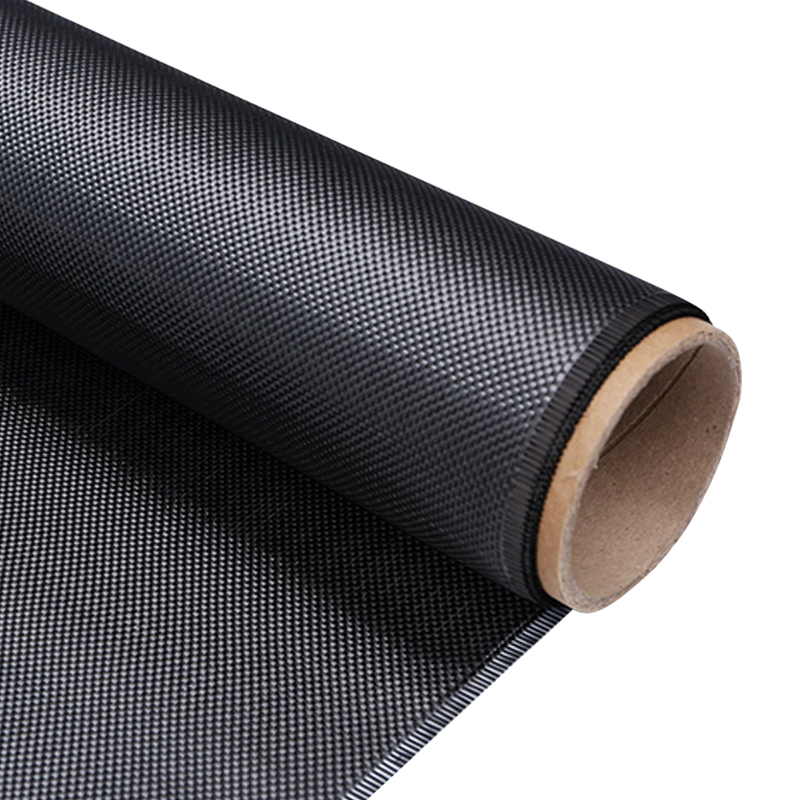
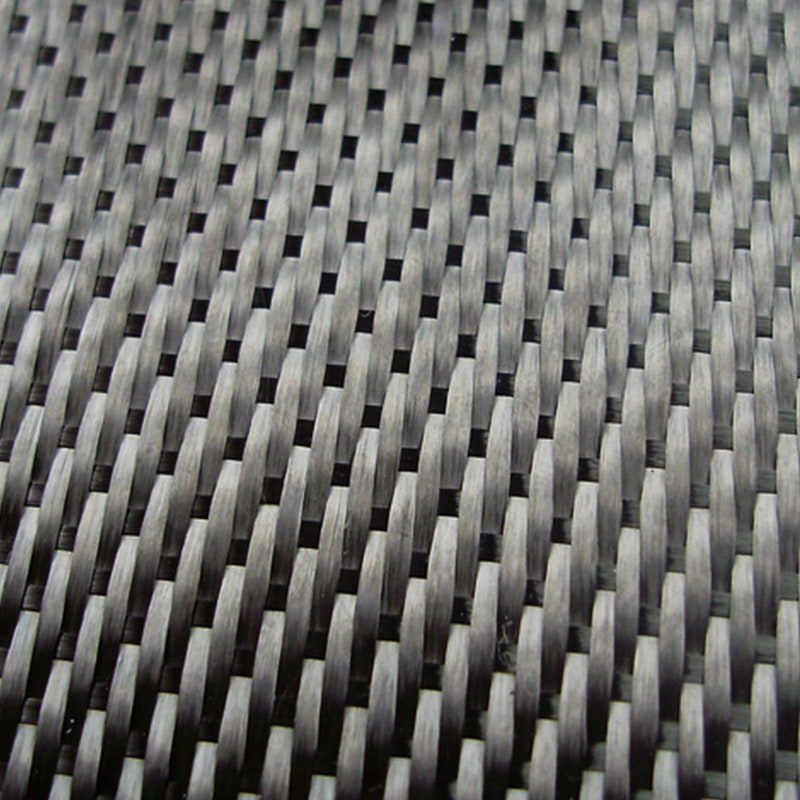
- Weave relaxation: In a plain or twill weave, individual tows (bundles of fibers) are crimped as they pass over and under each other. Under tension or vacuum pressure during layup, the weave can tighten slightly as tows straighten. This is not shrinkage but geometric settling.
- Resin cure shrinkage: Epoxy resins typically shrink 2–5% by volume during curing. This affects the overall composite part dimensions, not the fabric itself. Pre-preg carbon fabric (already impregnated with resin) must account for this in mold design.
For dry woven cloth used in wet layup or infusion processes, fabric dimensions remain stable during storage and handling at room temperature. No pre-treatment to control shrinkage is needed, unlike polyester or nylon textiles.
Does Woven Carbon Fiber Fabric Stretch?
Standard woven carbon fiber fabric has very low elongation to break — typically 1.5–2.0% along the fiber axis. This is far less than glass fiber (3–4%) and vastly less than aramid/Kevlar (2.5–3.5%). In practical terms, woven carbon fiber cloth feels rigid and inextensible when pulled along the warp or weft direction.
Stretch behavior varies significantly by weave pattern:
| Weave Type | Bias Drape (45°) | On-Axis Stretch | Best Use |
|---|---|---|---|
| Plain Weave | Low | Very low (~1.5%) | Flat panels, stiff laminates |
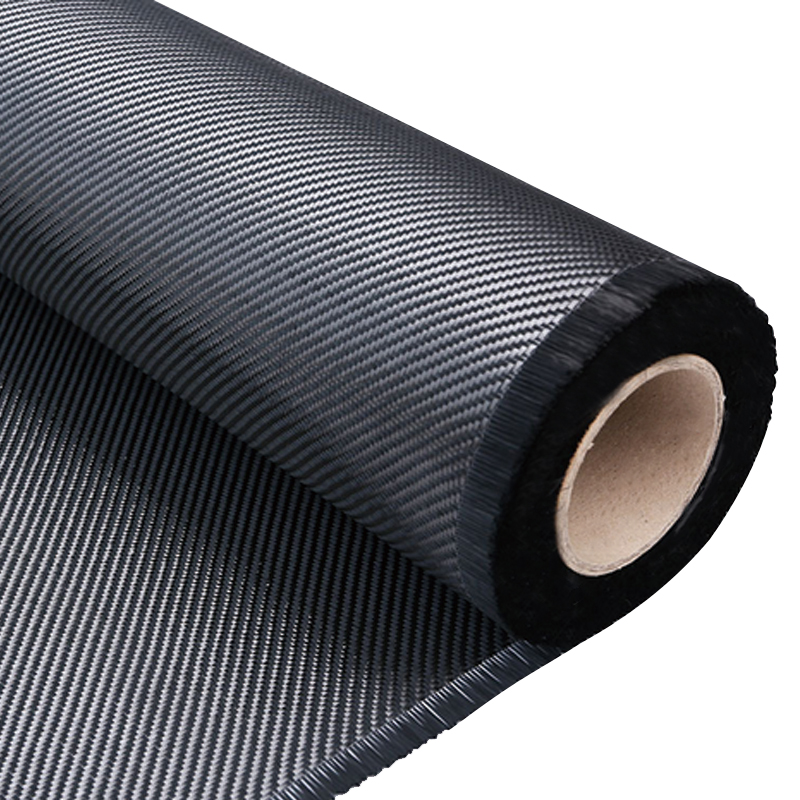
| 2×2 Twill | Medium | Low (~1.7%) | Curved parts, cosmetic surfaces |
| 4-Harness Satin | High | Low (~1.8%) | Complex contours, tight radii |
| Hybrid (C/Kevlar) | Medium | Low–Medium (~2.5%) | Impact-resistant panels |
Bias drape — the ability of the fabric to conform to curved surfaces when pulled at 45° to the fibers — is where woven fabrics gain real flexibility. Satin weaves, with fewer interlacement points, drape more easily over compound curves, which is why they are favored for automotive hoods, motorcycle fairings, and helmet shells. This is geometric conformability, not material stretching.
For applications requiring true elongation (gaskets, flexible composites), a carbon fiber knit fabric or a carbon/elastomer hybrid is more appropriate than woven cloth.
How Weave Architecture Affects Structural Performance
The weave pattern of carbon fiber fabric directly controls mechanical properties in the finished laminate. Because woven fabrics have fibers running in at least two directions (0° and 90°), they provide balanced in-plane stiffness — unlike unidirectional (UD) tape, which is strong in one direction but weak in others.
- Plain weave (1×1): Maximum fiber crimp, highest resistance to delamination, lowest in-plane stiffness. Ideal for structural panels that need impact resistance over raw stiffness.
- 2×2 Twill: The most popular choice for visible carbon fiber parts. The diagonal pattern offers better drape than plain weave while maintaining strong mechanical properties. Tensile modulus of a 2×2 twill laminate typically reaches 55–60 GPa.
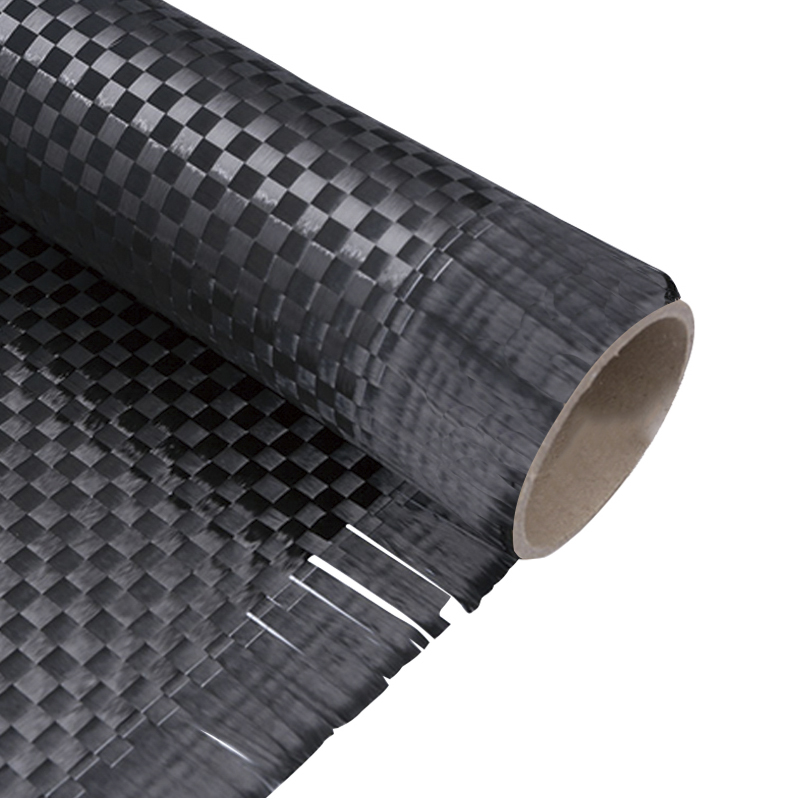
- Spread-tow fabric: Flat, minimal-crimp tows spread to reduced thickness. Delivers stiffness approaching UD performance with woven handleability. Used in high-end cycling frames and UAV structures.
For multi-layer laminates, alternating ply orientations (0°/90° and ±45°) compensates for the directional limitation of each ply, creating quasi-isotropic laminates used in structural aerospace components.
Practical Storage and Handling to Preserve Fabric Integrity
Even though woven carbon fiber cloth does not shrink or stretch, improper storage degrades its usability:
- Store dry fabric rolled, not folded. Creasing carbon fiber tows can fracture individual filaments (each only 5–10 microns in diameter), creating stress concentration points in the final part.
- Keep away from moisture before infusion. While carbon fiber is hydrophobic, sizing agents on the fiber surface can absorb humidity, weakening fiber-to-resin adhesion. Maintain storage humidity below 60% RH.
- Pre-preg fabric requires freezer storage at -18°C to stop resin advancement. Shelf life is typically 12–18 months frozen, 30 days at room temperature after removal.
- Avoid contamination. Skin oils, silicone mold release, and hydraulic fluids are the most common contaminants. Even trace amounts on dry fabric prevent proper resin wet-out and bonding.
Choosing the Right Carbon Fiber Cloth for Your Application
Selecting woven carbon fiber fabric involves balancing fiber weight (gsm), weave type, tow size, and resin compatibility. The table below provides a practical guide:
| Application | Recommended Fabric Weight | Preferred Weave | Notes |
|---|---|---|---|
| Cosmetic / decorative panels | 200–240 gsm | 2×2 Twill | Clear coat finish, no structural load |
| Structural aerospace skins | 160–200 gsm | Plain or spread-tow | Multiple plies, vacuum-bagged cure |
| Marine hull reinforcement | 280–400 gsm | Plain or twill | Vinyl ester or epoxy infusion |
| Sporting goods (frames, paddles) | 160–200 gsm | Twill or satin | Light weight priority |
| Tooling / mold faces | 200 gsm | Plain weave | High-temperature resin system |
Tow size also matters: 3K tow (3,000 filaments per bundle) produces a finer, tighter surface finish favored in automotive and consumer goods, while 12K tow covers area faster and suits structural layups where surface aesthetics are secondary.
 +86-13961668677
 No. 61, Xingyuan Road, Jiefang Village, Gushan Town, Jiangyin City, Jiangsu Province, China.