 Get In Touch
 English
  中文简体
中文简体 عربى
عربى Tiếng Việt
Content
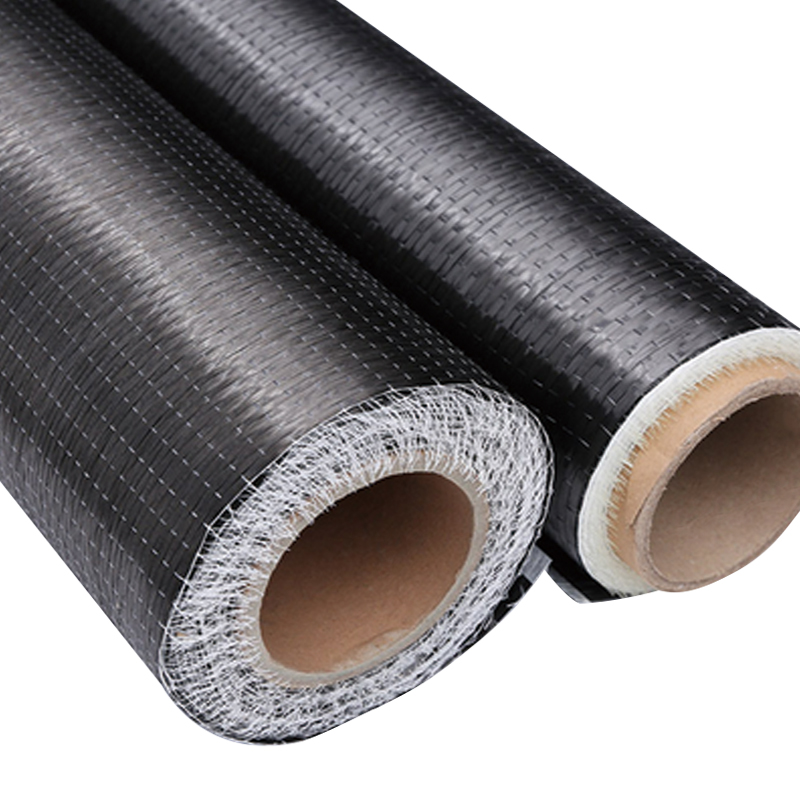
Jiangyin Dongli New Materials Technology Co., Ltd. operates a 32,000-square-meter industrial complex dedicated to the comprehensive development and manufacturing of high-performance fiber composite materials. Our facility features climate-regulated workshops and 100,000-grade purification zones to ensure precise environmental control during the impregnation process. As a one-stop factory, we integrate material innovation with engineering expertise, specializing in the R&D of high-performance fiber fabrics and carbon epoxy prepreg through advanced weaving and prepregging technologies. Our production capabilities extend to composite manufacturing via autoclave, RTM, RMCP, PCM, and WCM processes, serving critical sectors such as aerospace engineering and automotive manufacturing. When sourcing materials for elevated temperature environments, technical verification of the resin matrix and fiber-matrix interface is paramount to prevent delamination and structural softening.
Thermal Performance Metrics and Glass Transition Temperature (Tg) Verification
The primary constraint for composites in thermal environments is the glass transition temperature of epoxy prepreg. Tg represents the temperature range where the polymer matrix transitions from a rigid, glassy state to a flexible, rubbery state. How to measure Tg in carbon fiber composites typically involves Differential Scanning Calorimetry (DSC) or Dynamic Mechanical Analysis (DMA) according to ASTM D7028. For high-temperature applications, the Tg of high-performance carbon epoxy prepreg must significantly exceed the operational temperature to maintain the modulus of elasticity. A shift in Tg can indicate incomplete curing or moisture absorption, which drastically reduces the service temperature of carbon fiber prepreg. Engineers must verify the "Onset Tg" and "Tan Delta Peak" to define the safe thermal envelope for aerospace bulkheads or automotive engine components.
Interlaminar Shear Strength (ILSS) and Interface Adhesion Standards
Mechanical failure in layered composites often occurs between the plies rather than within the fibers themselves. What is the ILSS of carbon epoxy prepreg? Interlaminar Shear Strength, measured via the short-beam shear test (ASTM D2344), quantifies the internal fiber-matrix bond. In high-temperature cycles, the ILSS retention at elevated temperatures is a critical indicator of resin stability. A standard carbon epoxy prepreg might exhibit an ILSS of 60-90 MPa at room temperature, but this value must be re-verified at the maximum service temperature (e.g., 120°C or 180°C). Why interlaminar shear strength decreases with heat is due to the reduction in resin shear modulus as it approaches its Tg. Maintaining high ILSS ensures that the tensile strength of carbon prepreg laminates is translated effectively through the structure without interlaminar fracture.
Resin Flow Behavior and Fiber Volume Fraction Control
During the autoclave or PCM (Prepreg Compression Molding) process, the viscosity profile of epoxy resin during cure determines the final consolidation quality. How to calculate fiber volume fraction in composites involves acid digestion or thickness measurements (ASTM D3171), aiming for a 60% to 65% fiber content for structural efficiency. If the resin flow is too high, it leads to "dry spots"; if too low, it results in excessive void content. The void content in aerospace grade prepreg must remain below 1% to prevent stress concentrations. By utilizing controlled resin flow prepreg technology, Jiangyin Dongli ensures that the resin penetrates the fiber bundles uniformly, maximizing the compressive strength of cured carbon epoxy. This precision is vital for RTM and RMCP processes where the carbon epoxy prepreg must maintain its rheological properties under specific pressure gradients.
| Testing Property | Testing Standard | Engineering Target Value |
| Glass Transition Temp (Tg) | ASTM D7028 (DMA) | 120°C - 210°C (Application Dependent) |
| Interlaminar Shear (ILSS) | ASTM D2344 | > 70 MPa (RT) / > 45 MPa (at 150°C) |
| Fiber Volume Fraction | ASTM D3171 | 60% +/- 3% |
| Tensile Strength (0 Degree) | ASTM D3039 | > 2200 MPa (T700 Grade) |
| Resin Content by Weight | ISO 11667 | 33% - 42% +/- 2% |
Out-Life Management and Tack Retention Protocols
The chemical reactivity of carbon epoxy prepreg necessitates strict cold-chain management. What is the out-life of epoxy prepreg at room temperature? Typically, a standard system allows for 20 to 30 days of "out-life" before the resin advances (partially cures), which affects the tack and drape of carbon fiber prepreg. In our 100,000-grade purification zones, we monitor the shelf life of prepreg at -18°C, which usually extends to 12 months. Why tackiness changes in prepreg is a result of moisture ingress or thermal advancement of the B-stage resin. For complex geometries in sports equipment or automotive body panels, consistent drapability of woven carbon prepreg is essential to prevent fiber wrinkling. Rigorous monitoring of the "Cure Cycle" (pressure/temperature vs. time) ensures that the cross-linking density of the epoxy matrix achieves its theoretical maximum, providing the structural reliability required for high-stakes technical sectors.
Industrial Hardcore FAQ
Q1: Why is the "Onset Tg" more important than the "Peak Tg" in engineering?
A1: The Onset Tg marks the actual beginning of mechanical property degradation. For structural safety, engineers use the Onset value to define the maximum continuous operating temperature, whereas Peak Tg is often an overestimation of the material's capability.
Q2: How does moisture absorption affect the Tg of a carbon epoxy prepreg?
A2: Water acts as a plasticizer within the epoxy matrix. Even a 1% moisture uptake can depress the Tg by 20°C to 30°C, significantly reducing the material's high-temperature performance.
Q3: What is the difference between ILSS and Transverse Tensile Strength?
A3: ILSS measures the shear stress required to cause sliding between layers (delamination), while Transverse Tensile Strength measures the force required to pull the fibers apart perpendicular to their orientation. Both are resin-dominant properties.
Q4: Can this prepreg be cured without an autoclave?
A4: While autoclave provides the highest consolidation (lowest voids), many of our epoxy systems are formulated for Out-of-Autoclave (OOA) vacuum bag oven curing or PCM (compression molding) for faster cycle times in automotive production.
Q5: Why is a 100,000-grade purification zone necessary for prepreg production?
A5: Foreign particulates (dust, hair, fibers) can act as initiation sites for interlaminar cracks or prevent proper resin wetting, leading to a significant reduction in fatigue life and impact resistance.
Technical References
- ASTM D7028: Standard Test Method for Glass Transition Temperature (Tg) of Polymer Matrix Composites by Dynamic Mechanical Analysis (DMA).
- ASTM D2344: Standard Test Method for Short-Beam Strength of Polymer Matrix Composite Materials and Their Laminates (ILSS).
- ISO 11667: Fibre-reinforced plastics — Moulding compounds and prepregs — Determination of resin, reinforced-fibre and mineral-filler content.
 +86-13961668677
 No. 61, Xingyuan Road, Jiefang Village, Gushan Town, Jiangyin City, Jiangsu Province, China.