 Get In Touch
 English
  中文简体
中文简体 عربى
عربى Tiếng Việt
Content
- 1 1. Superior Strength-to-Weight Ratio in Hydrogen Storage
- 2 2. Impact Resistance and Rigidity in Next-Generation EV Chassis
- 3 3. Thermal Management and Material Stability
- 4 Conclusion: Leading the Composite Frontier
- 4.1 Frequently Asked Questions (FAQ)
- 4.1.1 1. Why is carbon epoxy prepreg for hydrogen storage tanks better than filament winding with wet resin?
- 4.1.2 2. What is the shelf life and how to store carbon epoxy prepreg?
- 4.1.3 3. How do the benefits of using epoxy prepreg in EV manufacturing impact battery life?
- 4.1.4 4. When comparing thermoset vs thermoplastic prepreg, which is better for mass production?
- 4.1.5 5. Can Jiangyin Dongli provide high-performance carbon epoxy prepreg for non-automotive use?
- 4.2 Industry References
- 4.1 Frequently Asked Questions (FAQ)
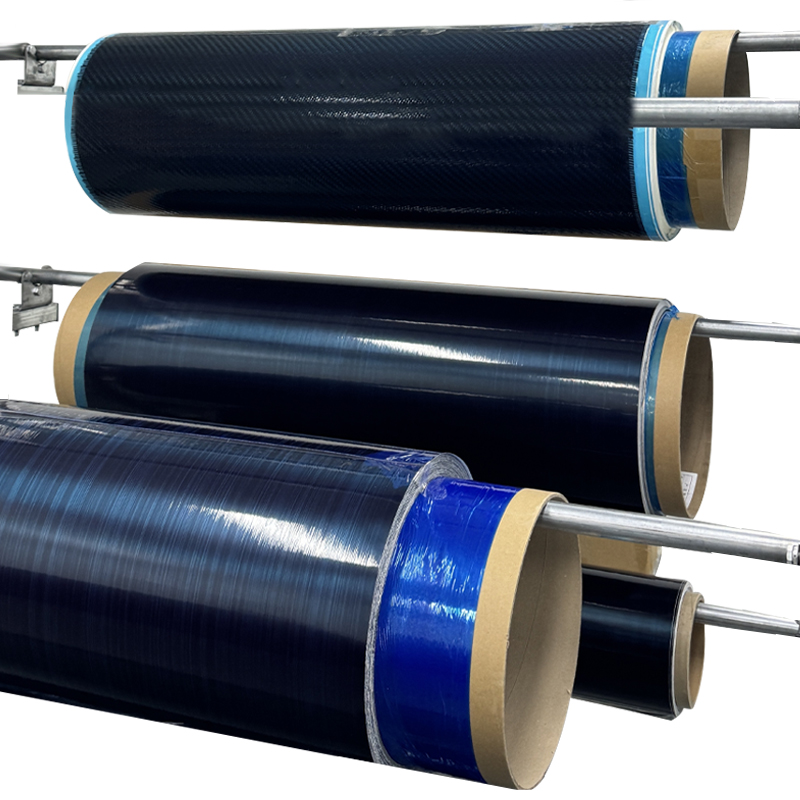
The global shift toward sustainable mobility has catalyzed a material revolution in the automotive and energy sectors. As engineers strive to maximize energy density and structural efficiency, carbon epoxy prepreg has emerged as the definitive solution for high-pressure hydrogen containment and lightweight electric vehicle (EV) architectures. Jiangyin Dongli New Materials Technology Co., Ltd., operating from a 32,000-square-meter precision-controlled industrial complex, stands at the forefront of this evolution. By utilizing climate-regulated workshops and 100,000-grade purification zones, we provide high-performance carbon epoxy prepreg that meets the rigorous safety standards of aerospace and automotive engineering. This article explores the technical advantages of carbon epoxy prepreg in modern green energy applications.
1. Superior Strength-to-Weight Ratio in Hydrogen Storage
Hydrogen storage tanks, particularly Type IV vessels, require materials that can withstand internal pressures of up to 700 bar while minimizing the vehicle's curb weight. Carbon epoxy prepreg for hydrogen storage tanks offers an unparalleled specific strength that traditional metals cannot match. While aluminum or steel tanks are inherently heavy and prone to hydrogen embrittlement, a lightweight carbon epoxy prepreg shell provides a high safety factor with significantly less mass. When comparing carbon epoxy prepreg vs wet layup for pressure vessels, the prepreg process ensures a precise fiber-to-resin ratio, which is critical for the structural integrity of hydrogen tanks. At Jiangyin Dongli, our R&D focus on carbon fiber epoxy prepreg manufacturing process optimization allows for consistent wall thickness and void-free laminates through advanced autoclave and PCM technologies.
Material Performance Comparison
- High-Strength Steel: Extremely heavy, limiting vehicle range; susceptible to corrosion and embrittlement.
- Carbon Epoxy Prepreg: Reduces weight by up to 70% compared to steel while offering superior fatigue resistance.
| Material Property | High-Strength Steel | Carbon Epoxy Prepreg |
| Specific Strength (kN·m/kg) | ~200 | ~2400 |
| Corrosion Resistance | Low (Requires coating) | Excellent (Inherent) |
| Hydrogen Compatibility | Risk of embrittlement | Non-reactive polymer matrix |
2. Impact Resistance and Rigidity in Next-Generation EV Chassis
Electric vehicle manufacturers are increasingly turning to EV chassis carbon epoxy prepreg applications to offset the substantial weight of battery packs. A rigid chassis is essential for battery protection and vehicle handling dynamics. Using carbon fiber prepreg for automotive parts allows for the consolidation of multiple components into single, complex geometries, reducing assembly time and points of failure. When comparing thermoset vs thermoplastic prepreg for chassis components, the thermoset epoxy matrix provides superior creep resistance and thermal stability under high-stress loads. Furthermore, the benefits of using epoxy prepreg in EV manufacturing include enhanced crashworthiness, as the material can be engineered to absorb specific energy levels through controlled fracture mechanics.
Chassis Fabrication Sequence
- Pre-shaping: Precision cutting of carbon epoxy prepreg plies to match complex chassis contours.
- Layup: Strategic ply orientation to optimize directional stiffness and impact resistance of carbon fiber composites.
- Curing: Utilizing PCM (Prepreg Compression Molding) or autoclave processes to achieve maximum molecular cross-linking.
- Finishing: Automated spraying or coating for environmental protection and aesthetic requirements.
| Metric | Traditional Aluminum Chassis | Carbon Epoxy Prepreg Chassis |
| Weight Reduction | Baseline | 30% - 50% lighter than aluminum |
| Torsional Rigidity | High | Ultra-High (Customizable) |
| Design Flexibility | Limited by extrusion/casting | High (Integrated complex shapes) |
3. Thermal Management and Material Stability
In both hydrogen storage and EV battery enclosures, thermal stability is non-negotiable. Carbon epoxy prepreg maintains its mechanical properties across a wide temperature range, which is critical during the rapid refueling of hydrogen (which causes temperature spikes). Understanding how to store carbon epoxy prepreg—typically in climate-controlled environments—is a specialty of Jiangyin Dongli, ensuring the material's shelf life and out-life remain within technical tolerances for aerospace-grade applications. Our low-temperature cure epoxy prepregs are specifically designed to reduce energy consumption during the carbon fiber epoxy prepreg manufacturing process while maintaining the structural integrity of hydrogen tanks.
Conclusion: Leading the Composite Frontier
The transition to carbon epoxy prepreg as the primary material for hydrogen storage and EV chassis is driven by the urgent need for weight reduction, safety, and high-performance engineering. By integrating material innovation with one-stop factory capabilities, Jiangyin Dongli New Materials Technology Co., Ltd. provides the technical foundation for the next generation of transportation. From weaving high-performance fabrics to precision curing via autoclave and RTM, we ensure that the future of mobility is lighter, stronger, and more sustainable.
Frequently Asked Questions (FAQ)
1. Why is carbon epoxy prepreg for hydrogen storage tanks better than filament winding with wet resin?
Prepreg allows for a much more controlled resin content and minimizes air voids. This results in a more uniform laminate with higher fiber volume fractions, leading to better burst pressure ratings and consistent safety factors.
2. What is the shelf life and how to store carbon epoxy prepreg?
Epoxy prepregs are partially cured (B-staged) and typically require cold storage at -18 degrees Celsius. Under these conditions, the shelf life is usually 6 to 12 months, ensuring the resin remains reactive for the final molding process.
3. How do the benefits of using epoxy prepreg in EV manufacturing impact battery life?
By significantly reducing the chassis weight, the energy consumption per mile is lowered. This allows EVs to achieve longer ranges with the same battery capacity or use smaller, lighter battery packs for the same range.
4. When comparing thermoset vs thermoplastic prepreg, which is better for mass production?
Thermoplastics offer faster cycle times, but thermoset carbon epoxy prepreg currently provides better dimensional stability and resistance to long-term fatigue, which is essential for structural chassis components.
5. Can Jiangyin Dongli provide high-performance carbon epoxy prepreg for non-automotive use?
Yes. Our 100,000-grade purification zones and full process control allow us to serve diverse technical sectors, including aerospace engineering and high-end sports equipment development.
Industry References
- ISO 11119-3: Gas cylinders of composite construction - Part 3: Fully wrapped fibre reinforced composite gas cylinders.
- SAE International: "Advanced Composite Materials for Automotive Chassis Applications."
- Jiangyin Dongli Internal Research: "Void Optimization in Autoclave-Cured Epoxy Prepregs for Pressure Vessels" (2025).
- Journal of Composite Materials: "Fatigue Life of Carbon Fiber Reinforced Epoxy in High-Pressure Environments."
 +86-13961668677
 No. 61, Xingyuan Road, Jiefang Village, Gushan Town, Jiangyin City, Jiangsu Province, China.