 Get In Touch
 English
  中文简体
中文简体 عربى
عربى Tiếng Việt
Content
- 1 The Physics of Consolidation: Pressure and Porosity
- 2 Mechanical Performance: Laminate Strength and Fiber Volume
- 3 Production Logistics: Efficiency and Cost-Effectiveness
- 4 Conclusion: Choosing the Right Process for Your Application
- 5 Technical Standard: Preserving the Latent Cure Cycle
- 6 Frequently Asked Questions (FAQ)
- 7 Industry References
In the advanced composites industry, the debate between Autoclave and Out-of-Autoclave (OOA) processing centers on the balance between mechanical absolute-performance and manufacturing economics. High-performance carbon epoxy prepreg materials are the backbone of modern structural engineering, yet the method of consolidation dictates the final void content and fiber volume fraction. Jiangyin Dongli New Materials Technology Co., Ltd., operating from a 32,000-square-meter precision-controlled industrial complex, integrates material innovation with full-process control. With capabilities spanning Autoclave, RTM, and PCM technologies, we provide an objective engineering perspective on whether OOA processing can truly match the rigorous standards of traditional autoclave consolidation.
The Physics of Consolidation: Pressure and Porosity
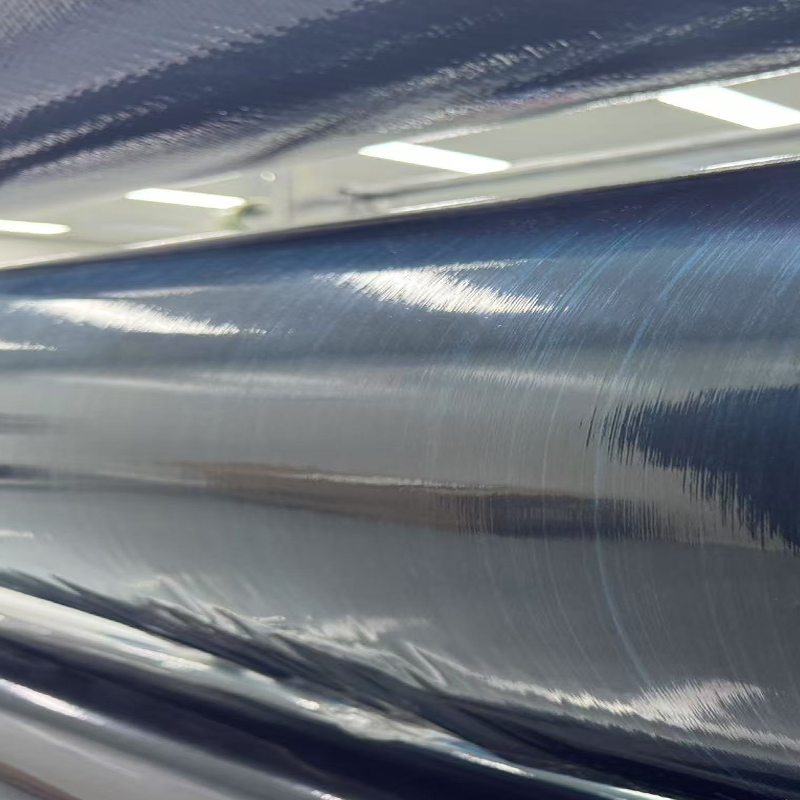
The primary difference between these methods lies in the magnitude of compaction pressure. Autoclaves typically apply 0.5 to 0.7 MPa of pressure, which suppresses volatile transition and collapses interlaminar voids. In contrast, OOA processing relies solely on vacuum bag pressure (approx. 0.1 MPa). To compensate for this lower pressure, engineers must utilize a specialized low temperature cure carbon prepreg designed with a partially impregnated "breathable" architecture to facilitate air evacuation before the resin gels. While Autoclave processing remains the gold standard for zero-void aerospace components, modern OOA resins have narrowed the gap, achieving void contents below 1% in optimized conditions.
| Process Variable | Autoclave Consolidation | Out-of-Autoclave (OOA) |
| Compaction Pressure | High (Up to 7 bar/100 psi) | Low (Atmospheric/Vacuum only) |
| Void Content (%) | Ultra-low (< 0.5%) | Low to Moderate (0.5% - 1.5%) |
| Tooling Requirements | High-temperature, pressure-rated steel/aluminum | Lower cost composite or elastomer tooling |
Mechanical Performance: Laminate Strength and Fiber Volume
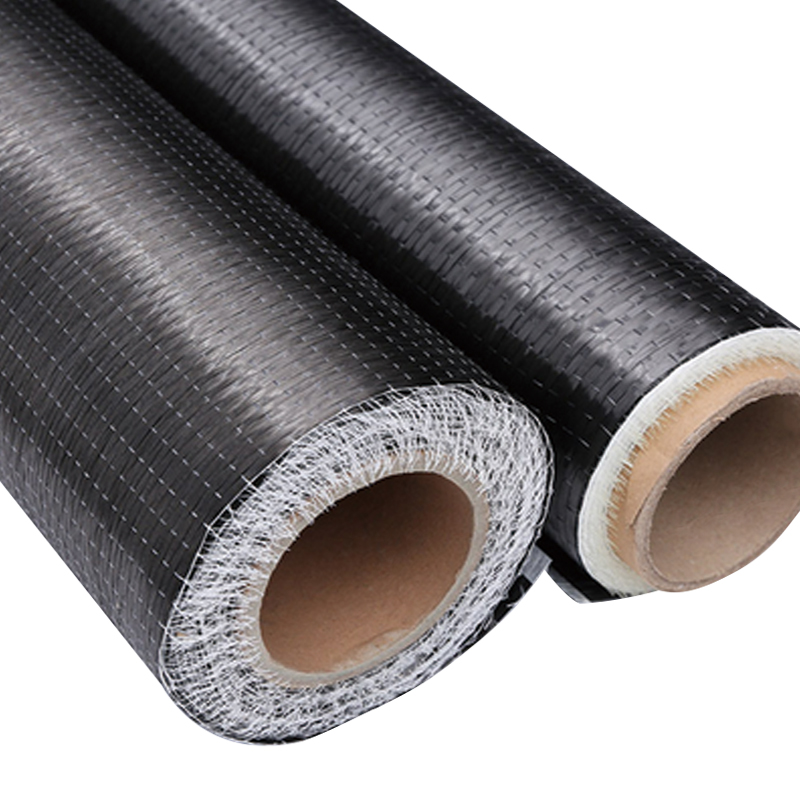
Mechanical properties, such as Interlaminar Shear Strength (ILSS) and compression after impact (CAI), are highly sensitive to consolidation quality. A unidirectional carbon fiber epoxy prepreg cured in an autoclave typically achieves a higher fiber volume fraction ($V_f$) because the high pressure forces out excess resin more effectively. However, for high modulus carbon fiber prepreg for aerospace applications where part geometry is overly large or complex, OOA provides a scalable solution. While the Autoclave produces a more consistent morphology, OOA laminates can achieve 90-95% of the mechanical properties of their autoclave counterparts if the vacuum-only carbon epoxy prepreg is engineered with high-flow resin systems during the consolidation phase.
| Property | Autoclave Laminate | OOA Laminate |
| Fiber Volume Fraction ($V_f$) | Typically 60% - 65% | Typically 55% - 60% |
| ILSS (Interlaminar Shear) | Maximum; consistent through-thickness | High; depends on air evacuation quality |
| Part Complexity | Limited by vessel size | High; virtually unlimited scale |
Production Logistics: Efficiency and Cost-Effectiveness
From a B2B procurement and wholesale perspective, the capital expenditure (CAPEX) of an autoclave is a significant barrier. OOA processing drastically reduces energy consumption and tooling costs, making it ideal for industrial grade carbon fiber epoxy prepreg used in automotive manufacturing and sports equipment. At Jiangyin Dongli, we utilize 100,000-grade purification zones to ensure that OOA-targeted prepregs remain free of contaminants that could act as nucleation sites for voids. While the Autoclave offers shorter cycle times due to superior heat transfer, OOA enables the production of integrated, large-scale structures that would be impossible to fit inside a pressure vessel.
Optimizing the OOA Workflow
Success in OOA relies on the meticulous management of the vacuum-bagging process. Any leak in the system during the cure of flame retardant carbon epoxy prepreg will lead to catastrophic porosity and structural rejection.
- Evacuation Time: Extended room-temperature vacuum holds are required to remove entrapped air from the ply interfaces.
- Resin Rheology: Resin must have a low viscosity "window" during heating to wet out fibers before cross-linking.
- Process Integration: Combining OOA with RTM or PCM can further enhance surface finish and dimensional tolerance.
Conclusion: Choosing the Right Process for Your Application
Is OOA as effective as Autoclave processing? For the highest-tier primary aerospace structures requiring absolute minimum weight and maximum stiffness, the Autoclave remains superior. However, for secondary structures, automotive components, and high-end sports equipment, OOA-optimized carbon epoxy prepreg offers a nearly equivalent performance at a substantially lower cost and higher scalability. Jiangyin Dongli New Materials Technology Co., Ltd. provides the engineering expertise to help you select the optimal curing technology, ensuring that your composite products meet the technical demands of your specific industry.
Technical Standard: Preserving the Latent Cure Cycle
The epoxy resin systems used in carbon epoxy prepreg are B-staged, meaning they are partially cured and remain chemically active at room temperature. At Jiangyin Dongli, we utilize climate-regulated workshops to ensure that our unidirectional carbon fiber epoxy prepreg maintains its specified tack and flow properties. Improper thermal management can lead to "advancement," where the resin prematurely cross-links, rendering the material unworkable for complex layups.
1. Cold Storage and Thermal Stabilization
To arrest the chemical reaction of the high modulus carbon fiber prepreg for aerospace, materials must be stored in specialized industrial freezers. The stabilization period (thawing) is equally critical; opening a roll before it reaches ambient temperature will cause moisture condensation on the carbon epoxy prepreg surface, leading to catastrophic interlaminar porosity during the cure.
| Storage Condition | Temperature Range | Expected Shelf Life |
| Long-term Cold Storage | -18°C (0°F) or below | 6 to 12 months |
| Chilled Storage | +4°C (40°F) | Up to 3 months |
| Room Temperature (Out-life) | +21°C (70°F) | 5 to 30 days (Specific to resin system) |
2. Thaw Time and Environmental Control
Before moving the flame retardant carbon epoxy prepreg into the 100,000-grade purification zone for layup, the material must undergo a controlled thaw. This prevents the "dew point" effect. Larger rolls require exponentially more time to reach thermal equilibrium than smaller cut-sheets.
- Sealed Thawing: Rolls must remain in their original moisture-barrier bags until the core temperature reaches +20°C.
- Thaw Duration: A standard 50m roll typically requires 12-24 hours to thaw completely, depending on ambient humidity.
- Condensation Risk: Any moisture trapped within the industrial grade carbon fiber epoxy prepreg plies will vaporize in the autoclave or OOA process, creating internal voids.
3. Out-life Tracking and "Tack" Verification
The "Out-life" is the cumulative time the carbon epoxy prepreg spends outside of the freezer. As an engineering-focused manufacturer, we require a meticulous log for every batch to ensure the resin remains within its "flow window." Once the out-life is exceeded, the resin becomes "stiff" or "dry," and its ability to consolidate under vacuum pressure is significantly diminished.
| Physical Property | In-Life Condition | Exceeded Out-life Condition |
| Tackiness | Slightly adhesive; plies "grab" each other. | Dry/Glassy; plies slide or spring back. |
| Drapability | Flexible; conforms to complex radii. | Brittle; prone to fiber breakage or "bridging." |
| Resin Flow | Optimal viscosity for fiber wetting. | High viscosity; results in "dry patches." |
4. Engineering Support and Process Integration
Jiangyin Dongli New Materials Technology Co., Ltd. provides comprehensive R&D and production data for all carbon epoxy prepreg shipments. By integrating our material innovation with your facility's process control, we ensure that every composite product—whether manufactured via autoclave, RTM, or PCM—achieves its maximum theoretical mechanical properties. Our team is available to help you establish a customized tracking system for your sourcing requirements.
Frequently Asked Questions (FAQ)
- Q1: Can any prepreg be cured Out-of-Autoclave?
A: No. Standard autoclave prepregs often have high "tack" and fully filmed resin that traps air. OOA requires specialized "breathable" low temperature cure carbon prepreg to allow air to escape along the fiber paths. - Q2: What is the main disadvantage of OOA?
A: The primary risk is higher void content and a lower fiber volume fraction compared to high-pressure autoclave consolidation. - Q3: Is OOA suitable for high modulus carbon fiber prepreg for aerospace?
A: Yes, for secondary structures (like fairings or interior panels) and increasingly for primary structures on UAVs and small aircraft where autoclave size is a constraint. - Q4: How does Jiangyin Dongli ensure OOA quality?
A: We operate in climate-regulated workshops and 100,000-grade purification zones to eliminate dust and moisture, which are critical causes of defects in vacuum-only curing. - Q5: Does OOA cure faster than Autoclave?
A: Generally, no. OOA often requires longer ramp rates and "dwell" times to ensure complete air evacuation before the resin reaches its gel point.
Industry References
- ASTM D3529: Standard Test Method for Resin Solids Content and Extractable Content of Prepregs.
- NASA Technical Reports: "Out-of-Autoclave Processing of Aerospace Quality Composites."
- Journal of Composite Materials: "A comparison of void formation in autoclave and vacuum bag only (VBO) prepregs."
- ISO 14126: Fibre-reinforced plastic composites — Determination of compressive properties in the in-plane direction.
 +86-13961668677
 No. 61, Xingyuan Road, Jiefang Village, Gushan Town, Jiangyin City, Jiangsu Province, China.