C
Multi-ply · Hybrid construction · Engineered laminate

Carbon Fiber Composite Cloth

Pre-consolidated hybrid architecture combining woven carbon with auxiliary fiber systems
2–6 Layers per composite
0.8–2.5 Thickness mm

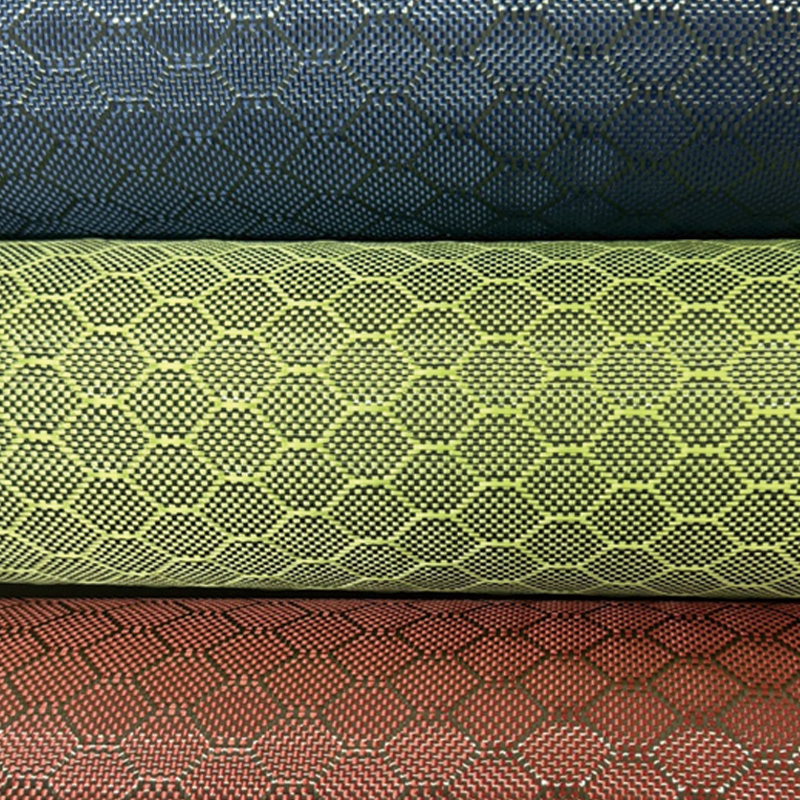
Carbon Fiber Composite Cloth represents an engineered fabric system where multiple layers of carbon reinforcement are combined with supplementary materials—such as aramid, glass, or thermoplastic veils—to create a pre-configured hybrid architecture. This composite cloth eliminates the need for interleaving separate plies during layup, reducing production steps and improving ply-to-ply registration. The integration of auxiliary materials enhances specific properties: aramid layers add impact resistance, glass layers reduce cost without compromising stiffness, and thermoplastic veils improve fracture toughness. Available in 2-ply, 4-ply, and 6-ply configurations, with total areal weights from 400 to 1800 g/m². The composite cloth is supplied as a single, drapeable sheet ready for vacuum infusion or compression molding.

Standard Composite Configurations

2-Ply Hybrid Carbon 200 g/m² + Glass 200 g/m² · Total 400 g/m² Cost-sensitive panels, marine interiors
4-Ply Balanced Carbon 300 + Aramid 150 + Carbon 300 + Aramid 150 · Total 900 g/m² Impact-resistant structures, ballistic shields
6-Ply Heavy Carbon 300 × 4 + Thermoplastic veil 100 × 2 · Total 1400 g/m² Tooling, heavy-duty equipment, armor
Custom Stack Any combination of carbon, aramid, glass, or veil layers Tailored property profiles for specific load cases

Composite-Level Properties (Typical)

Flexural strength 650 – 850 MPa
Flexural modulus 35 – 55 GPa
Impact energy absorption 15 – 35 J (Charpy, un-notched)
Interlaminar fracture toughness GIC 0.8 – 1.6 kJ/m²
Density 1.45 – 1.65 g/cm³ (depending on hybrid ratio)
Values depend on resin system and cure cycle. Consult engineering data sheet for specific stack configurations.

Composite Cloth Advantages

  • Reduces layup time by 50% – 70% compared to multi-ply hand stacking
  • Eliminates inter-ply misalignment and bridging defects
  • Provides consistent fiber volume fraction across the entire panel
  • Enables precise control of hybrid fiber ratios for tailored properties
  • Available with pre-applied binder for improved handling and drape stability

Processing Recommendations

Infusion Use 80–200 cP resins; apply 0.6–0.9 bar vacuum; composite cloth maintains alignment during resin flow.
Compression molding Preheat composite stack to 60 °C; mold at 120–150 °C, 8–12 bar pressure.
Hand layup Suitable for low-volume production; use roller to consolidate layers and remove entrapped air.
Post-cure 120 °C for 2 hours or 150 °C for 1 hour to achieve maximum glass transition temperature.

Common Questions

Can the composite cloth be cut to shape before layup? Yes. Use sharp shears or a CNC knife; the pre-consolidated layers maintain their relative position during cutting.
What is the maximum operating temperature? 120 °C continuous for standard epoxy; 180 °C with high-temperature resin systems.
Is the cloth compatible with prepreg processing? Yes. Pre-impregnated versions are available; contact sales for prepreg composite cloth specifications.
✦ Est. 2018 · Jiangyin
Dongli New Materials
⬡ High-performance Fiber Composites · ◈ Precision Engineering · ◉ Global Reach
32,000 ▣ Factory Area (㎡)
7 ◆ Years Experience
10 ◼ Production Lines
24 ◉ Technical Personnel
⬡ Aerospace ◈ Automotive ◉ Sports Equipment ✦ R&D Innovation ◆ Global Partner ◼ Sustainability

◉ Founded 2018

Jiangyin Dongli New Materials Technology Co., Ltd. focuses on the comprehensive development and manufacturing of high-performance fiber composite materials. We are China Carbon Fiber Composite Cloth Manufacturers and Wholesale Carbon Fiber Composite Cloth Suppliers. Operating from a 32,000‑square‑meter industrial complex featuring precision‑controlled environments, including climate‑regulated workshops and 100,000‑grade purification zones.

We integrate material innovation with engineering expertise to serve aerospace, automotive, and sports equipment sectors.

◈ One‑Stop Factory

With full process control, we integrate material innovation with engineering expertise. Our capabilities include R&D and production of high‑performance fiber fabrics through weaving and prepreg processes, as well as composite products utilizing autoclave, RTM, RMCP, PCM, WCM, and spraying technologies.

⬡ Aerospace ◈ Automotive ◉ Sports ✦ R&D

Global Vision & Breakthrough Solutions

Dongli New Materials aims to expand its global influence, enhance its research and development capabilities, and continue to provide breakthrough solutions for global partners.

In the years to come, Dongli will continue to make significant contributions to the industry through relentless innovation and collaboration. We are committed to developing cutting‑edge technologies that not only enhance product performance but also promote social progress. With the continuous evolution of the industry, we always insist on creating solutions with far‑reaching impact and sustainability, ensuring that we become a trusted partner and helping enterprises fully realize their potential in the ever‑changing global environment.

◉ Autoclave ◈ RTM ⬡ RMCP ✦ PCM ◆ WCM ▣ Spraying ◼ Weaving ◉ Prepreg
Recommended LINKS