 Get In Touch
 English
 中文简体
 عربى
 Tiếng Việt

Content
- 1 Start with the part, not the fabric data sheet
- 2 Plain weave: the stable baseline for strength-critical and low-drape parts
- 3 Twill weave: the production workhorse for compound curves
- 4 Satin weave: deep draws and smooth surfaces, with handling penalties
- 5 Unidirectional fabric: not a weave, but the strength benchmark
- 6 Compare weave architectures on the metrics that affect yield
- 7 Use a qualification plan to lock the selection
- 8 Practical answers for production teams
A 2x2 twill laminate can conform to a compound-curve mold that a plain weave of the same areal weight will bridge and wrinkle. That difference is not cosmetic. A wrinkle creates a resin-rich zone, a fiber-volume drop, and a stress concentration that can fail an ultrasonic inspection before the part reaches assembly. Carbon fiber weave selection is therefore a production decision, not a catalog preference. The correct architecture is the one that survives the mold, carries the load path, and still meets the surface requirement at an acceptable scrap rate.
Start with the part, not the fabric data sheet
The correct weave is the one that fits the part geometry and load path at production speed; a data sheet alone cannot make that call. A fabric that tests well as a flat coupon can still bridge on a tight radius, separate tows during layup, or create a resin-rich pocket that fails C-scan. Manufacturers need a selection sequence that links tooling, load case, and consolidation before samples are cut.
Formability is the fabric's ability to shear and conform to a 3D surface without wrinkling, tow separation, or fiber distortion.
- Map the tightest tool radius and the deepest draw.
- Identify the primary load direction. If it is one-directional, unidirectional material or a directional stack wins.
- Match the consolidation process: hand layup, vacuum infusion, RTM, or autoclave.
- Set the cosmetic standard: visible weave, painted surface, or hidden structure.
Run this sequence before requesting samples. A weave that passes a flat panel trial can still fail when the same fabric is asked to follow a compound curve under vacuum pressure.
Plain weave: the stable baseline for strength-critical and low-drape parts
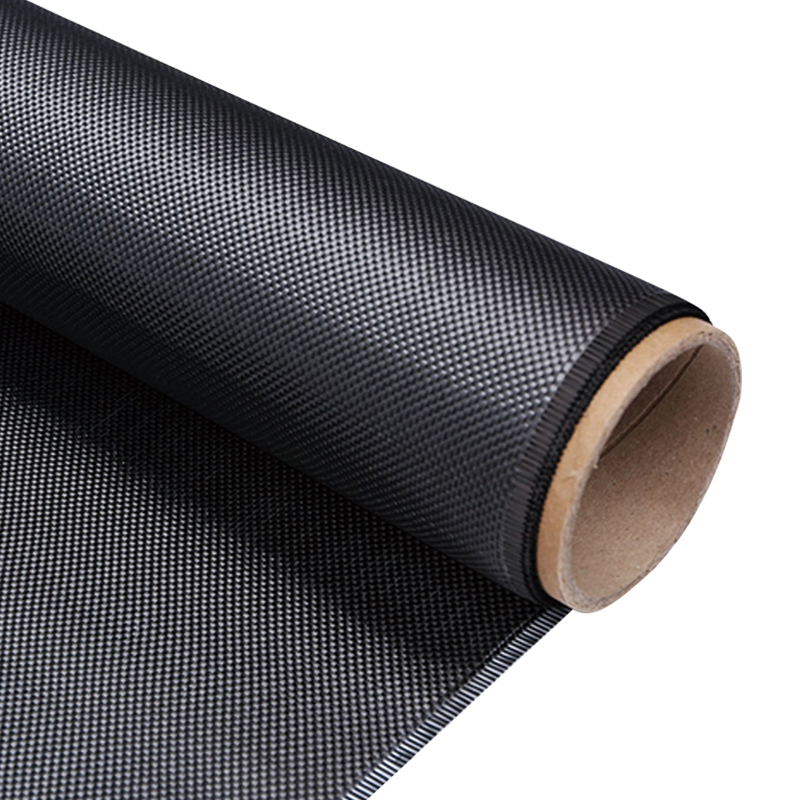
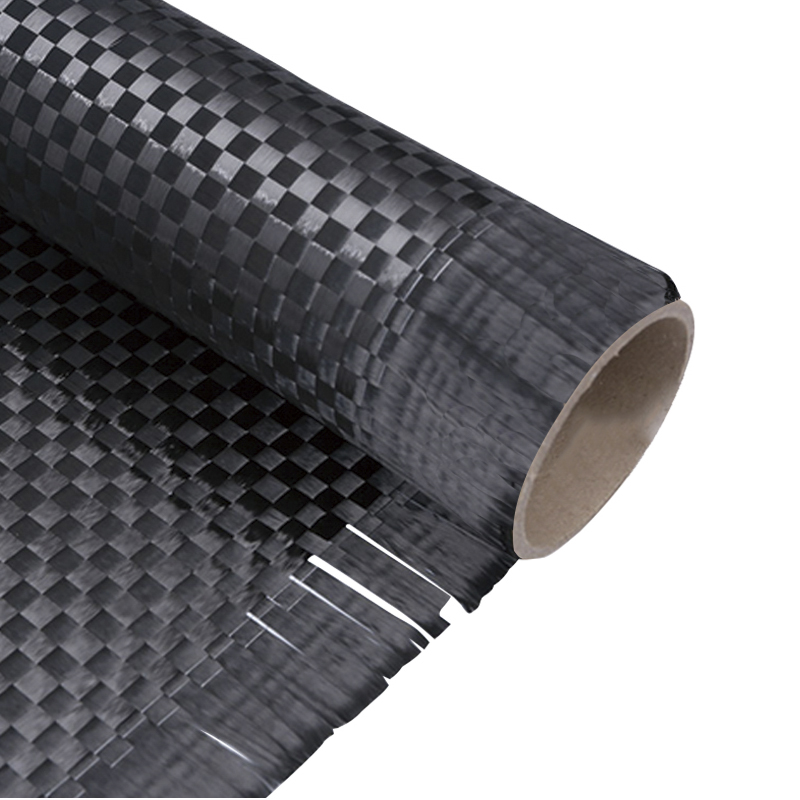
Plain weave is the default when dimensional stability and symmetrical properties matter more than deep draw. The 1/1 interlacing pattern creates the highest number of crossover points among woven architectures. That structure limits tow movement, improves cut-edge stability, and produces balanced warp and weft properties. The trade-off is crimp: every crossover forces the tow to bend, and that bend reduces the fiber's direct load contribution. Plain weave also resists draping over tight compound curves; it bridges, then wrinkles when pressure is applied.
Use plain weave for flat or gently curved panels, drone housings, battery pack enclosures, and thin laminates that need symmetrical properties. For flat structural panels, a carbon fiber woven fabric for composites with a 3K plain weave and 200 gsm areal weight is easier to control than a high-drape satin. The catalog from Jiangyin Dongli New Materials Technology Co., Ltd. includes 1K, 3K, and 12K plain weave options in 200 gsm and 240 gsm constructions, which gives production teams room to match ply count to tool curvature.
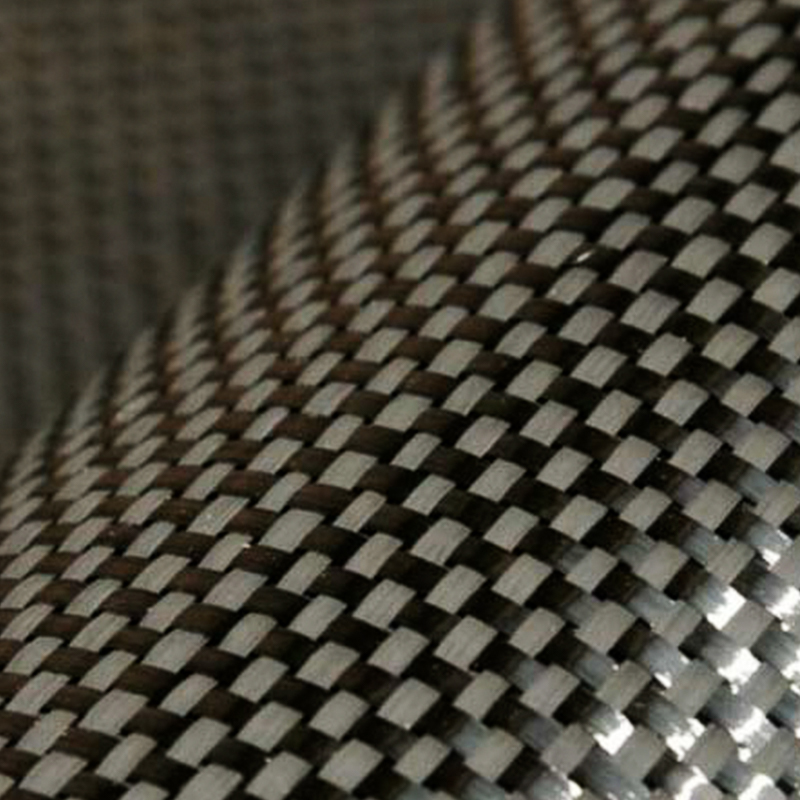 1K/3K/12K Carbon Fiber Plain Weave FabricSymmetric 0°/90° plain weave with 1K, 3K and 12K tow options, suited to flat or gently curved panels and thin laminates where balanced properties matter.View Product →
Plain weave is less forgiving on deep draws. If the tool has more than one curvature direction, cut a trial ply and check for bridging before releasing the layup sequence.
Twill weave: the production workhorse for compound curves
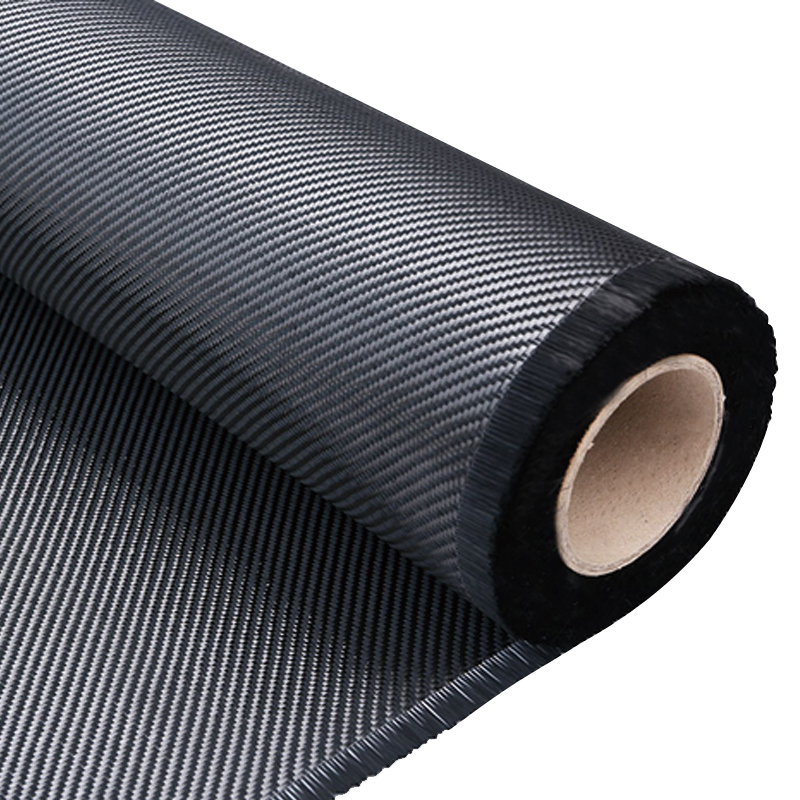
A 2x2 twill is the production workhorse when a manufacturer needs drape, impact tolerance, and a visible diagonal pattern in one laminate. The pattern passes two warp tows over two weft tows, which reduces crossover density compared with plain weave. The result is a fabric that conforms to compound curves with less wrinkling, while retaining enough stability for hand layup and vacuum bagging. Twill also keeps more fiber length in the load path than a high-crimp plain weave, which helps tensile and flexural performance in thin skins.
Common fits include automotive interior parts, upper spoilers, motorcycle underbody guards, drone shells, and sporting goods with cosmetic surfaces. A 3K twill in the 200 gsm to 240 gsm range is a practical starting point for parts that need both formability and a visible diagonal weave.
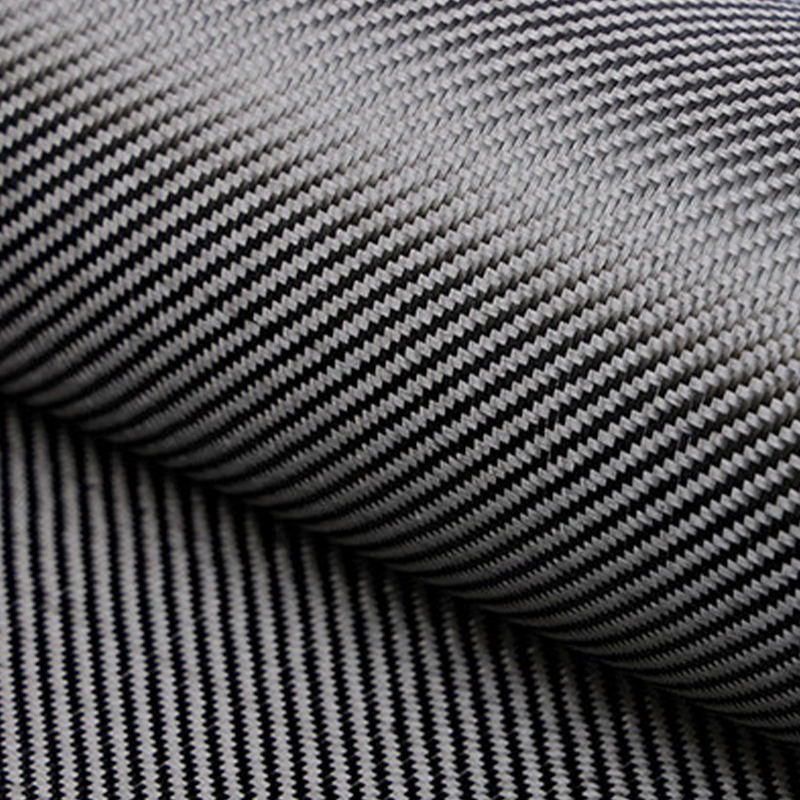 Abrasion- and High-Temperature-Resistant Carbon Fiber Twill Fabric2x2 twill weave in 3K/6K tows and 200–400 gsm, offering formability and a visible diagonal pattern for cosmetic and heat-resistant parts.View Product →
Plain weave wins when
- The part is flat or gently curved.
- Dimensional control matters more than drape.
- Cut edges must stay stable during handling.
Twill weave wins when
- The tool has compound curvature.
- The part needs impact tolerance and a cosmetic weave.
- Layup speed matters in production.
Satin weave: deep draws and smooth surfaces, with handling penalties
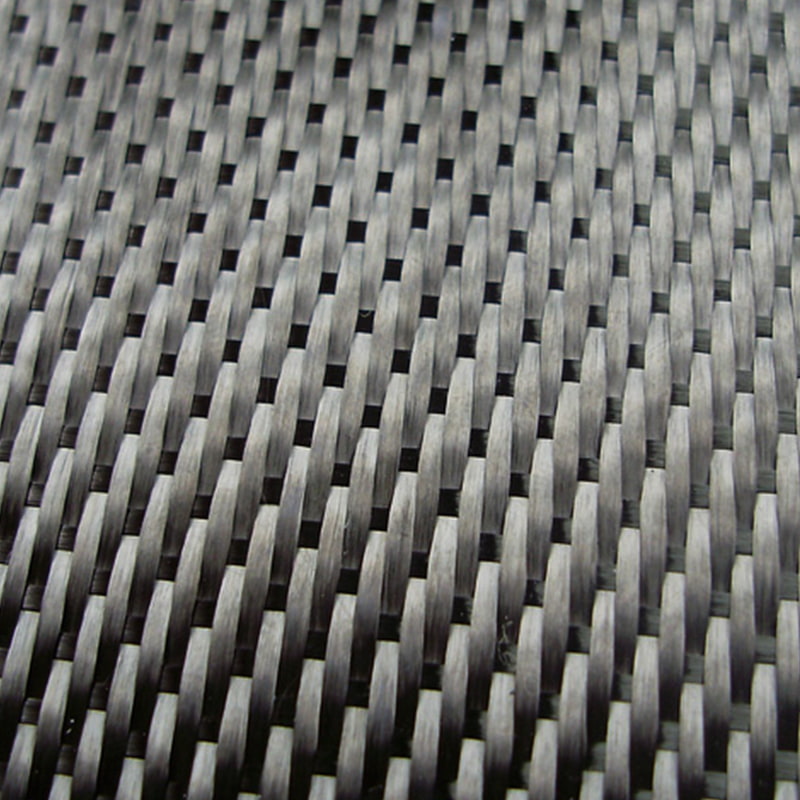
Satin weave delivers the highest drape and smoothest surface among woven carbon architectures, but it trades stability and damage tolerance. A 5HS or 8HS satin uses long floats, which reduce interlacing points and let the fabric shear into deep draws with fewer wrinkles. That same float length makes the fabric less stable during cutting and layup. Tows can shift, edges can fray, and surface print-through can appear after cure if the laminate is not consolidated carefully.
Use satin for deep cosmetic draws, large curved skins, and aerodynamic surfaces where a smooth finish is more important than edge damage tolerance. Avoid satin at sacrificial edges, bolted joints, and parts that see repeated handling before cure.
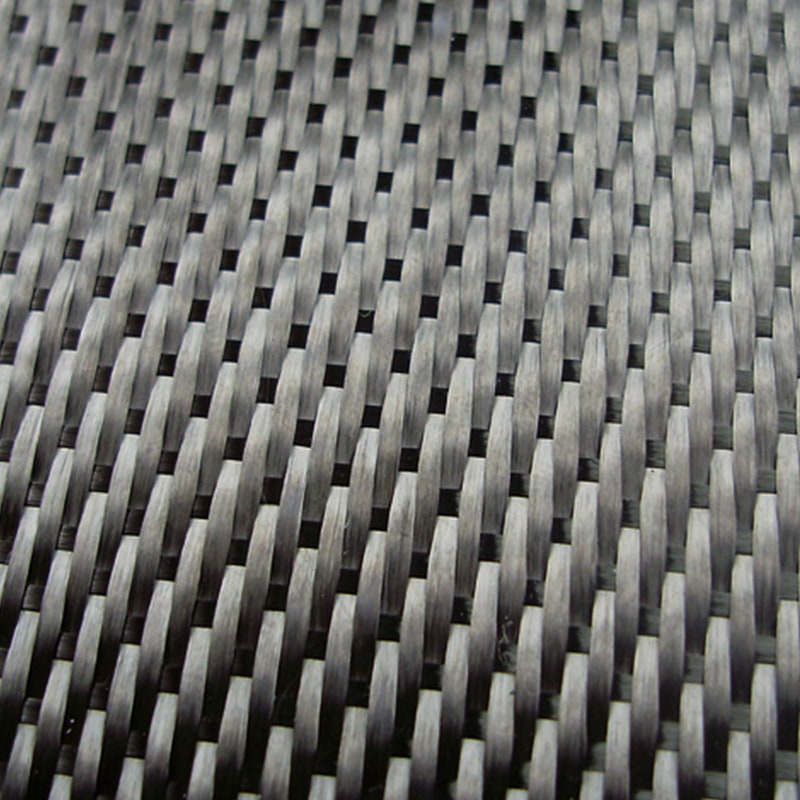 4H/8H Satin Carbon Fiber Weave Fabric4H/8H satin weave with 3K tow and 200–300 gsm, providing drape and smooth surfaces for complex cosmetic parts and chemical-resistant applications.View Product →
Satin weave has long unsupported floats. Cut plies with a sharp blade, stabilize edges, and control tack so tows do not shift during layup.
Unidirectional fabric: not a weave, but the strength benchmark
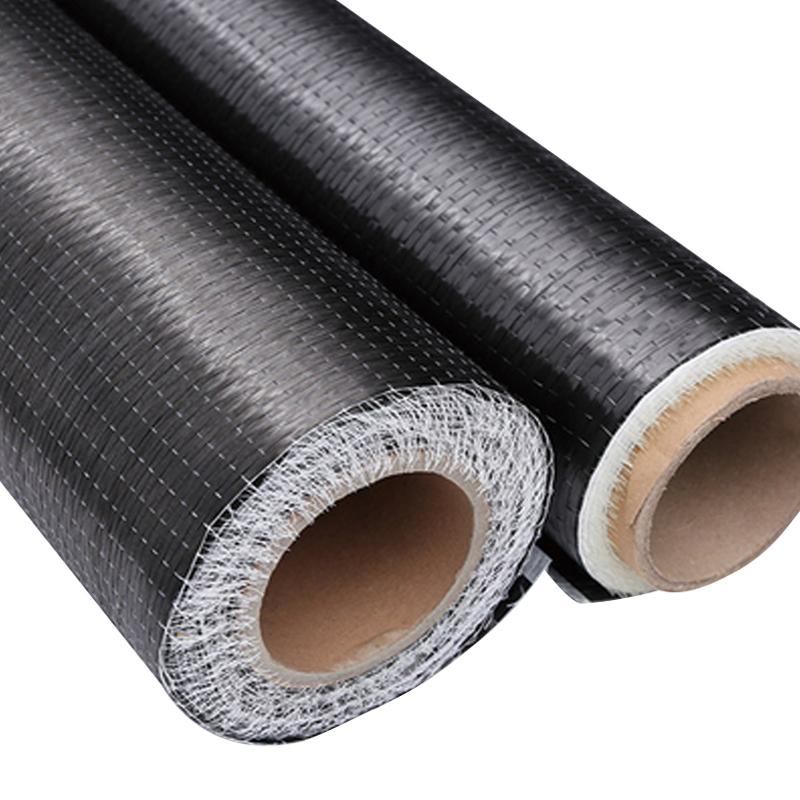
Unidirectional carbon fiber is not a weave, but it is the strength benchmark because it removes weave crimp from the load path. UD fibers run in one direction, so a 0-degree ply carries fiber-direction load, while a 90-degree ply carries little of that same load. That makes UD the efficient choice for spars, pressure vessels, drone arms, leaf springs, and any laminate where the ply book is designed around a known load case. UD is not a formability shortcut. It drapes along one axis and resists shear, so it needs a ply book with 0, 90, and plus or minus 45 orientations.
A 0-degree UD ply carries fiber-direction load; a 90-degree ply carries little of that same load. The ply book, not the fabric alone, defines strength.
For load-critical structures, specify unidirectional carbon fiber fabric as the structural layer and use a woven surface ply only where formability or cosmetic weave is required.
Compare weave architectures on the metrics that affect yield
Weave selection should be screened on five production metrics: drape, stability, crimp, surface quality, and load-path efficiency. The chart below is a qualitative architecture map, not a test result. Use it to narrow candidates, then confirm the choice with drape trials and laminate coupons.
| Architecture | Drape | Stability | Crimp | Best fit | Watch-out |
| Plain 1/1 | Low | High | High | Flat panels, enclosures, symmetrical skins | Bridging on compound curves |
| 2x2 Twill | Medium to high | Medium | Medium | Automotive interiors, drone shells, sports goods | Tow distortion on tight radii |
| 5HS Satin | High | Low to medium | Low | Deep draws, smooth cosmetic surfaces | Float damage and print-through |
| 8HS Satin | High | Low | Low | Large curved skins, tooling trials | Edge fraying and tow shifting |
| UD | Directional | High in fiber axis | None | Spars, pressure vessels, load-critical stacks | Weak off-axis without a ply book |
Use a qualification plan to lock the selection
A weave that passes a flat coupon can still fail at the mold, so qualification should combine drape trials, laminate coupons, and nondestructive inspection. The plan does not need to be large, but it must use the production resin and cure cycle. Otherwise the data will not predict wrinkle severity, void content, or surface quality.
- Cut a 300 mm x 300 mm ply and drape it over the tightest tool radius. Check for bridging, tow separation, and wrinkles.
- Mold a representative laminate with the production resin and cure cycle. Record fiber volume, void content, and thickness.
- Test tensile properties per ASTM D3039/D3039M and in-plane shear per ASTM D3518/D3518M. Use three coupons per condition as a minimum comparison set.
- Inspect cosmetic surfaces and use ultrasonic C-scan on structural parts before releasing the weave to production.
Three coupons per condition, one production tool trial, and one C-scan on a structural laminate.
Practical answers for production teams
The final selection rule is simple: match the weave to the mold first, then verify the laminate against the load case. A fabric that wrinkles on the tool will not reach its data-sheet strength, no matter how good the fiber properties look on paper.
Which weave gives the best balance of strength and formability?
A 2x2 twill in 3K tow is the practical starting point for compound-curve structural parts. It reduces crossover density versus plain weave and keeps more fiber length in the load path than a high-crimp plain weave. Verify the choice with ASTM D3039 tensile coupons and a drape trial on the production tool.
When should a manufacturer avoid satin weave?
Avoid satin when the part will see impact, edge loading, or repeated handling before cure. Long floats improve drape, but they also reduce interlacing points and can shift during layup. Use satin for deep cosmetic draws, not for sacrificial or highly loaded edges.
Does areal weight change the weave decision?
Yes. A 200 gsm fabric conforms more easily than a 240 gsm fabric of the same architecture because each ply is thinner. Heavier plies reduce layup count but increase resin movement and wrinkle risk on tight radii. Match areal weight to ply thickness and tool curvature, then confirm with a trial laminate.
How many fabric options should be tested before production?
Screen two architectures and one areal weight per architecture, then qualify one production candidate. A practical set is plain weave for stability, 2x2 twill for drape, and a satin only if the tool has a deep draw. Three coupons per condition is a minimum for a meaningful comparison.
If the ply wrinkles on the tool, the laminate will not reach its data-sheet strength. Fix formability first, then optimize fiber orientation and areal weight.
 +86-13961668677

 No. 61, Xingyuan Road, Jiefang Village, Gushan Town, Jiangyin City, Jiangsu Province, China.
