 Get In Touch
 English
 中文简体
 عربى
 Tiếng Việt

Content
Stiffness, toughness, and weight pull every composite purchase in different directions. A drone shell that must survive a hard landing, a hockey stick that takes slash after slash, and a protective panel facing open flame do not want the same cloth. That is why buyers keep two very different fabrics on the same shelf: carbon aramid fabric, the carbon-aramid hybrid weave, and pure aramid fiber fabric. Choosing between them starts with understanding what each one actually is.
What Is Carbon Aramid Fabric?
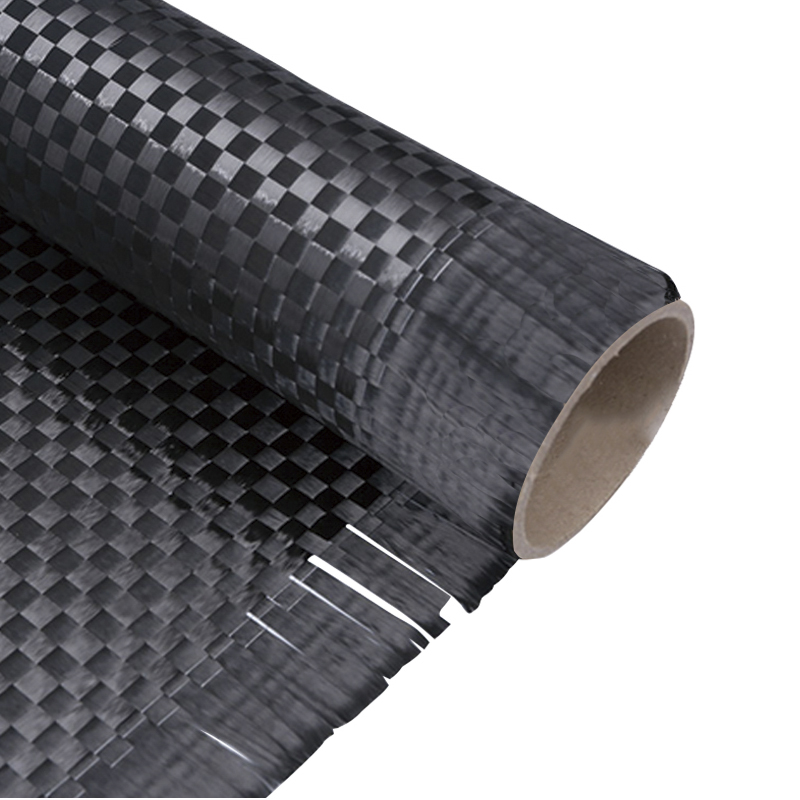
Carbon aramid fabric is a hybrid woven cloth that carries carbon fiber yarn and aramid yarn in the same weave, so a single ply delivers both stiffness and impact tolerance. Most commercial versions pair 3K carbon tow with 1000D or 1500D aramid yarn in plain or twill construction, and the two fibers keep their natural colors, which is why hybrid cloth shows the familiar black-and-gold look. Red-black and yellow-black football-pattern variants exist for parts where the weave itself is a design feature.
In a laminate, the carbon yarns carry bending loads and hold the part's shape, while the aramid yarns arrest cracks and absorb impact energy that would delaminate a pure carbon panel. That split personality is exactly why drone shells, motorcycle underbody guards, and automotive spoilers so often specify the hybrid.
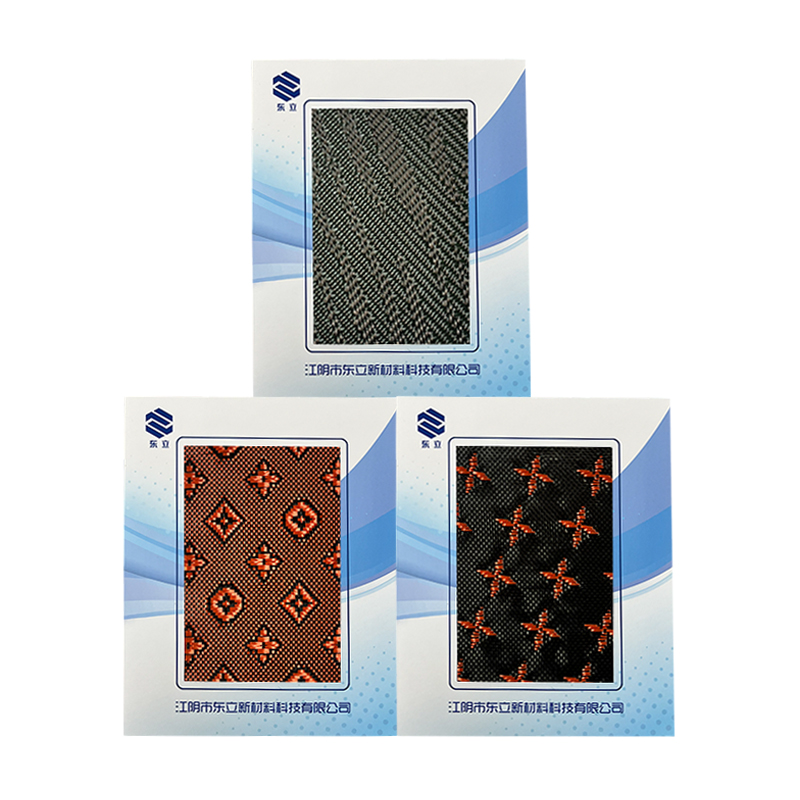 Aramid Carbon Hybrid Woven Fabric in Plain and Twill WeavesCombining 3K carbon yarns for stiffness with aramid fibers for toughness, this hybrid cloth balances bending strength and impact resistance. It suits hybrid laminate builds such as drone shells, guards, and spoilers where pure carbon panels risk delamination.View Product →
What Is Pure Aramid Fiber Fabric?
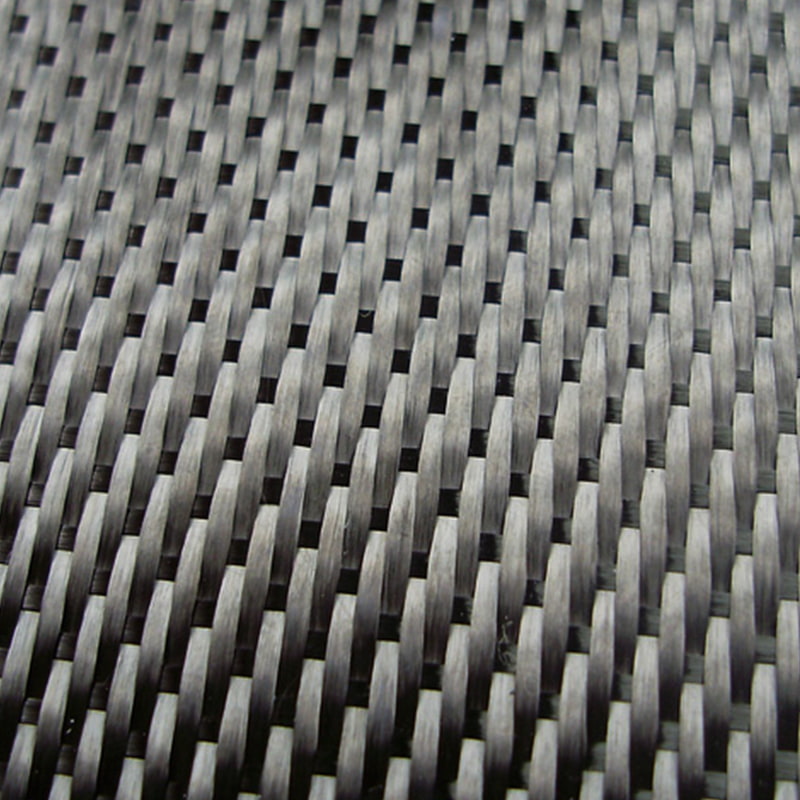
Pure aramid fiber fabric is woven entirely from aramid filaments, a family of aromatic polyamide fibers, with no carbon yarn anywhere in the structure. Para-aramid grades deliver tensile strength in the 3,000 MPa class at a density of just 1.44 g/cm3, while meta-aramid grades lean into inherent flame resistance. Either way, the fabric you get is tough, abrasion resistant, non-conductive, and remarkably good at damping vibration.
The trade-offs are real. Aramid absorbs moisture, dulls under long UV exposure, resists compression poorly, and is famously hard to cut cleanly. Where the service environment involves sustained heat or open flame, fiber-inherent resistance matters more than any of those drawbacks, and no carbon yarn is needed to get it.
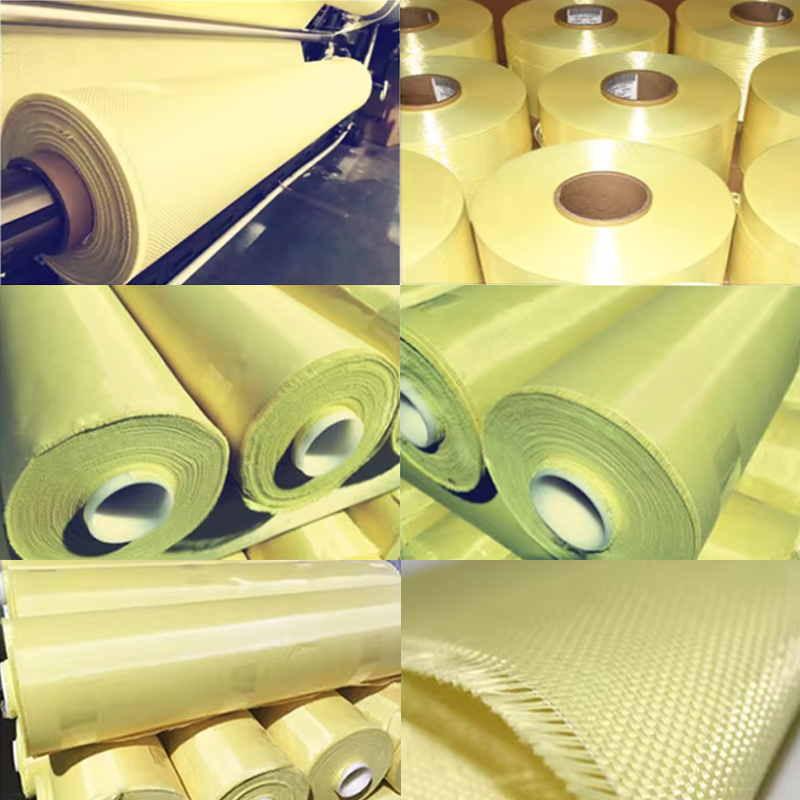 High Temperature and Flame Resistant Aramid Woven FabricWoven entirely from para- or meta-aramid fibers, this fabric keeps its integrity at continuous temperatures above 200°C without melting. It is worth considering where sustained heat or flame exposure makes fiber-inherent resistance more valuable than carbon's stiffness.View Product →
The Numbers That Decide the Choice
Density, modulus, compression behavior, and conductivity are the four numbers that separate these fabrics on a spec sheet. Aramid fiber runs about 1.44 g/cm3 against roughly 1.80 g/cm3 for carbon, which is why aramid laminates come out around 20 percent lighter at equal volume. Carbon pushes back with a tensile modulus several times higher, so hybrid cloth lands between the two on nearly every axis.
| Property | Carbon Aramid Hybrid | Pure Aramid Fabric | Pure Carbon Fabric |
| Density (g/cm3) | About 1.50 to 1.60 | 1.44 | 1.76 to 1.80 |
| Tensile modulus | Medium to high | Low to medium | Highest |
| Impact tolerance | Excellent | Excellent | Brittle under point load |
| Compression strength | Moderate | Low | High |
| Electrical behavior | Conductive | Insulating, low dielectric | Conductive |
| Heat and flame | Bound by resin choice | Inherent fiber resistance | Fiber non-flammable, resin-bound |
Where Each Fabric Wins
Match the fabric to the dominant load case: stiffness with moderate impact points to carbon aramid, while pure toughness, heat, or electrical insulation points to aramid on its own.
- Exterior shells take hits: drone canopies, underbody guards, crash-prone covers
- Body panels and spoilers need dent resistance without losing shape
- Sporting goods face repeated impact, such as hockey sticks and paddles
- The two-tone weave is part of the product's visual identity
- Parts face sustained heat, hot work, or open flame
- Abrasion and cut protection drive the design, as in liners and chafe strips
- Electrical insulation or radar transparency matters
- Vibration damping and fatigue life outrank stiffness
For consumer-facing products, the hybrid also solves a marketing problem: the football-pattern weave in yellow-black or red-black reads as performance material at a glance, which is why it appears on phone cases, luggage shells, and delivery boxes as often as on structural parts.
 Yellow and Black I-Beam Aramid Carbon Blend FabricThis hybrid weave interlaces yellow aramid with black carbon fiber, adding directional stiffness along the warp while retaining aramid's crack and impact resistance. Its striking yellow-black pattern also suits consumer products where visible performance aesthetics matter.View Product →
Procurement: Cost, Processing, and Supply
Budget for processing, not just the price per square meter. Two fabrics with similar laminate costs can land far apart once cutting, resin behavior, and scrap rates are counted.
- Cutting: aramid yarns resist shears and fuzz under standard blades, so plan for laser, waterjet, or dedicated blades; hybrids trim more predictably than pure aramid
- Resin wetting: carbon wets out quickly in epoxy, while aramid yarns demand careful impregnation to keep void content low
- Moisture: aramid absorbs water, so specify dry storage and pre-drying before layup or prepreg booking
- UV: shield aramid-rich surfaces from sunlight or hide them under an opaque outer ply
- Supply: confirm weave availability, roll widths, and areal weights before design freeze
Working with a supplier that controls weaving, prepreg, and finished-part molding under one roof shortens this loop. Jiangyin Dongli New Materials Technology Co., Ltd., for example, weaves carbon, aramid, and hybrid fabrics and forms them into parts across its 32,000-square-meter facility, so a weave change does not mean changing vendors. For a deeper checklist, see the technical buying specifications for carbon aramid fabric, or browse the full fabric portfolio to compare current options side by side.
Frequently Asked Questions
Is carbon aramid fabric stronger than pure aramid fabric?
It is stiffer, not simply stronger. Carbon yarns raise tensile modulus and hold shape under bending loads, while aramid keeps the tensile toughness, abrasion resistance, and impact behavior. In compression and point loading, carbon wins; under repeated impact, aramid fights back.
Does aramid fabric conduct electricity?
No. Aramid is an insulating polymer with a low dielectric constant, which is why it appears in electrical enclosures and radar-transparent structures. A carbon aramid hybrid does conduct, because the carbon yarn network forms a continuous path through the weave.
Can carbon aramid fabric run on a standard epoxy prepreg process?
In most cases yes. Hybrid cloth runs through the same epoxy prepreg lines and autoclave or press curing cycles used for carbon. Watch aramid resin wetting, control storage humidity, and plan trimming methods that handle aramid yarns cleanly.
Which weave should I order, plain or twill hybrid?
Plain weave gives the best dimensional stability for flat panels and frequently handled parts; twill drapes better over compound curves. When the cosmetic surface stays exposed, the football-pattern hybrid delivers the distinctive two-tone look without giving up the mechanical blend.
 +86-13961668677

 No. 61, Xingyuan Road, Jiefang Village, Gushan Town, Jiangyin City, Jiangsu Province, China.
