 Get In Touch
 English
 中文简体
 عربى
 Tiếng Việt

Content
- 1 Seven Fields Define a Carbon Fiber Fabric Roll
- 2 Tow Size and Weave Set Drape, Surface and Cost
- 3 Areal Weight Converts into Ply Thickness
- 4 Width, Roll Length and Core Size Carry the Commercial Risk
- 5 Fiber Grade and Sizing Decide Whether the Roll Wets Out
- 6 Five Checks Before the Roll Ships
- 7 Roll Specification Decisions in Brief
A purchase order that says only "3K twill, 200 gsm" leaves five roll-level fields unverified, and width is usually the first to fail: a converter nesting 1,000 mm plies from a roll supplied at 995 mm loses a full column of parts on every pass while the fabric itself stays perfectly good.
Roll purchasing fails on measurements far more often than on material science. The laminate may be designed correctly and the fiber grade may be right, but if areal weight, width, core size or sizing chemistry is missing from the contract, nobody is accountable when the roll will not run.
What follows is the specification set a carbon fiber fabric roll should carry before a PO is released, together with the test method or document that makes each field checkable. Jiangyin Dongli New Materials Technology Co., Ltd. weaves 1K, 3K and 12K carbon cloth across 10 production lines in a 32,000 sq m plant in Jiangyin, and the same seven fields apply whether a roll comes from that plant or from any other weaving mill.
Seven Fields Define a Carbon Fiber Fabric Roll
A complete roll specification carries seven values: tow size, weave, areal weight in gsm, width in mm, net roll weight with core diameter, fiber grade, and sizing chemistry. Any purchase order missing one of the seven transfers that decision back to the buyer.
Three of the seven fields appear on every quotation. The other four - net weight versus gross weight, core diameter, splice allowance and sizing type - usually appear only when the buyer asks for them, which is precisely why they are the fields that produce disputes at goods-in inspection.
Tow Size and Weave Set Drape, Surface and Cost
Tow size fixes the filament count in each bundle - 1K carries 1,000 filaments, 3K carries 3,000 and 12K carries 12,000 - and that single number drives surface smoothness and weaving cost per square meter more than any other roll field.
More filaments per bundle means fewer interlacing points across the same width, so the loom runs faster and the roll costs less per square meter, but the surface shows coarser bundle texture. A 12K plain weave at 200 gsm reads as visible bundle texture under clear coat; a 1K weave at the same areal weight reads as a fine, tight surface and costs several times more to weave.
| Construction | Drape over compound curves | Surface character | Typical areal weight | Best fit |
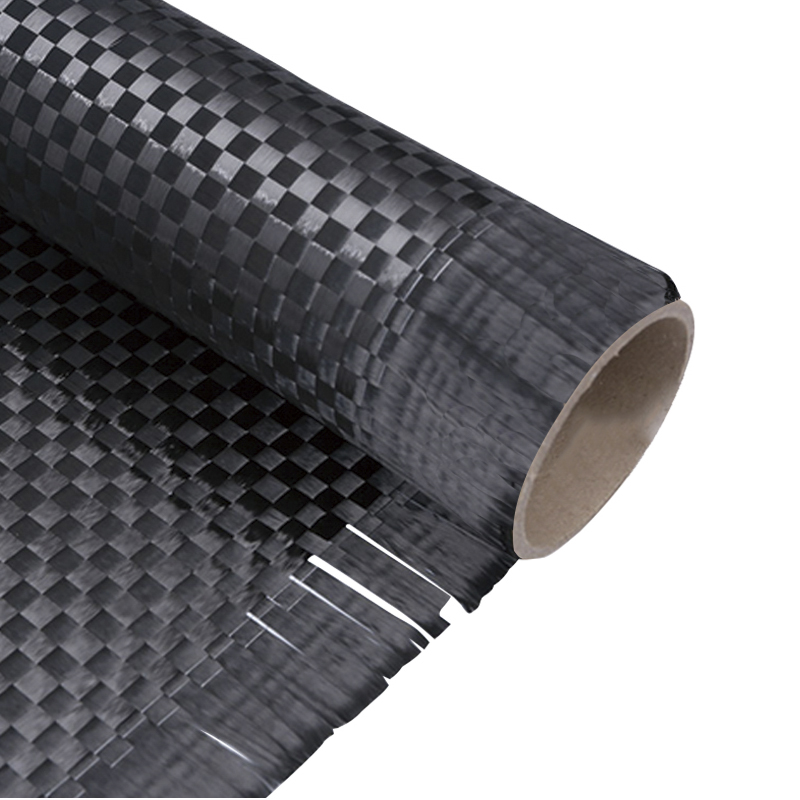
| Plain 1x1 | Lowest, most dimensionally stable | Tight check pattern, crisp lines | 90 to 200 gsm | Flat plates, cosmetic skins, thin laminates |
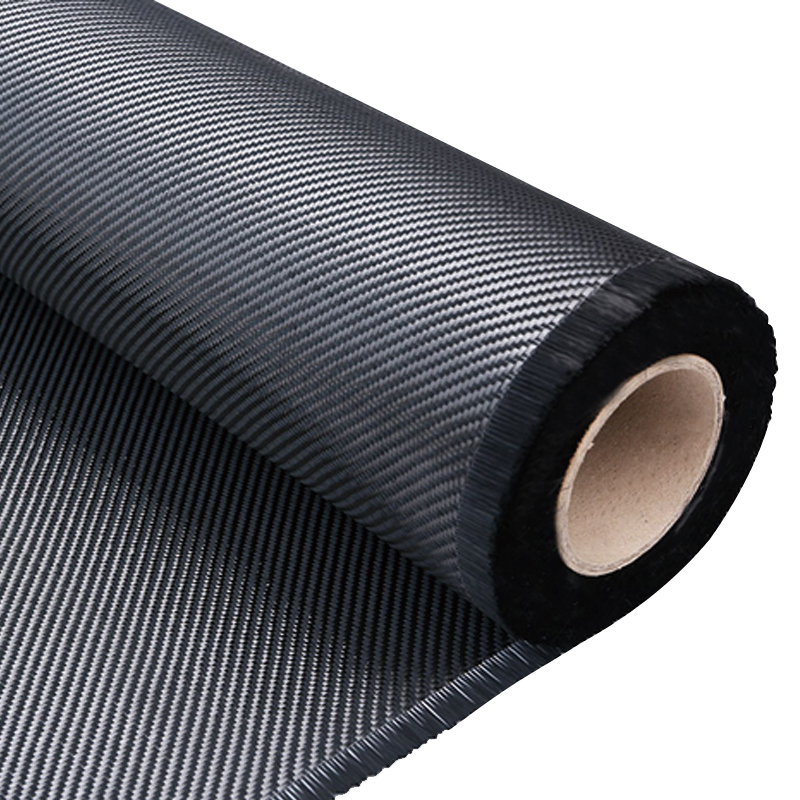
| 2x2 twill | Moderate | Diagonal lines, strong print-through | 200 to 300 gsm | Cosmetic panels, tubes, drone housings |
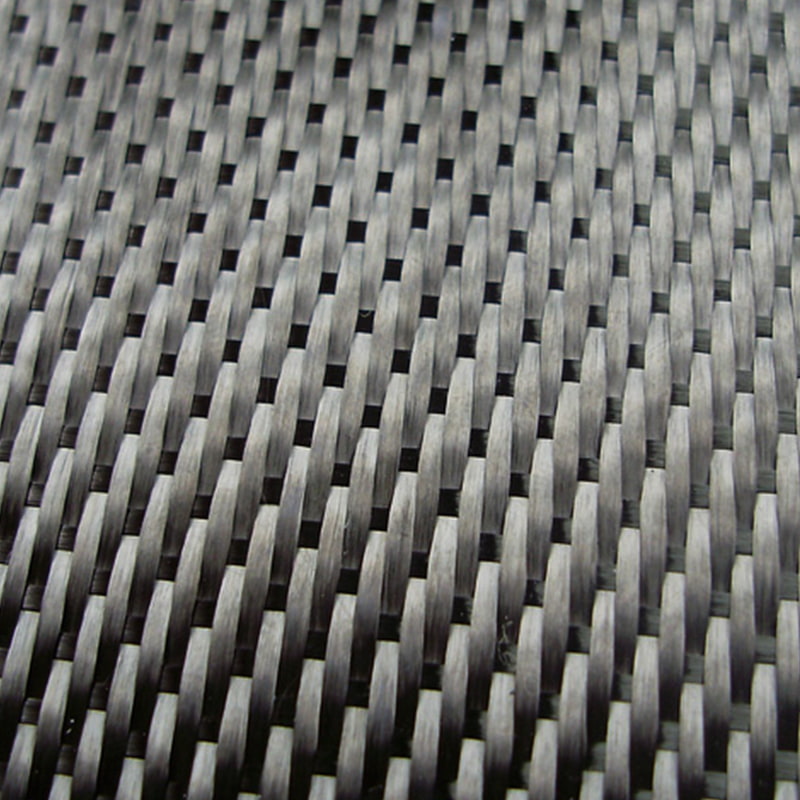
| 4H satin | Highest of the three | Low crimp, subtle grid, least print-through | 200 to 400 gsm | Compound curves, chemical service parts |
The practical split is blunt. Plain weave is the most stable construction and the weakest at draping, so it suits flat skins where the weave pattern is part of the finished product. Twill and satin lay longer floats across the surface, which lets the roll follow compound curvature with less wrinkling and fewer print-through marks on a clear-coated part.
Choose plain weave when
The part is flat or gently curved, the ply book stays at 0/90, and the visible weave is a design feature the customer will inspect at arm's length.
Choose twill or satin when
The mold has compound curvature, the stack exceeds eight plies, or low crimp matters more than dimensional stability during cutting.
For flat carbon skins, 3K plain weave at 200 gsm remains the default roll because it balances surface quality against weaving cost and is available in consistent lots. Buyers moving to a 1K surface usually do so for visible parts where the tighter pattern justifies the price step.
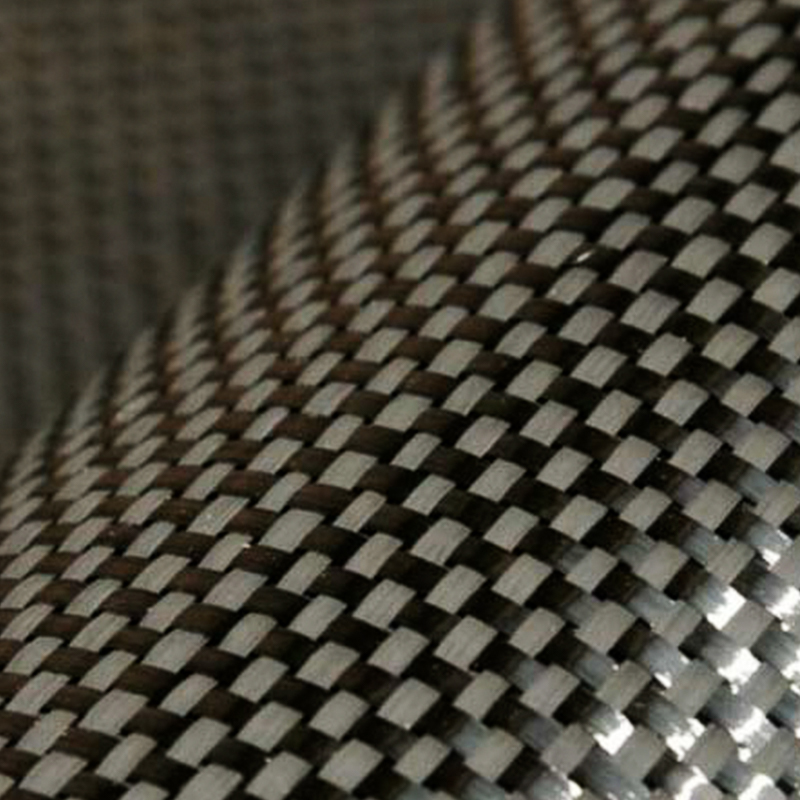 Custom 1K/3K/12K Plain Weave Carbon Fiber FabricCompare 1K, 3K, and 12K plain weave options by areal weight and cured ply thickness, with custom widths for flat skins and visible parts.View Product →
Areal Weight Converts into Ply Thickness
Areal weight converts to cured ply thickness by dividing fiber mass per unit area by fiber density times fiber volume fraction, so 200 gsm at 60% fiber volume and 1.80 g/cm3 fiber density gives roughly 0.19 mm per cured ply.
Estimated cured ply thickness per layer at 60% fiber volume
The arithmetic changes ply counts and layup labor. A 2 mm skin needs about 11 plies of 200 gsm cloth or 7 plies of 300 gsm, and every extra ply adds cutting, layup and debulk time to the part cost. It also changes how the tolerance is written: ASTM D3776 sets the method for mass per unit area but not an acceptance band, so the buyer must state the tolerance and the coupon count in the PO rather than assuming the standard defines a pass or fail.
Width, Roll Length and Core Size Carry the Commercial Risk
Width, roll length and core size are the fields most often left off a woven fabric PO, and they are the three that decide whether the roll can enter production at all.
Width is measured at three stations along the roll, head, middle and tail, because edge tension changes over a long run. Length is measured under controlled tension or replaced by net weight on a calibrated scale, which is why the core weight has to be declared separately. Splices deserve their own line: one unmarked splice in an automated cutting program becomes a stopped line.
| Field | Method or document | What to write into the PO |
| Areal weight | ASTM D3776 coupon weighing | 200 gsm with a stated tolerance and three-coupon sampling |
| Width | ASTM D3774, three stations | 1,000 mm with a 3 mm tolerance |
| Length and net weight | ASTM D3773 or calibrated scale | 100 m roll, net of core, gross and net both stated |
| Construction | COA plus visual check | 3K 2x2 twill at declared ends and picks |
| Sizing | Certificate of analysis | Sizing chemistry and add-on percentage |
| Fiber grade | Fiber datasheet | Tensile modulus and strength with grade designation |
| Splices | Supplier declaration | Maximum one splice per roll, taped and marked |
Fiber Grade and Sizing Decide Whether the Roll Wets Out
Standard-modulus carbon fiber runs at roughly 230 GPa tensile modulus and 3,500 MPa tensile strength, intermediate-modulus grades sit near 290 GPa, and high-modulus grades exceed 350 GPa, so grade designation belongs in the PO because two rolls woven from the same 3K tow can differ by more than 25% in stiffness.
Sizing is the second half of that sentence. The finish applied at the fiber plant is formulated for a resin family, and an epoxy-compatible sizing on a roll destined for phenolic tooling will wet out poorly no matter how the laminate is processed. Ask the certificate of analysis for sizing chemistry and add-on percentage, and treat a missing sizing line as an open technical question rather than a formality.
Where the roll feeds tooling surfaces or fixtures that see repeated abrasion and elevated cure cycles, a twill construction with an abrasion-resistant and high-temperature-resistant finish holds up better than a standard plain weave of the same weight.
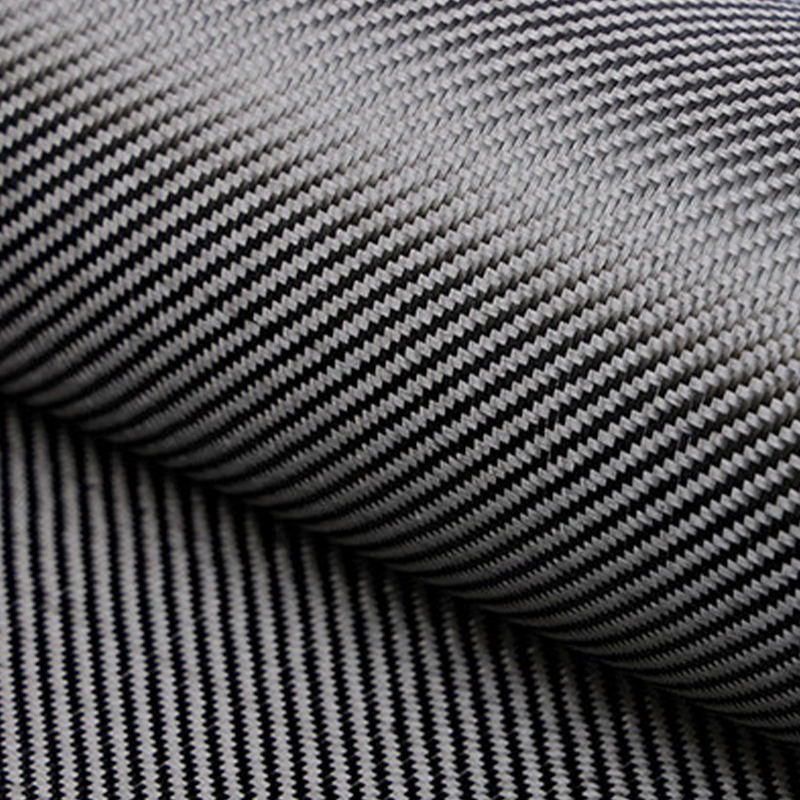 Abrasion- and High-Temperature-Resistant Carbon Fiber Twill FabricFor tooling surfaces and fixtures exposed to repeated abrasion and elevated cure cycles, this 2x2 twill fabric offers high-temperature sizing and wear resistance.View Product →
Five Checks Before the Roll Ships
Five checks - coupon weight, width at three stations, a visual scan, a core and splice audit, and a trial laminate - catch the roll-level defects that one look at the outer wrap will never reveal.
- Cut three 100 mm by 100 mm coupons from different positions in the roll, weigh to 0.01 g, and convert to gsm against the PO band.
- Measure width at head, middle and tail with the fabric relaxed, and record each reading rather than an average.
- Scan for broken filaments, fuzz, size streaks and resin patches, then check edge straightness along the full length.
- Audit core inside diameter, net weight against gross, splice count, and whether each splice is taped and marked.
- Laminate a trial panel with the production resin and cure cycle, then check wet-out and void content before releasing the balance of the order.
Run the trial on the construction you intend to buy, not a convenient substitute: satin weave where the part sees chemical exposure, plain weave where flat nesting matters. Sampling a satin roll for a chemical-service component is the only way to confirm that the resin and the surface finish behave together.
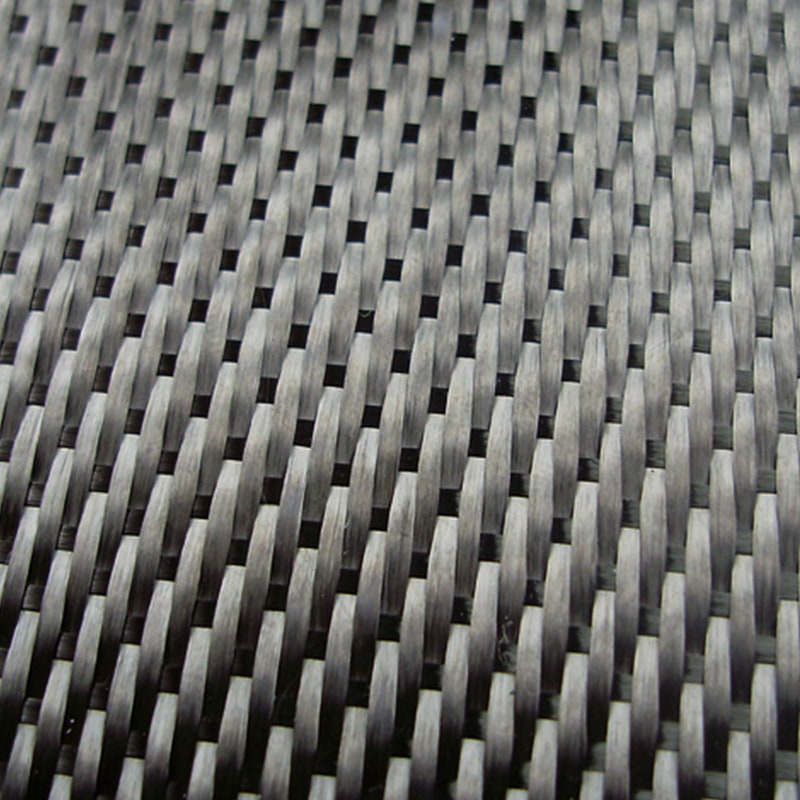 Corrosion- and Drug-Resistant Satin Carbon Fiber Weave FabricFor chemical-service parts and complex curved surfaces, this satin weave combines drapability with chemical-resistant sizing and tested solvent compatibility.View Product →
Roll Specification Decisions in Brief
What width tolerance should a carbon fiber fabric roll PO specify?
Write the nominal width plus a millimetre tolerance and require measurement at head, middle and tail under ASTM D3774. A 1,000 mm roll quoted at a 3 mm tolerance keeps automated nesting workable; an open "nominal 1,000 mm" wording does not, because the standard reports the measurement without setting the acceptance limit.
Does a 12K roll produce a weaker laminate than 3K?
Tow size alone does not set laminate strength; fiber grade and fiber volume fraction do. What changes is crimp and resin distribution: 200 gsm woven from 12K tow has fewer interlacing points and flatter bundles than the same weight in 3K, and the difference shows up in surface finish more than in tensile strength. Confirm with an ASTM D3039 tensile test on a laminate made with the production resin, not on a dry fabric datasheet.
How do I convert grams per square meter into ply thickness?
Divide areal weight in kg per square meter by fiber density times fiber volume fraction. At 1.80 g/cm3 and 60% fiber volume, 200 gsm gives 0.19 mm; at 50% fiber volume the same roll gives 0.22 mm. State the fiber volume fraction next to the thickness, otherwise the number cannot be checked by anyone else.
Which documents should arrive with each roll?
Four: a certificate of analysis keyed to the roll lot with areal weight, width, sizing chemistry and add-on percentage; the fiber datasheet with tensile modulus and strength; the test method references used for each measurement, such as ASTM D3776 for mass per unit area; and storage instructions. A roll without a lot number cannot be traced to production, which makes any later defect claim unenforceable.
 +86-13961668677

 No. 61, Xingyuan Road, Jiefang Village, Gushan Town, Jiangyin City, Jiangsu Province, China.
