 Get In Touch
 English
 中文简体
 عربى
 Tiếng Việt

Content
- 1 Areal Weight and Thickness Measure Two Different Things
- 2 Convert Areal Weight into Cured Ply Thickness
- 3 Weave Pattern and Tow Size Shift the Thickness
- 4 Thickness Tolerance Is Where Purchase Orders Fail
- 5 Build the Ply Schedule from Cured Ply Thickness
- 6 Numbers That Belong on the Specification Sheet
- 7 Sourcing Checks Beyond the Datasheet
- 8 Questions Buyers Ask Before Releasing a PO
A purchase order that reads only "200 g/m2 3K twill carbon fiber cloth" leaves three numbers undefined: dry thickness, cured ply thickness, and the fiber volume fraction that connects them. Get the third one wrong and a nominally 2.0 mm panel closes at 1.8 mm or 2.2 mm, which is enough to fail a fit check on a bonded insert and enough to send a batch back through rework.
The two figures industrial buyers quote most often, areal weight in grams per square metre and thickness in millimetres, belong to different measurement systems. One is gravimetric and tested to ASTM D3776. The other is dimensional and measured to ASTM D1777 under a defined presser foot load. This guide converts between them with the arithmetic that actually governs a ply schedule, then sets out the weave choices, tolerances and sourcing numbers that decide whether a laminate closes at the thickness on the drawing.
Areal Weight and Thickness Measure Two Different Things
Areal weight is a mass-per-area figure measured to ASTM D3776, while thickness is a dimensional figure measured to ASTM D1777 under a controlled load, and neither converts into the other without fiber density and fiber volume fraction.
ASTM D3776 covers mass per unit area of textile fabrics and is normally reported as g/m2 with a stated tolerance. ASTM D1777 defines dry thickness for textile materials measured with a presser foot under a specified pressure, which matters because a woven carbon fabric compresses. Measure the same 3K twill with a light foot and a heavy foot and the readings differ by several hundredths of a millimetre. Confirm the method before comparing thickness claims from two suppliers, because a 0.05 mm disagreement at goods-in becomes a 0.6 mm disagreement across twelve plies.
Standard-modulus carbon fiber has a density of 1.76 to 1.80 g/cm3 depending on grade, and 1.78 g/cm3 is the working value for most 3K and 12K woven goods. That is roughly 4.4 times lighter than steel at 7.85 g/cm3. Once resin is added, the cured laminate density moves toward 1.55 g/cm3 at 60% fiber volume fraction with an epoxy at 1.2 g/cm3, which is why prepreg mass and dry fabric mass are never interchangeable numbers on a drawing.
Convert Areal Weight into Cured Ply Thickness
At 60% fiber volume fraction, a 200 g/m2 carbon fabric produces a cured ply of 0.187 mm, and a 300 g/m2 fabric produces 0.281 mm.
Run the example. Take 200 g/m2, divide by 1,780 and the result is 0.112 mm of solid fiber. Divide by 0.60 and the ply is 0.187 mm. Change the fiber volume fraction to 0.55 and the same cloth gives 0.204 mm, a 9% swing produced by resin content alone. That is the single most common source of thickness error in industrial laminates, and it is invisible on any fabric datasheet that lists only areal weight.
The table below converts the areal weights that appear most often in industrial purchase orders. Dry thickness is the value a goods-in inspector measures with a calliper. Cured ply thickness is the value the design engineer adds up.
| Construction | Areal weight | Dry thickness | CPT at 55% FVF | CPT at 60% FVF |
| 1K plain weave | 90 g/m2 | 0.10 mm | 0.09 mm | 0.08 mm |
| 3K plain weave | 200 g/m2 | 0.22 mm | 0.20 mm | 0.19 mm |
| 3K 2/2 twill | 240 g/m2 | 0.26 mm | 0.25 mm | 0.22 mm |
| 12K 2/2 twill | 300 g/m2 | 0.34 mm | 0.31 mm | 0.28 mm |
| 12K plain weave | 400 g/m2 | 0.44 mm | 0.41 mm | 0.37 mm |
| 12K 2/2 twill | 600 g/m2 | 0.68 mm | 0.61 mm | 0.56 mm |
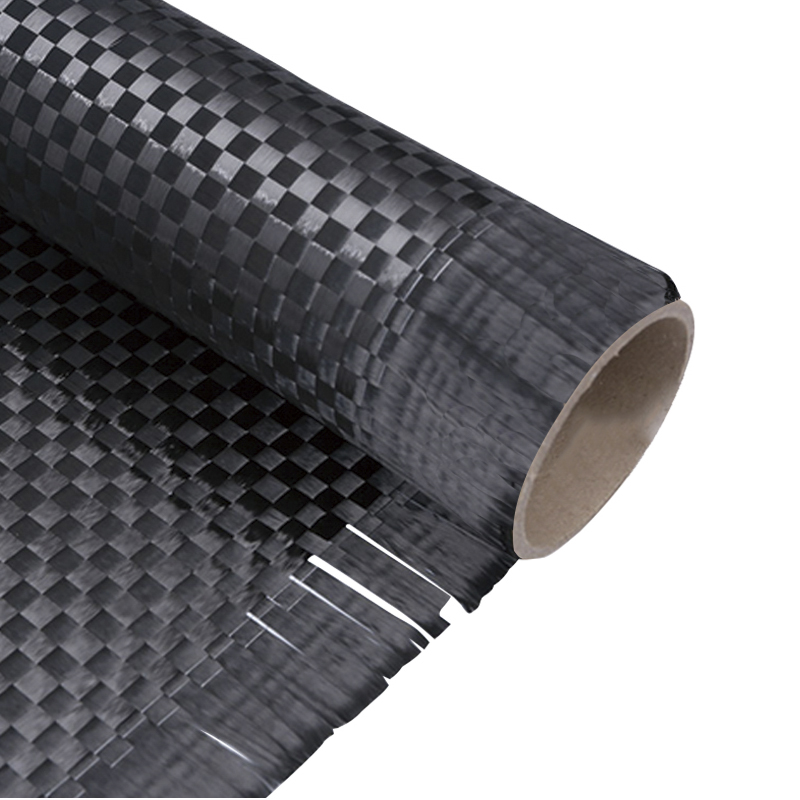
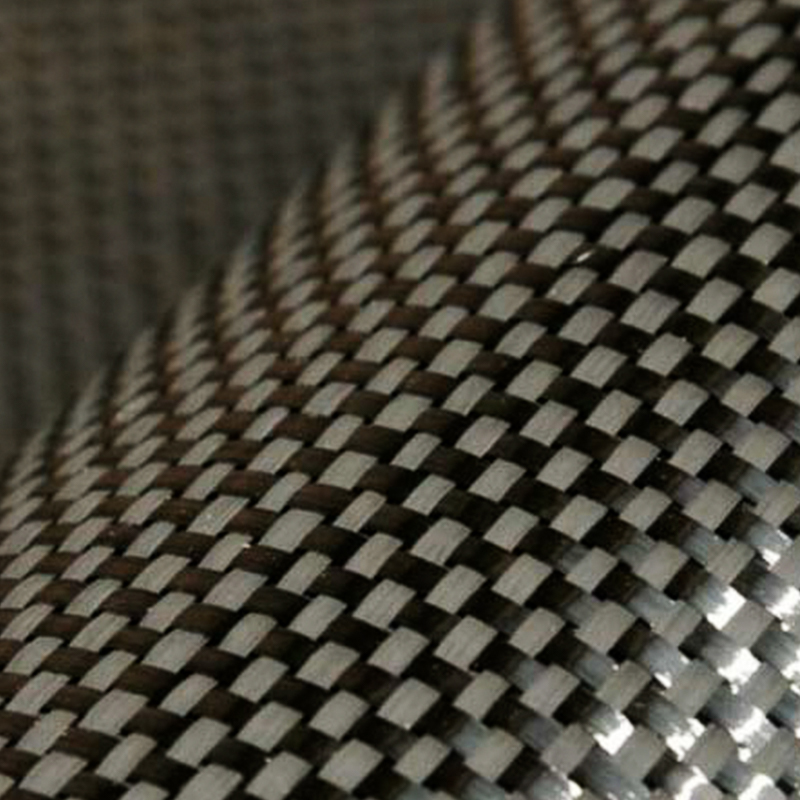 1k/3k/12k Carbon Fiber Plain Weave Fabric1K, 3K, 12K carbon fiber plain weave fabrics are high-performance textile materials made from carbon fiber. Plain weave fabrics are woven in alternating warp and weft,...View Product →
Mass follows the same arithmetic. At 60% fiber volume fraction, one ply of 200 g/m2 fabric adds 290 g/m2 to the finished laminate, so an eight-ply skin weighs 2.32 kg/m2 before coatings, inserts or fasteners are counted. Buyers who track mass per ply rather than mass per roll rarely get surprised at the weighing station.
Weave Pattern and Tow Size Shift the Thickness
Two fabrics with an identical 200 g/m2 areal weight but different weave geometry do not always close at the same cured thickness, because crimp, interlacing and tow width change how the plies nest under vacuum.
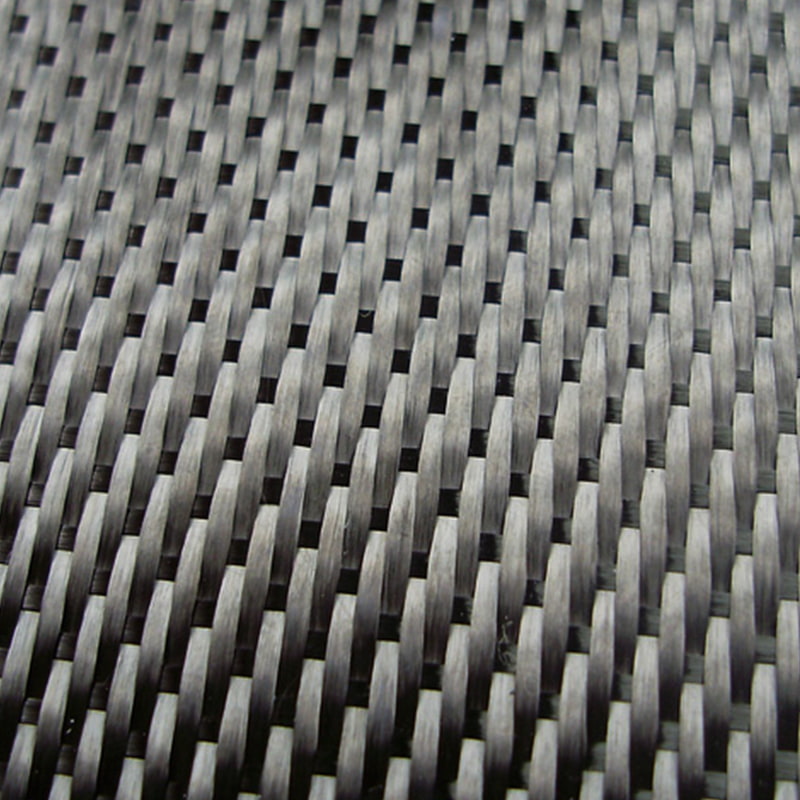
Tow size matters more on visible parts than on load paths. A 1K tow carries 1,000 filaments, a 3K tow carries 3,000 and a 12K tow carries 12,000. Moving from 3K to 12K at the same areal weight coarsens the surface texture, reduces the number of interlacing points per unit area and lowers weaving cost per square metre, but it also raises the minimum bend radius. For thin cosmetic skins where a fine marbled pattern is specified, a 1K plain weave at 90 to 100 g/m2 remains the reference construction. For a full comparison of drape behaviour across plain, twill and satin, see this weave selection guide.
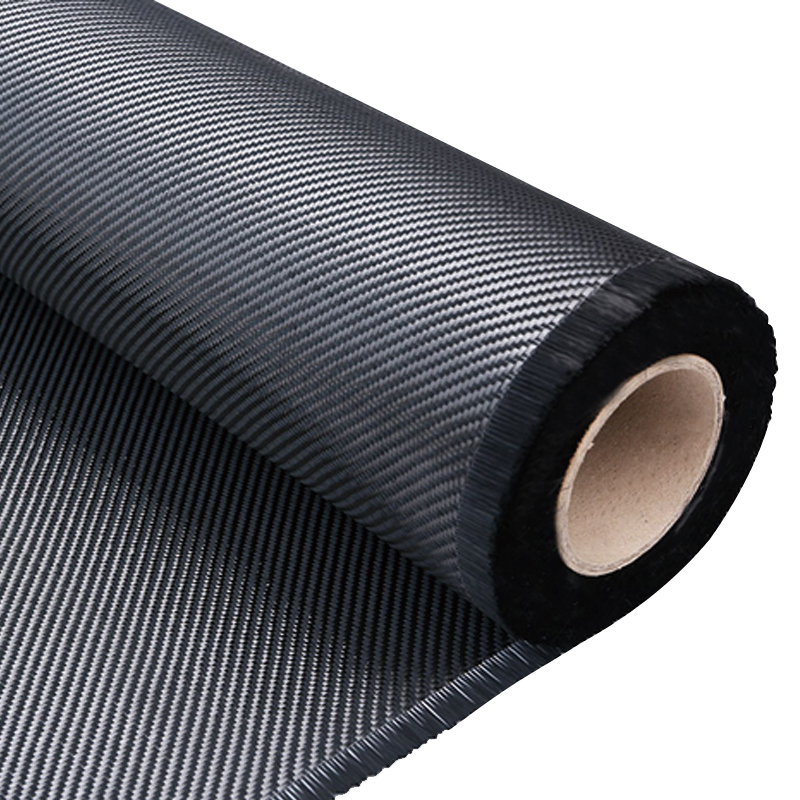
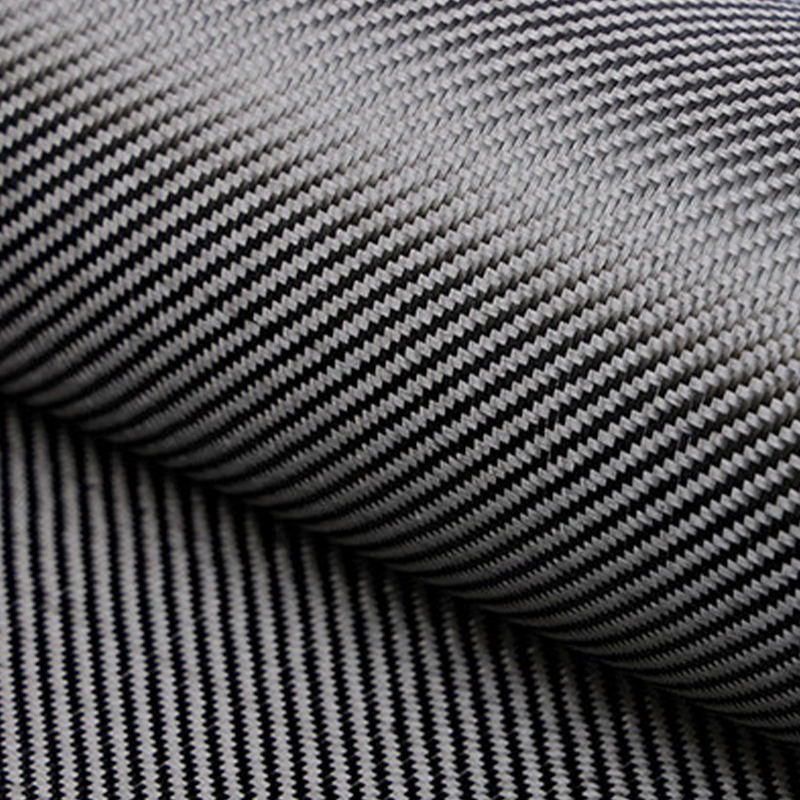 Abrasion-Resistant And High-Temperature-Resistant Carbon Fiber Twill Weave FabricWear-resistant and heat-resistant carbon fiber twill weave fabric is made of carbon fiber yarns woven by the twill process. It has the properties of wear resistance, t...View Product →
Consolidation removes thickness that the dry arithmetic never accounts for. Between 3% and 5% of nominal dry thickness disappears when plies compact under vacuum, so a twelve-ply 200 g/m2 stack targeted at 2.25 mm usually lands a few hundredths below the sum. This is precisely why ply schedules are written in whole plies and why drawing tolerances for hand layup are set at plus or minus 0.2 mm or wider.
Thickness Tolerance Is Where Purchase Orders Fail
Dry thickness on a woven carbon fabric varies by up to 10% between rolls, while cured ply thickness from a qualified prepreg holds within about 5%, and that gap is the reason goods-in inspection exists.
- Cut a 100 mm x 100 mm coupon and weigh it to ASTM D3776. A 200 g/m2 fabric should return 2.00 g, and a plus or minus 3% acceptance band is a workable commercial limit.
- Take five thickness readings to ASTM D1777 at the stated presser foot load, one at the centre and four at the quarter points, and record the mean and the range rather than a single number.
- Cure one four-ply panel and measure fiber volume fraction and void content to ASTM D3171. Void content above 2% typically shows up as a measurable drop in interlaminar shear strength.
- Determine resin content by ignition loss to ASTM D2584. A five-point resin swing on a 200 g/m2 prepreg moves cured ply thickness by roughly 0.02 mm.
Build the Ply Schedule from Cured Ply Thickness
An eight-ply stack of 200 g/m2 carbon fabric at 60% fiber volume fraction produces a 1.50 mm laminate, while a 2.0 mm target needs eleven plies of the same cloth or seven plies of 300 g/m2.
| Target thickness | 200 g/m2 at 0.19 mm/ply | 300 g/m2 at 0.28 mm/ply | 600 g/m2 at 0.56 mm/ply |
| 1.5 mm | 8 plies / 1.52 mm | 5 plies / 1.40 mm | 3 plies / 1.68 mm |
| 2.0 mm | 11 plies / 2.09 mm | 7 plies / 1.96 mm | 4 plies / 2.24 mm |
| 2.5 mm | 13 plies / 2.47 mm | 9 plies / 2.52 mm | 4 plies / 2.24 mm |
| 3.0 mm | 16 plies / 3.04 mm | 11 plies / 3.08 mm | 5 plies / 2.80 mm |
Two rules shorten this work. First, round up rather than down when the laminate is structural, because a 2.0 mm target with 300 g/m2 fabric lands at 1.96 mm with seven plies and 2.24 mm with eight, so the choice is a stiffness decision rather than a rounding exercise. Second, keep the stack symmetric about the mid-plane, since an unbalanced laminate warps during cure and the warp usually exceeds the thickness tolerance it was meant to protect.
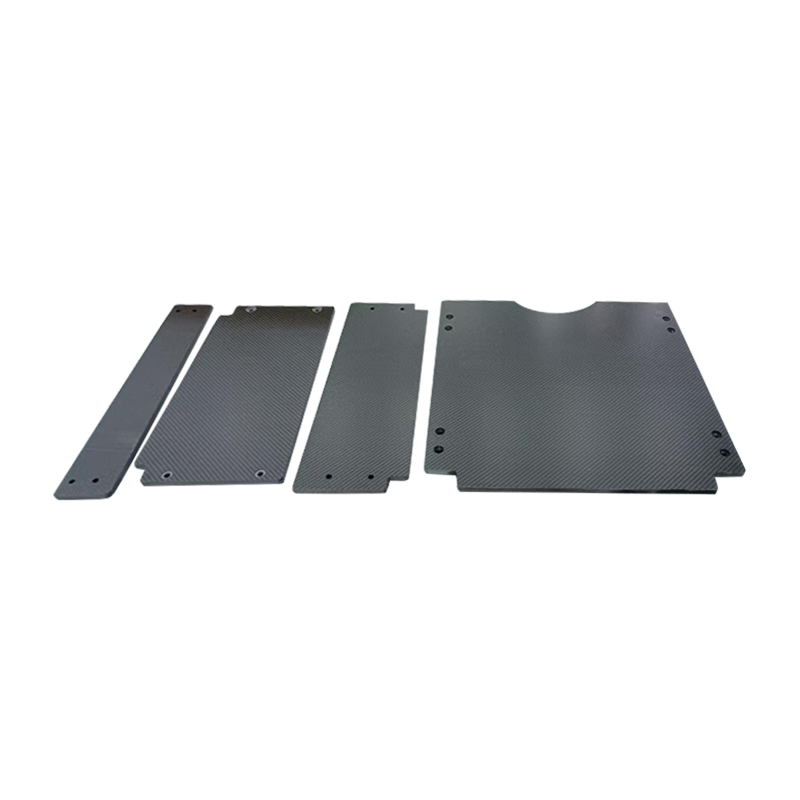 25-250 Thickness, Lightweight Yet Rigid Carbon Fiber Sheet/Panels/Plate1.It can be used as covers and bottom plates for drones, lightweight yet rigid.View Product →
Heavier fabric reduces layup labour per millimetre. Moving from 200 g/m2 to 600 g/m2 cuts the ply count for a 3.0 mm laminate from sixteen to five, which removes eleven handling steps and eleven chances to trap a wrinkle. That labour saving is the real commercial argument for a heavier cloth, not the material price per kilogram.
Numbers That Belong on the Specification Sheet
Six parameters control whether a carbon fiber cloth order will run in production: areal weight, dry thickness, resin content, fiber volume fraction, void content and roll width.
| Parameter | Working band | Test method | Why it matters |
| Areal weight | 200 g/m2 plus or minus 3% | ASTM D3776 | Sets ply mass and ply count |
| Dry thickness | 0.22 mm plus or minus 10% | ASTM D1777 | Goods-in check and tooling clearance |
| Resin content | 33-42% by weight | ASTM D2584 | Determines fiber volume fraction |
| Fiber volume fraction | 55-62% | ASTM D3171 | Drives cured ply thickness and allowables |
| Void content | 2% maximum | ASTM D3171 | Interlaminar shear strength |
| Roll width | 1000, 1270 or 1500 mm | Measured at goods-in | Cutting yield and scrap rate |
A specification that states only "200 g/m2" will pass inspection and still fail production. Add the resin content band and the fiber volume fraction target and the supplier has a defined process window rather than a mass target, which is the difference between a repeatable laminate and a negotiation every shipment.
Sourcing Checks Beyond the Datasheet
Roll width decides cutting yield before price does: on a 1000 mm roll a part nesting at 940 mm leaves 60 mm of scrap, while the same part on a 1270 mm roll leaves 330 mm, a 26% loss across the roll.
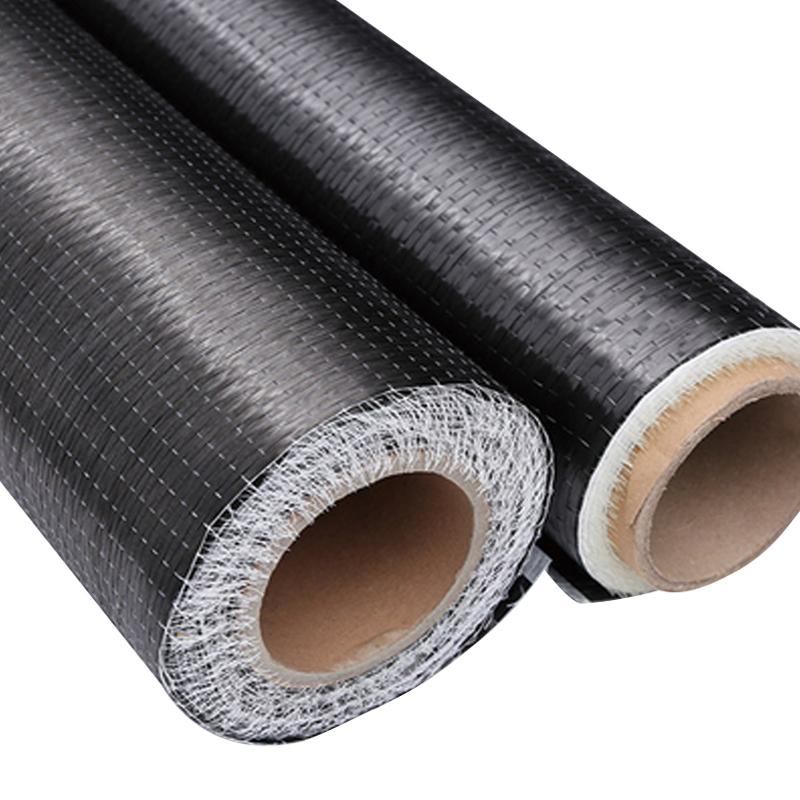
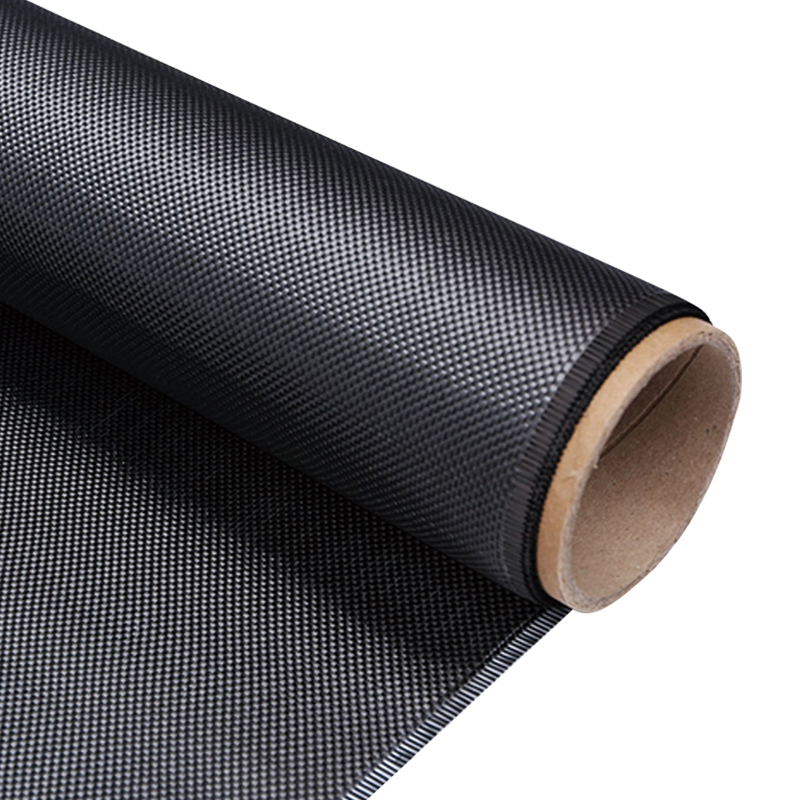
Standard roll widths for woven carbon fabric are 1000 mm, 1270 mm and 1500 mm, with 50 m and 100 m roll lengths. A 100 m roll of 200 g/m2 fabric at 1000 mm width carries 20 kg of dry fiber, which is also the number that drives freight, racking and humidity-controlled storage planning. Width and weight selection for automotive programmes is covered in more depth in this weight and width selection article.
Jiangyin Dongli New Materials Technology Co., Ltd., trading as Dongli New Materials, runs its weaving and prepreg operations from a 32,000 m2 plant in Jiangyin with temperature-controlled weaving halls and a Class 100,000 cleanroom, supported by 24 technical staff and 10 production lines. Its process list covers autoclave, RTM, RMCP, PCM, WCM and spray moulding for downstream parts, which matters to buyers who want the fabric, the prepreg and the finished panel governed by one process owner instead of three.
Questions Buyers Ask Before Releasing a PO
How thick is one ply of carbon fiber cloth?
One ply of 200 g/m2 3K twill measures about 0.22 mm dry and 0.19 mm cured at 60% fiber volume fraction. A 300 g/m2 12K fabric measures 0.34 mm dry and 0.28 mm cured, and a 600 g/m2 12K fabric measures about 0.68 mm dry and 0.56 mm cured.
Does heavier carbon fiber cloth always give a stronger laminate?
No. Strength and stiffness per unit thickness follow fiber volume fraction and fiber orientation, not areal weight. A 600 g/m2 cloth builds 0.56 mm per ply and cuts layup labour sharply, but the heavier tow leaves more crimp and waviness at the crossing points, and compressive strength is the property most sensitive to that waviness.
What tolerance should I accept on areal weight?
Specify plus or minus 3% on mass per unit area to ASTM D3776 and plus or minus 10% on dry thickness to ASTM D1777. For cured parts, hold cured ply thickness within plus or minus 5% and verify fiber volume fraction to ASTM D3171 on a cured coupon rather than on dry fabric.
How many plies do I need for a 2 mm carbon fiber panel?
Eleven plies of 200 g/m2 fabric give 2.09 mm at 60% fiber volume fraction, and seven plies of 300 g/m2 give 1.96 mm. Add 0.05 to 0.10 mm per coated face if the panel is painted or clear-coated, and confirm the drawing tolerance before rounding a ply count down.
 +86-13961668677

 No. 61, Xingyuan Road, Jiefang Village, Gushan Town, Jiangyin City, Jiangsu Province, China.
