 Get In Touch
 English
 中文简体
 عربى
 Tiếng Việt

Content
Carbon epoxy prepreg and dry carbon fiber fabric are often compared as if they were two competing fabrics. In reality, they are two competing manufacturing systems. A prepreg roll carries a factory-metered resin content that cures into a void-free, high-stiffness laminate. A dry fabric carries no resin at all, relying on your infusion process to deliver the matrix at the moment of molding. Neither system is universally superior; each is optimized for a specific production envelope. At Jiangyin Dongli New Materials Technology Co., Ltd., the production floor both weaves carbon fabrics and meters epoxy prepreg, which puts this comparison into a material-to-part perspective.
Prepreg buys repeatability. Dry fabric buys tooling freedom. The right choice depends on your certification requirements, production volume, and capital equipment.
What Is Carbon Epoxy Prepreg?
Carbon epoxy prepreg is the standard route for structural parts when dimensional stability and mechanical consistency cannot be compromised.
Carbon epoxy prepreg is a semi-finished composite material in which carbon fiber reinforcement is pre-impregnated with a metered epoxy resin system, then partially cured to a tacky, workable state.
The resin-to-fiber ratio is set at the prepreg manufacturing facility and does not change between batches. This is why prepreg laminates can reach a fiber volume fraction of 60-65 percent and a void content below 1 percent. It removes the largest variable in composite production: hand-dosed resin mixing.
Production demands a controlled chain: storage at -18 degrees Celsius, thawing, cutting and lay-up, then curing in an autoclave or an out-of-autoclave (OOA) oven. The freezer constraint is real, but the mechanical payoff is straightforward.
- Factory-metered resin content ensures batch-to-batch consistency
- Fiber volume fraction of 60-65 percent delivers high stiffness
- Void content below 1 percent supports fatigue-critical aerospace loads
- Tool-side surface finish is excellent, reducing post-mold finishing
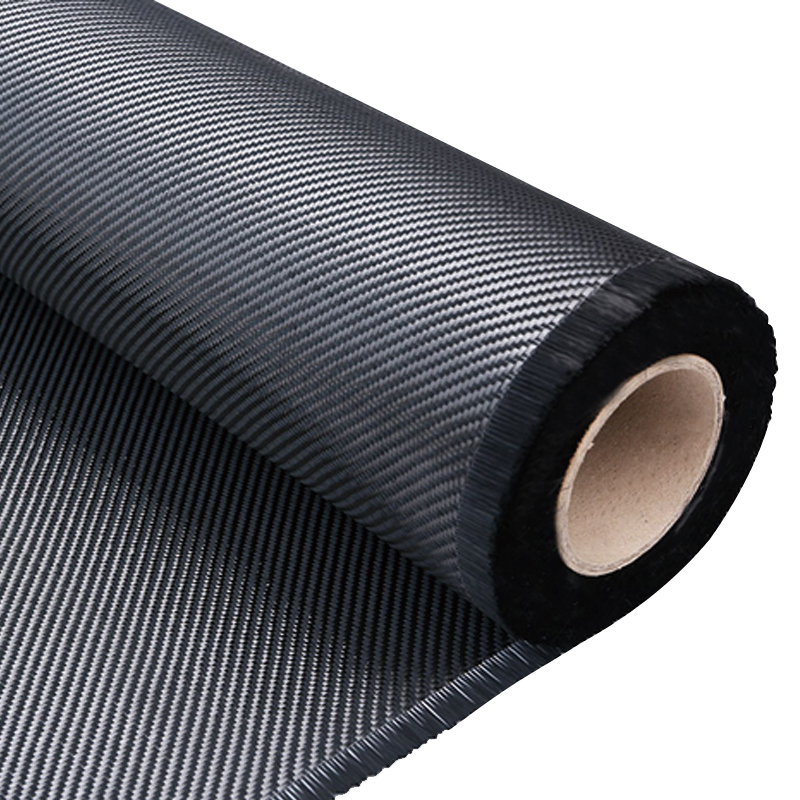
 Controlled Resin Epoxy Carbon Fiber Prepreg for Structural CompositesThis prepreg offers a precise resin-to-fiber ratio and consistent mechanical performance, ideal for applications requiring controlled curing and high strength, as discussed in the section on production chains.View Product →
What Is Dry Carbon Fiber Fabric?
Dry carbon fiber fabric is the reinforcement-only route for anyone who wants to select the resin system after the fiber has been purchased.
Dry carbon fiber fabric is a woven or unidirectional carbon reinforcement with no pre-applied resin; the matrix is introduced during part production through resin transfer molding (RTM), vacuum-assisted resin transfer molding (VARTM), or hand lay-up.
Because there is no resin at delivery, dry fabric can be stored at ambient temperature without the six-month freezer clock that governs prepreg. You also choose the resin at the moment of production, which opens the door to flame-retardant, low-density, or ultra-tough matrix systems. The tradeoff is that resin-to-fiber ratio is controlled by your operator and your infusion setup, not by the material supplier.
Fiber volume fraction typically lands at 50-58 percent, and void content varies from 1 to 3 percent depending on infusion discipline. Tooling can be lower cost because infusion pressures are low, so composite molds and lightweight tooling plates are acceptable.
- Ambient-temperature storage with indefinite shelf life
- Open freedom for resin selection at the molding stage
- Lower raw material cost per square meter
- Low-pressure tooling options reduce initial investment
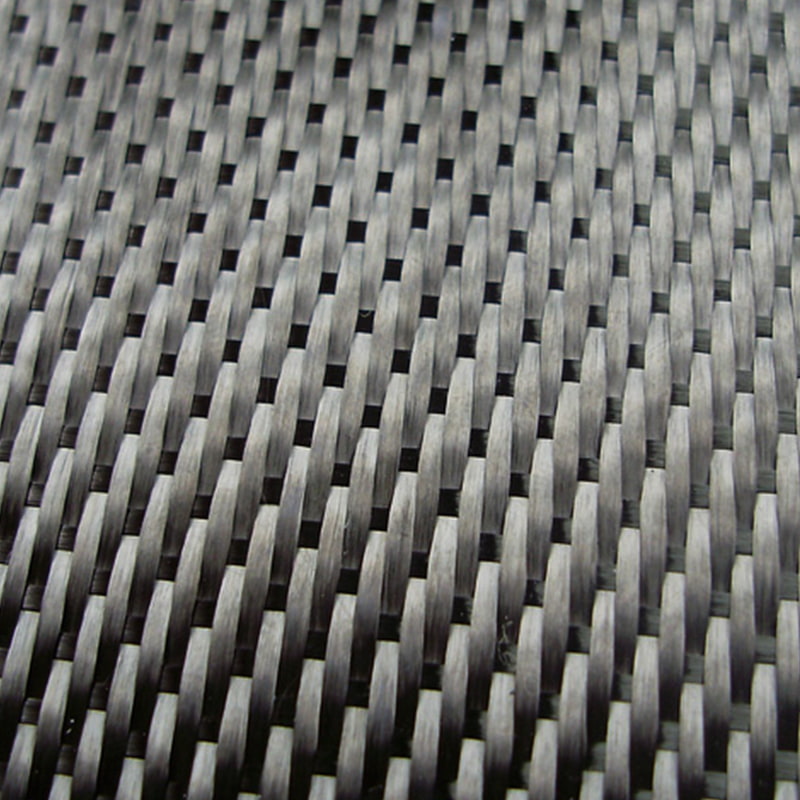
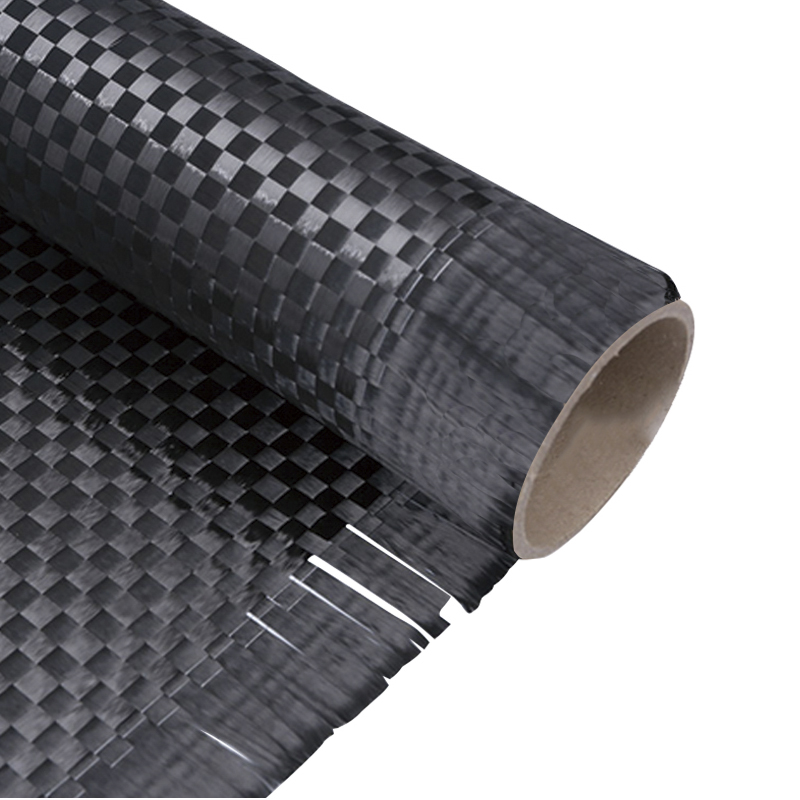
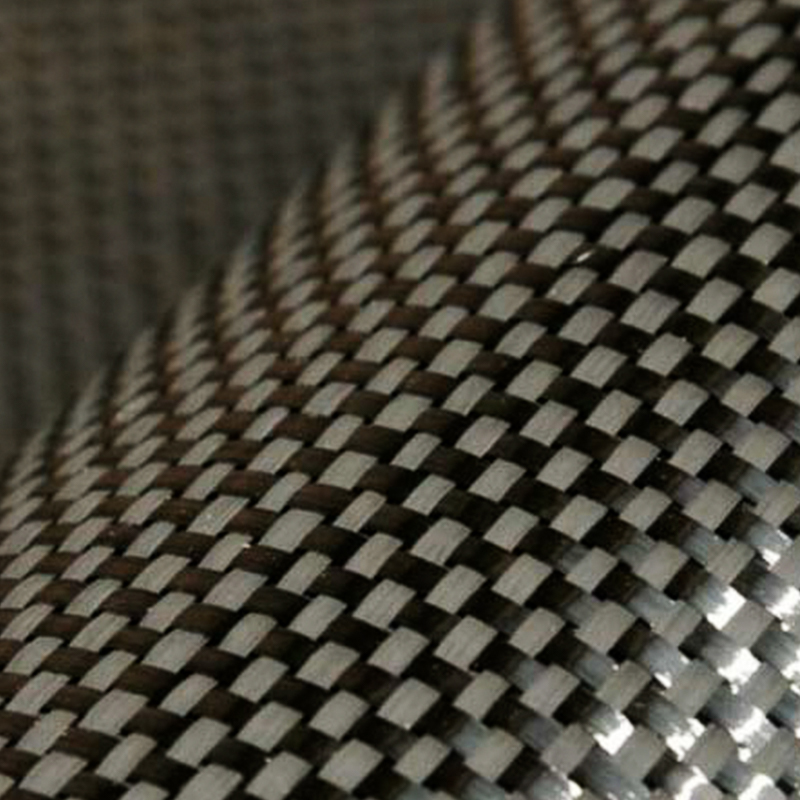 Versatile 1k/3k/12k Plain Weave Carbon Fiber FabricAvailable in multiple weights, this weave balances flexibility and strength, well-suited for infusion processes where low-pressure tooling and moderate fiber volume fractions are acceptable.View Product →
Head-to-Head: Manufacturing Process and Material Behavior
If your part carries structural certification, build it in prepreg. If your volumes are low and your tooling budget is tight, infuse dry fabric.
| Attribute | Carbon Epoxy Prepreg | Dry Carbon Fiber Fabric |
| Resin content | Factory-metered | Infusion-controlled |
| Fiber volume fraction | 60-65% | 50-58% |
| Void content | Below 1% | 1-3% |
| Storage | -18 degrees C, 6-12 months | Ambient, indefinite |
| Curing | Autoclave or OOA oven | RTM, VARTM, or oven |
| Tooling | High-pressure metal tooling | Low-pressure composite tooling |
| Cycle time | 2-6 hours | 6-12 hours |
| Surface finish | Excellent, tool-side | Good, tool-side |
| Material cost per part | Higher | Lower |
Prepreg autoclave curing is historically the most repeatable route to high-quality laminates. OOA prepreg has changed the calculus by removing the autoclave requirement, but teams still need to weigh the tradeoffs between OOA and autoclave prepreg processing before committing to a production line.
Performance and Cost Considerations
Prepreg is governed by the same resin system batch after batch, while dry fabric is only as repeatable as your operator's infusion discipline.
Typical Curing and Demold Cycle (Hours)
The cycle data reveals an important pattern. Autoclave and OOA prepreg both produce a part in a single curing step within the same window. Dry fabric infusion requires a longer resin flow stage before the part is demoldable, extending the manufacturing cycle. However, dry fabric spends less on tooling, and eliminating cold-chain logistics offsets part of the material saving.
Cost is never decided by reinforcement alone. A prepreg part carries hidden storage and thawing costs, while a dry fabric part carries consumables like vacuum bags, peel ply, and flow media. The final price per part depends on utilization, scrap rate, and labor hours, not just the square-meter price of the fabric.
Which Process Fits Your Application?
Prepreg is the right call for certified aerospace structures and performance racing. Dry fabric infusion fits automotive panels, marine decks, and large-format parts where tooling cost matters more than micro-scale void content.
Aerospace and drone components
For structural drone housings and landing gear, prepreg is preferred because certification and repeatability outweigh tooling cost.
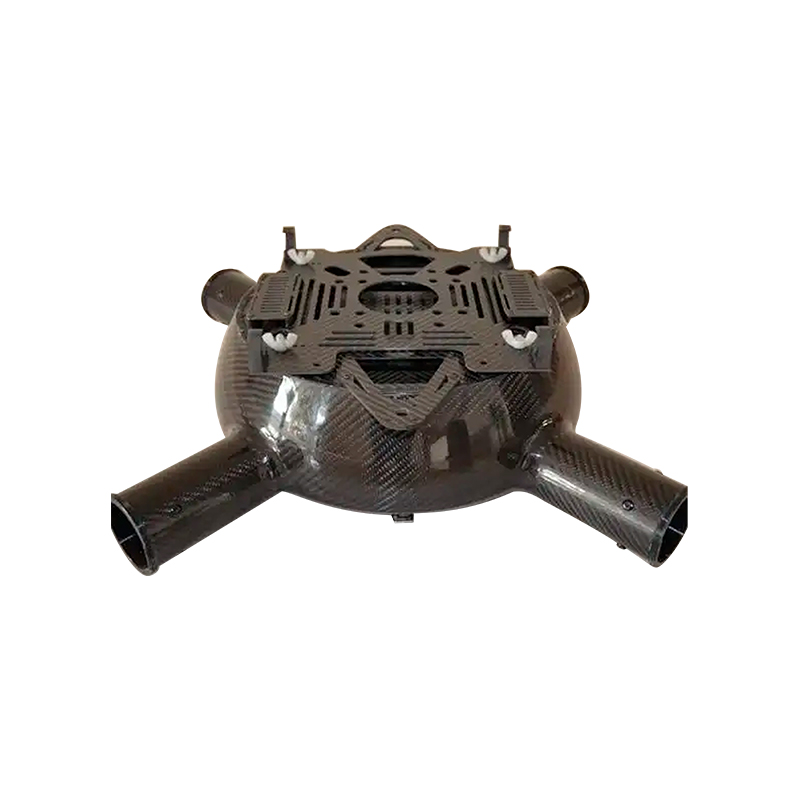 Lightweight Carbon Fiber Drone Shell for Custom UAV BuildsDesigned to reduce aircraft weight and simplify assembly, this shell supports structural certification and repeatability needs, making it a preferred choice for drone housings and landing gear.View Product →
Automotive interior and exterior parts
Dry fabric infusion makes sense for prototype and low-volume exterior panels, while press-cured prepreg wins at high volume.
Sports equipment
Hockey sticks, paddles, and bike racks benefit from prepreg at medium volumes because the process delivers consistent flex profiles.
Industrial panels and construction
VARTM with dry fabric is the cost-effective route for large, flat, non-cosmetic panels.
Frequently Asked Questions
Can dry carbon fiber fabric achieve the same strength as prepreg?
Not automatically. Dry fabric infusion typically produces a 3 to 7 percent lower fiber volume fraction and can retain 1 to 3 percent void content, so tensile and flexural strength usually lands 5 to 10 percent below an equivalent prepreg laminate of the same reinforcement and thickness.
What is the storage and out-life of carbon epoxy prepreg?
Epoxy prepreg is stored at -18 degrees Celsius for about 6 to 12 months from the manufacturing date. Room-temperature out-life is normally 2 to 3 weeks, which is why schedulers treat prepreg as a clock-driven material and dry fabric as the forgiving option.
Is dry fabric infusion cheaper per part than prepreg?
At low volume, yes. Tooling can be low-pressure composite, and you avoid cold-chain logistics. At high volume, press-cured prepreg in a metal mold can beat infusion on cycle time and provide better part-to-part consistency.
Which process is better for drones and UAV structures?
For structural drone shells and landing gear, prepreg is preferred because dimensional stability and mechanical repeatability matter more than tooling cost. Dry fabric infusion is more practical for prototype enclosures when a quick iteration is needed.
 +86-13961668677

 No. 61, Xingyuan Road, Jiefang Village, Gushan Town, Jiangyin City, Jiangsu Province, China.
