 Get In Touch
 English
 中文简体
 عربى
 Tiếng Việt

Content
- 1 Areal Weight Tolerance Controls Ply Thickness and Resin Demand
- 2 Tow Size Sets Weave Density, Drape and Cost Per Square Metre
- 3 Weave Pattern Decides Drape, Crimp and Surface Quality
- 4 Unidirectional Fabric Removes Crimp and Changes Handling
- 5 Fiber Grade Is Bought by Modulus, Not by Brand Name
- 6 Sizing Content and Resin Compatibility Decide Bond Strength
- 7 Roll Geometry, Splices and Packaging Are Where Bulk Orders Lose Money
- 8 Documentation and Incoming Inspection Protect the Whole Batch
- 9 Compare Quotations on Delivered Cost Per Square Metre
- 10 A Seven-Point Verification Sequence Before You Release the PO
- 11 Questions That Decide the Final Specification
Two rolls of 3K twill, both labelled 200 g/m2, can measure 12 g/m2 apart. Across 4,000 m2 of production that gap moves 48 kg of fiber into a part that was qualified at a different ply thickness.
That is why experienced buyers stop treating carbon fiber fabric as a material name and start treating it as a set of measurable specifications, each one carrying a tolerance, a test method and an acceptance band.
The nine checks below decide whether an incoming roll clears inspection or becomes a quality claim, and every one of them is paired with the evidence that makes it verifiable before the purchase order is released.
Areal Weight Tolerance Controls Ply Thickness and Resin Demand
Areal weight should be fixed first and bought with a stated tolerance of plus or minus 3 percent or tighter, never as a nominal figure alone.
Measurement matters as much as the number. Cut three specimens of 100 mm x 100 mm from different positions across the roll width, weigh them on a balance readable to 0.001 g and average the results. A single specimen taken near the selvage can sit outside the roll average and produce a false verdict.
At a nominal 200 g/m2, a 3 percent band accepts 194 to 206 g/m2, while a 5 percent band accepts 190 to 210 g/m2. That wider band can release 8 kg of unbudgeted fiber per 2,000 m2 into a laminate qualified on the tighter figure.
Benchmarking a catalogue item is sensible, but compare the published weight of a 200 gsm carbon fiber fabric against the band your own laminate design can absorb.
| Specification | Verification method | Typical acceptance range |
| Areal weight | ASTM D3776, three specimens across the roll width | Plus or minus 3 percent of nominal, for example 194 to 206 g/m2 at 200 g/m2 |
| Tow size | Supplier declaration plus filament count check | 1K, 3K, 6K or 12K exactly as ordered |
| Size content | ISO 10548 | 1.0 to 1.5 percent by weight for epoxy-compatible sizing |
| Width | Measured at three points per roll | 5 mm each side of nominal on woven rolls, tighter on slit rolls |
| Roll length and splices | Counted and measured on receipt | Nominal length within tolerance, maximum one splice per roll |
| Moisture condition | Supplier method, stated on the certificate of analysis | Sealed moisture barrier bag with desiccant and a humidity indicator |
Tow Size Sets Weave Density, Drape and Cost Per Square Metre
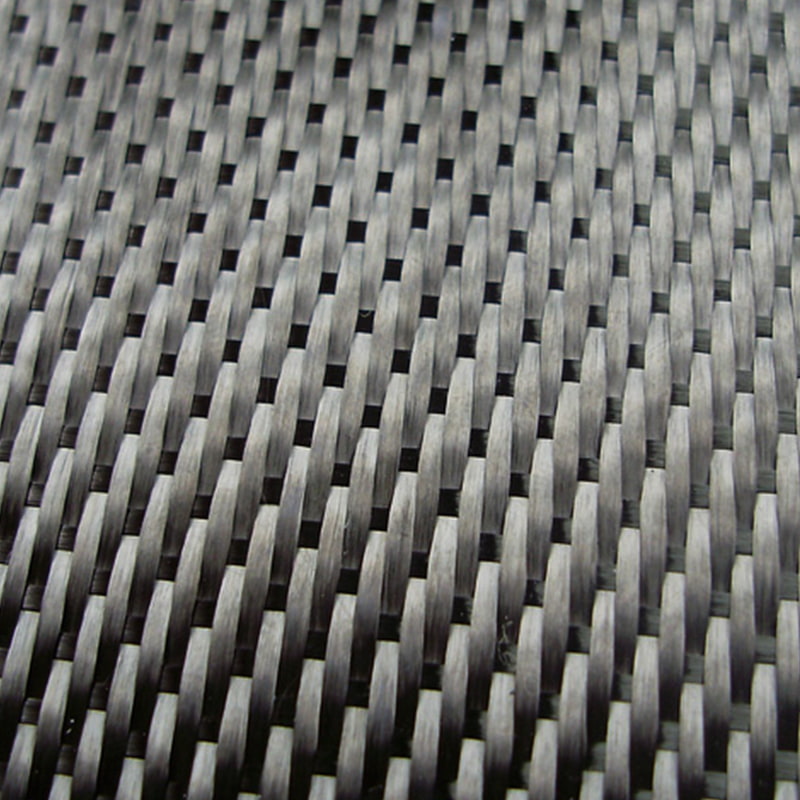
Tow size states how many filaments are bundled into each yarn, so a 3K tow carries 3,000 filaments and a 12K tow carries 12,000.
Standard-modulus PAN filaments are typically 5 to 7 micrometres across. Bundling them into 1K or 3K tows produces a fine, tight weave with a smooth surface and a high number of picks per centimetre, which raises weaving cost. Bundling into 12K tows produces heavier fabric in the 300 to 600 g/m2 range that weaves faster and suits thick structural layups.
Price per kilogram falls as tow size rises, while price per square metre and laminate thickness rise with it. Compare quotations on the construction you actually need rather than on the cheapest tow in the catalogue.
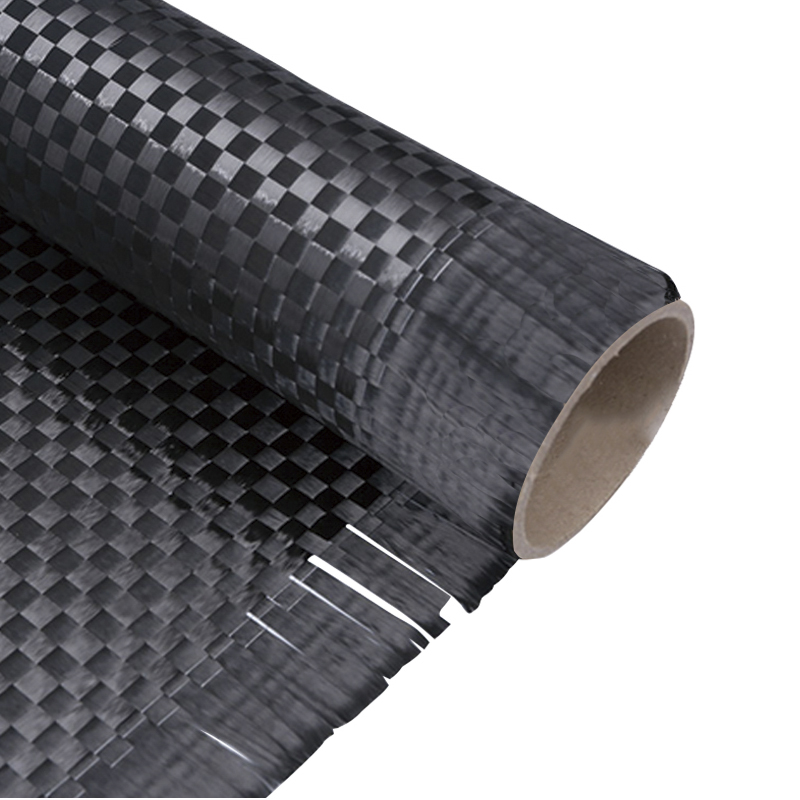
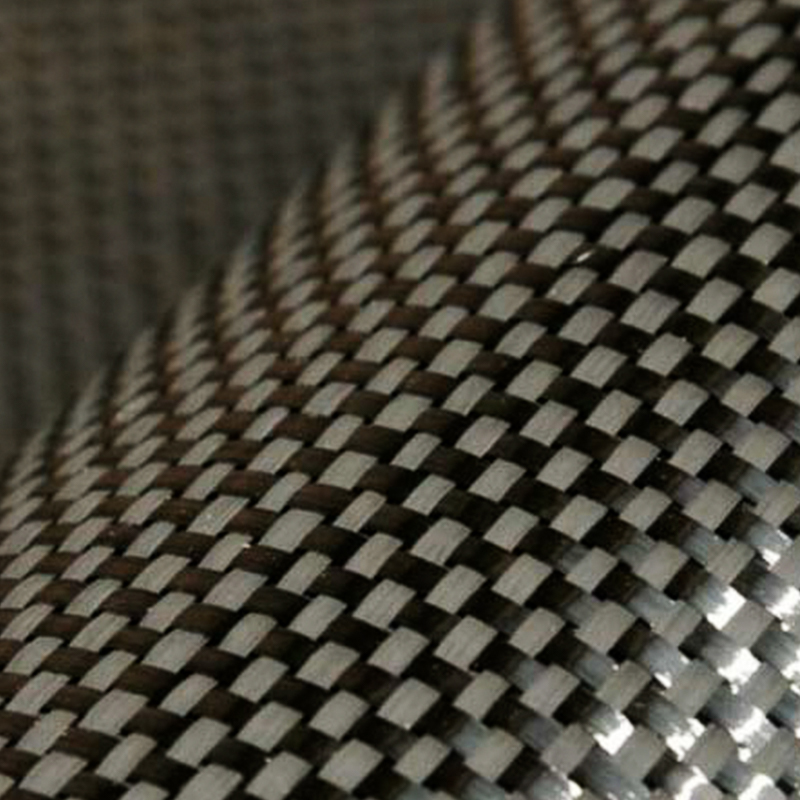 Custom 1K/3K/12K Carbon Fiber Plain Weave FabricCompare this balanced plain weave fabric in 1K, 3K, and 12K tows when selecting construction performance and quotation for your laminate.View Product →
Weave Pattern Decides Drape, Crimp and Surface Quality
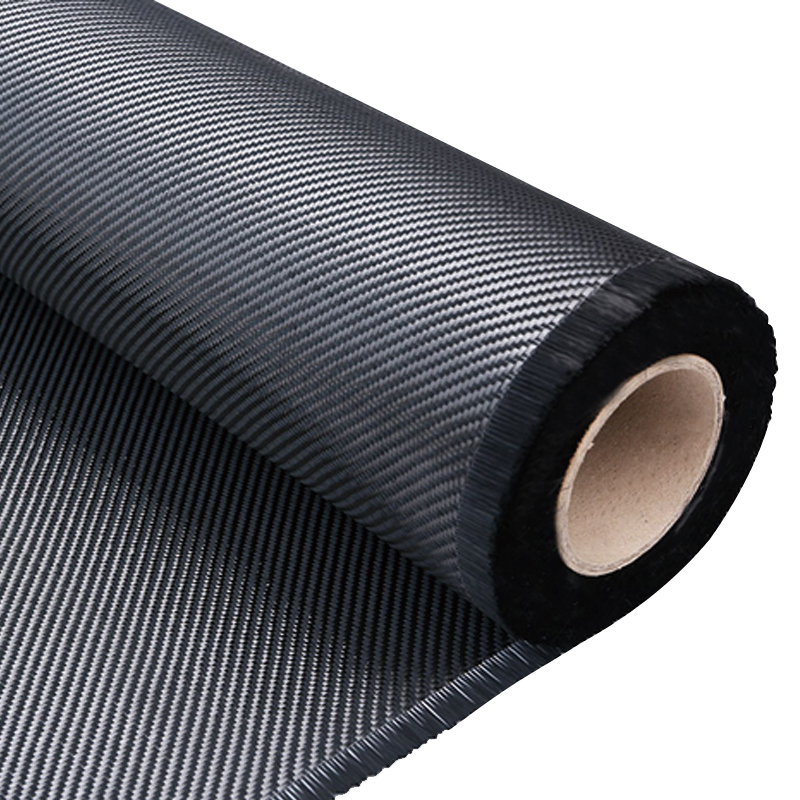
Plain weave interlaces every warp and weft yarn, twill 2/2 floats each yarn over two and under two, and satin 8H floats over seven. Interlacing density is what decides how a cloth behaves on a curved mould.
More interlacing means more crimp. The yarns undulate more, the fabric is more stable to cut, and it drapes poorly over compound curves. Fewer interlacing points give better drape and a smoother surface, at the cost of fraying and weave distortion during handling.
Plain weave
- High crimp, high dimensional stability
- Limited drape on compound curves
- Uniform surface with a visible weave grid
- Common on flat panels, plates and structural skins
2/2 twill
- Moderate crimp, easier handling
- Drapes over tubes and curved shells
- Smoother surface with a diagonal pattern
- Common on cosmetic parts and curved housings
Weave choice is a drapability decision as much as a cosmetic one, so review weave selection for plain, twill and satin constructions before the construction is locked for a bulk run.
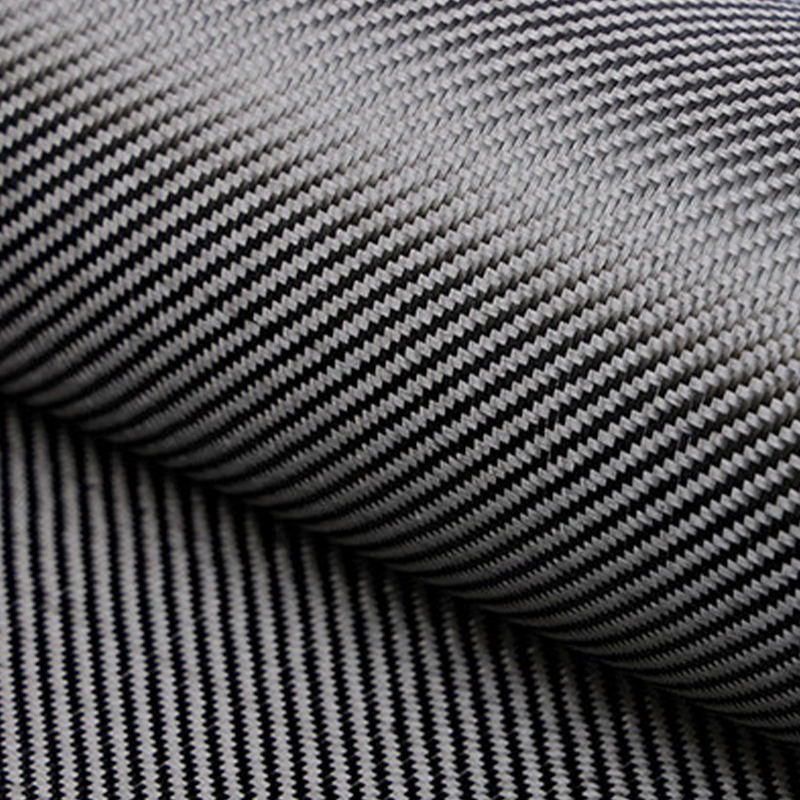 Abrasion-Resistant High-Temperature Carbon Fiber Twill Weave FabricReview this 2x2 twill fabric for drape, fracture toughness, and high-temperature resistance before locking weave construction for bulk production.View Product →
Unidirectional Fabric Removes Crimp and Changes Handling
Unidirectional reinforcement fabric carries all fibers in one direction, usually at 0 degrees, held together by a light weft thread or a thermoplastic binder.
With no over-and-under interlacing, the fibers stay straight and translate tensile properties into the laminate more efficiently than woven cloth at the same fiber volume fraction. The trade-off is handling: UD fabric splits along the fiber axis when cut, has almost no cross-axis stability, and needs the fiber direction recorded on the ply book.
Typical UD areal weights run from about 100 to 400 g/m2. Confirm the binder chemistry as well, because some binders are incompatible with specific resin systems and cure temperatures.
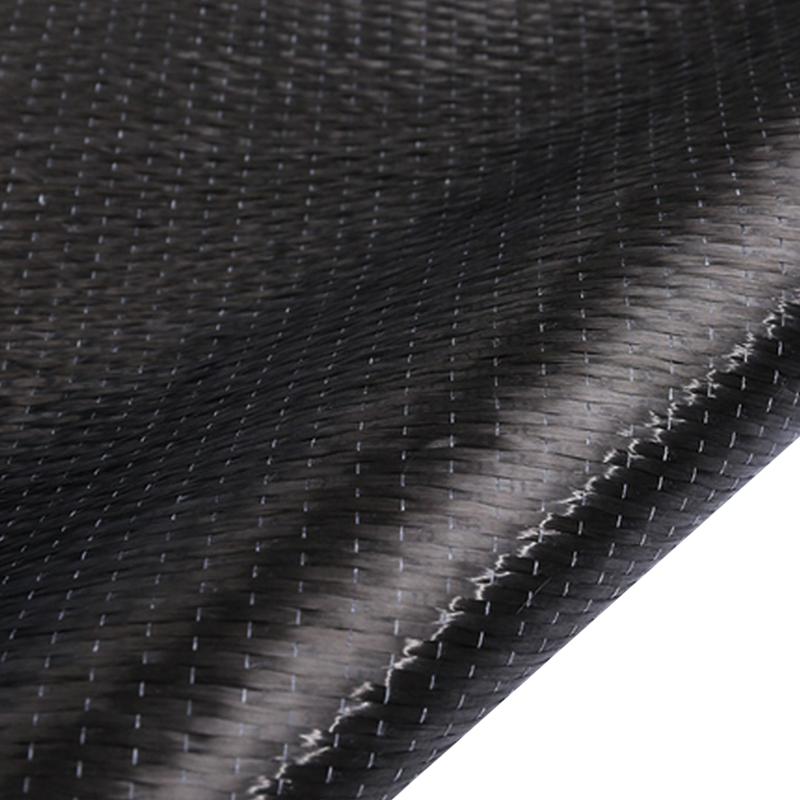 Highly Flexible Carbon Fiber Unidirectional UD Reinforcement FabricCheck this UD reinforcement with T700S/T800S options when comparing areal weights and binder chemistry for structural strengthening projects.View Product →
Fiber Grade Is Bought by Modulus, Not by Brand Name
Carbon fiber grades are specified by tensile modulus: standard-modulus fiber is published at roughly 230 to 240 GPa, intermediate-modulus at 270 to 300 GPa, high-modulus at 350 to 400 GPa and ultra-high-modulus above 500 GPa.
Modulus and strain to failure move in opposite directions. Standard-modulus fiber commonly fails between 1.5 and 2.1 percent strain, while high-modulus grades often fail below 1.5 percent, so a stiffer part can be a less damage-tolerant part. Specify modulus against the load case and the impact requirement, not against the largest number on the datasheet.
Tow tensile properties are tested on impregnated strands per ASTM D4018 and on single filaments per ISO 11566. Ask which standard sits behind any modulus figure, because values reported by different methods are not directly comparable.
Sizing Content and Resin Compatibility Decide Bond Strength
Sizing is the thin polymer coating applied to the fiber surface, commonly at 1.0 to 1.5 percent by weight on epoxy-compatible fabric, and its chemistry must match the resin you will use.
Size content is measured per ISO 10548, normally by extraction or thermal decomposition. Fabric below roughly 0.5 percent handles poorly and frays during cutting, while a level outside the resin supplier's recommended window can change wet-out behaviour, void content and interlaminar shear strength in the finished laminate.
- Which resin chemistry is the sizing formulated for?
- What cure temperature does the sizing tolerate?
- Does the sizing on this batch match the batch you qualified?
For cyanate ester, phenolic and high-temperature polyimide matrices, confirm whether the sizing survives the cure cycle or has to be removed before layup.
Roll Geometry, Splices and Packaging Are Where Bulk Orders Lose Money
Width tolerance, roll length, splice count and packaging decide how much usable fabric you actually pay for.
Ask for the nominal length, the length tolerance, whether length is measured under tension, and where splices fall. A 100 m roll carrying two splices and a short length can cost more per usable square metre than a nominally dearer roll with none.
Rolls should ship on a rigid core inside a sealed moisture barrier bag with desiccant and a humidity indicator. Edge fraying and selvage damage are transport issues, and they become the buyer's loss unless the packaging specification is written into the contract.
Documentation and Incoming Inspection Protect the Whole Batch
Every bulk shipment should arrive with a batch-level certificate of analysis covering areal weight, size content, width, roll length and roll count, and a retained sample should be kept from each batch for at least 12 months.
- Record every roll number and check it against the packing list.
- Weigh and measure at least one roll in ten per ASTM D3776 and log the result against the acceptance band.
- Cut a 1 m retained sample from each batch, label it with the roll number and date, and store it away from humidity and sunlight.
- Check the certificate of analysis line by line against the specification; a generic product datasheet is not a substitute.
- Quarantine any roll outside tolerance and agree the disposition in writing before it enters production.
Change control belongs in the contract, not in an email thread. Ask for written notice before any change to precursor tow, sizing chemistry or weaving setup, since each of the three can alter wet-out, drape and laminate strength without changing a printed specification.
Compare Quotations on Delivered Cost Per Square Metre
Convert every quotation to a delivered cost per square metre before comparing suppliers. At 200 g/m2, one kilogram of fabric covers exactly 5 m2.
Illustrative Example: a 200 g/m2 3K twill quoted at 28.00 USD/kg FOB, with 1.20 USD/kg freight and insurance and 6.5 percent ad valorem duty, lands at 31.02 USD/kg. An 8 percent cutting scrap rate on a narrow pattern pushes the effective cost to 6.74 USD/m2. Duty rates depend on the HS code and the destination country, so verify them with a customs broker before modelling total cost.
| Cost element | USD per kilogram | USD per square metre |
| Fabric FOB | 28.00 | 5.60 |
| Freight and insurance | 1.20 | 0.24 |
| Duty at 6.5 percent ad valorem | 1.82 | 0.36 |
| Landed cost before cutting | 31.02 | 6.20 |
| Equivalent cost of usable fabric after 8 percent scrap | 33.72 | 6.74 |
Ask for the minimum order quantity of the exact construction and width you need. MOQs are normally set per weave, per width and per sizing rather than per supplier, and the price break at the next volume tier is often worth negotiating before you scale up.
A Seven-Point Verification Sequence Before You Release the PO
- Write the full specification: areal weight and tolerance, tow size, weave, width, roll length, sizing chemistry and packaging.
- Request a certificate of analysis from a recent batch of the exact construction, not a generic product datasheet.
- Order a 5 to 10 m sample and measure areal weight in house per ASTM D3776 across the full width.
- Laminate that sample with your own resin and cure cycle, then check fiber volume fraction per ASTM D3171 and inspect for voids.
- Confirm roll-level terms: splice count, core diameter, length tolerance and moisture barrier packaging.
- Agree incoming inspection criteria, the retained sample period and the disposition procedure for out-of-tolerance rolls.
- Fix change-control notification in writing for tow, sizing and weaving changes.
Questions That Decide the Final Specification
What areal weight tolerance belongs in a purchase order?
A band of plus or minus 3 percent of nominal, verified per ASTM D3776 on at least three specimens taken across the roll width. At 200 g/m2 that gives 194 to 206 g/m2, which keeps ply thickness variation inside the range most laminate designs can absorb.
How much sizing should epoxy-compatible carbon fiber fabric carry?
The common commercial window is 1.0 to 1.5 percent by weight, measured per ISO 10548. Fabric below roughly 0.5 percent handles poorly and frays, and a level above the resin supplier's recommended window can change wet-out behaviour in the finished laminate.
Does a higher modulus fabric always produce a better part?
No. Standard-modulus fiber at 230 to 240 GPa typically fails between 1.5 and 2.1 percent strain, while high-modulus grades at 350 to 400 GPa commonly fail below 1.5 percent. Choose modulus against the load case and the impact requirement.
How should a buyer verify a supplier before a bulk order?
Audit the weaving, sizing control and roll inspection processes, check the scope of the supplier's ISO 9001 certificate, test a 5 to 10 m sample of the exact construction, and confirm that batch-level certificates of analysis and retained samples are standard practice.
 +86-13961668677

 No. 61, Xingyuan Road, Jiefang Village, Gushan Town, Jiangyin City, Jiangsu Province, China.
