 Get In Touch
 English
  中文简体
中文简体 عربى
عربى Tiếng Việt
Content
Epoxy Fiberglass Sheet: A Process, Not Just a Material
Epoxy fiberglass sheets do not emerge from a single mold. They are the result of textile engineering meeting thermoset chemistry, and that process determines everything from dielectric strength to long-term dimensional stability. If you have specified insulation plates for battery packs, switchgear, or PCB fixtures, you have already relied on this process. It is part of the same manufacturing family used for carbon and aramid laminates, but with glass cloth and epoxy the balance of cost, insulation, and mechanical strength is different.
The direct answer to "how is epoxy fiberglass sheet made" is that the sheet is manufactured by impregnating woven E-glass cloth with epoxy resin, stacking the resin-coated layers, and curing them under heat and pressure. Behind that simple description are stages that require close control of resin viscosity, drying temperature, platen pressure, cooling rate, and cure time.
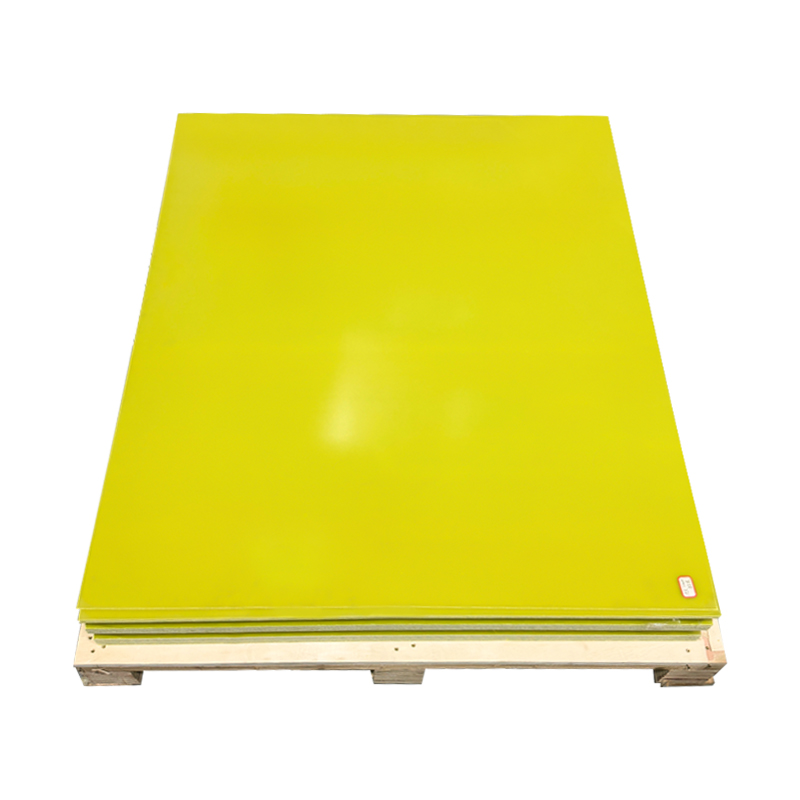
The most common commercial form is an epoxy fiberglass insulation sheet, pressed into flat panels for electrical insulation and high-load mechanical parts.
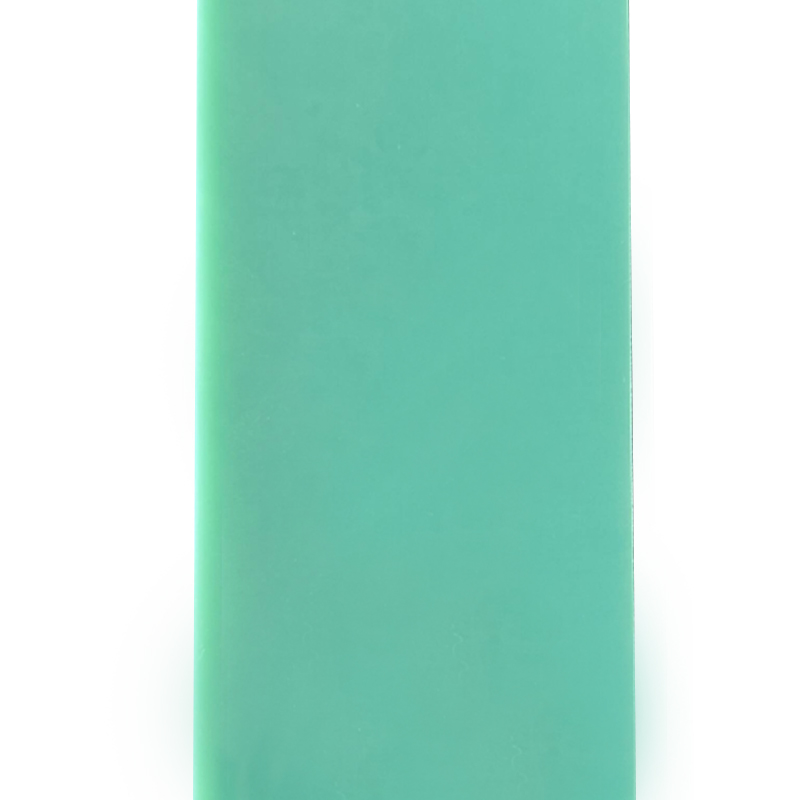 Custom Epoxy Resin Glassfiber Insulation Board Manufacturers, FactoryWe Offer Custom Epoxy Resin Glassfiber Insulation Board, Jiangyin Dongli New Materials Technology Co., Ltd Is China Epoxy Resin Glassfibe...View Product →
What Goes Into an Epoxy Fiberglass Sheet
Glass Fiber Cloth
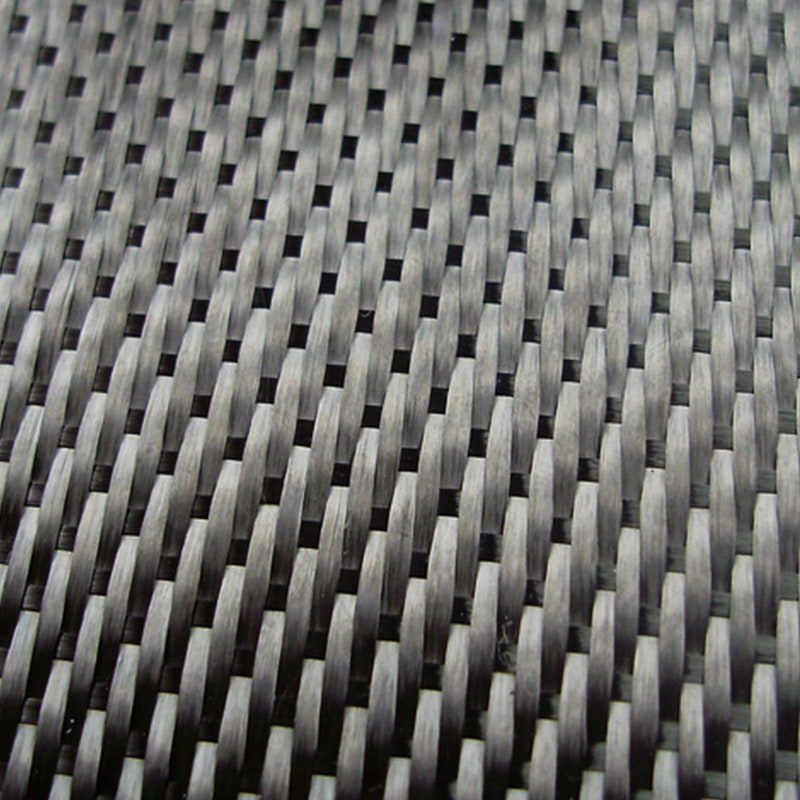
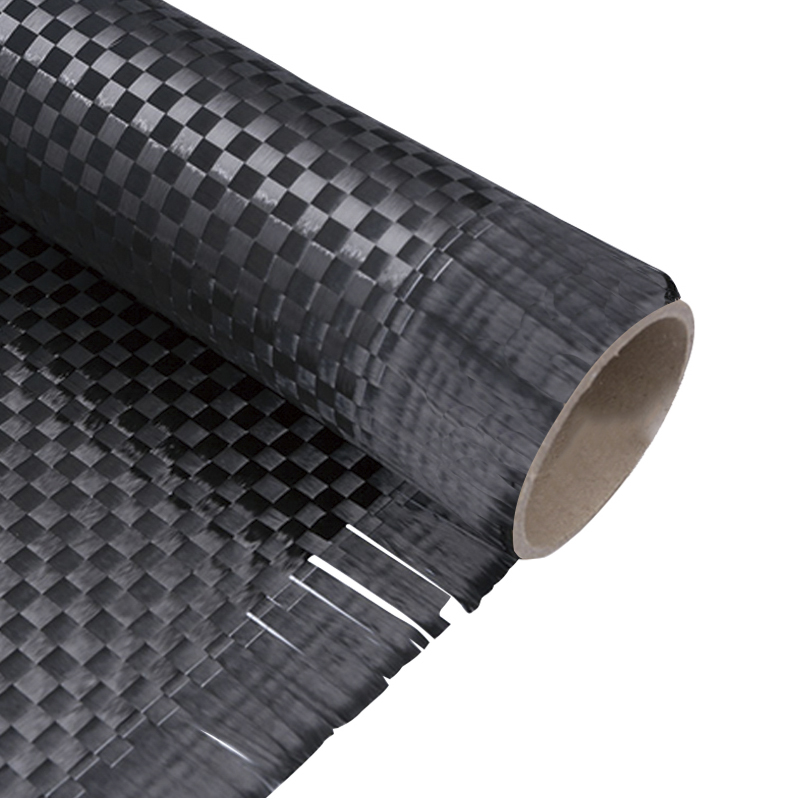
Most epoxy fiberglass sheets use E-glass continuous filament yarn, selected for high electrical resistance and cost efficiency. The yarn is twisted or lightly ply-twisted, then woven into a balanced plain weave, or occasionally twill for better conformity, with areal weights commonly between 100 and 300 g/m². Plain weave produces a smoother surface and better dimensional stability, while twill can conform more easily around curved tooling. Before lamination, the cloth is heat-cleaned to remove weaving lubricants, then treated with a silane coupling agent. This sizing creates a chemical bridge between the glass surface and the epoxy matrix; without it, the laminate can delaminate because the resin cannot grip the smooth filaments. The underlying weaving and surface treatment logic is similar to woven technical fabric production in other high-performance composites.
Epoxy Resin System
Epoxy resin supplies the sheet's electrical insulation, chemical resistance, and heat tolerance. Most formulations use a difunctional epoxy, such as bisphenol A or bisphenol F, combined with a hardener, accelerator, and flame-retardant additives. Solvent or reactive diluents lower the viscosity enough for the cloth to wet out quickly in an impregnation bath. The resin composition also sets the operating temperature: a standard bisphenol A system reaches a glass transition Tg of roughly 130–150°C after cure, while novolac epoxy or multifunctional resin systems can improve heat resistance. For electrical safety, halogenated epoxy or other flame-retardant chemistry is commonly used to reach a UL94 V0 rating.
How Epoxy Fiberglass Sheet Is Made: Step by Step
Although the production sequence is standard, exact setpoints change with resin chemistry, sheet thickness, and the required electrical rating. The steps below describe the industrial route used in a modern composite factory.
- Fabric preparation. E-glass cloth is inspected, heat-cleaned, and treated with a coupling agent so the surface is ready for resin wet-out.
- Resin bath formulation. Epoxy, hardener, flame-retardant additives, and solvent are mixed, filtered, and tested for viscosity and gel time before the line starts.
- Impregnation and B-staging. The glass cloth passes through a resin dip tank and between metering rolls that control resin pickup. Target resin content is generally 35–45% by weight. The wet cloth then runs through a drying tower at 100–160°C, where solvent evaporates and the resin advances to a dry, slightly tacky state. At this point the material is called an epoxy prepreg
 Custom Epoxy Carbon Fiber Prepreg Manufacturers, FactoryWe Offer Custom Epoxy Carbon Fiber Prepreg, Jiangyin Dongli New Materials Technology Co., Ltd Is China Epoxy Carbon Fiber Prepreg Manufac...View Product →, a semi-cured product that can be stored for later lamination. The degree of staging is checked on production samples so the prepreg keeps the right flow, tack, and shelf life.
 - Cutting and lay-up. Prepreg is cut to sheet size and stacked in a precise number of layers to reach the target thickness. A typical 2 mm board may use eight to ten layers, while a 50 mm plate requires far more. Lay-up is carried out in a clean, temperature-controlled room; in this factory, the press area is kept separate from the lay-up area to avoid dust being trapped between layers.
- Hot pressing. The stack is placed in a heated press. Temperature and pressure are raised according to a controlled curve. The resin flows, wets out the remaining fibres, fills voids, and crosslinks into a rigid thermoset network. Pressure is often applied in two stages: a lower initial pressure lets the resin distribute, then high pressure compacts the laminate to its final density.
- Cooling, trimming, and inspection. The panel is cooled under pressure to prevent warpage, then trimmed to dimension. Thickness, surface defects, and, for electrical grades, dielectric properties are checked before dispatch. Some boards are surface-ground to tighten thickness tolerance when they will be used for precision jigs or PCB fixtures.
Key Process Parameters That Decide Sheet Quality
Most differences between a consistent sheet and a one-batch problem come from how tightly the factory controls the process. The table lists the parameters that should be measured on every production run.
| Parameter | Typical Range | Why It Matters |
|---|---|---|
| Glass cloth areal weight | 100–300 g/m² | Controls resin pickup, mechanical strength, and thickness build-up per layer. |
| Resin content after drying | 35–45% by weight | Balances dielectric strength against interlaminar shear strength. |
| Impregnation drying temperature | 100–160°C | Removes solvent without advancing the resin too far before lay-up. |
| Curing temperature | 150–180°C | Determines crosslink density and the glass transition temperature. |
| Curing pressure | 3–10 MPa | Eliminates air, compacts layers, and prevents voids and delamination. |
| Cure hold time | 60–150 min | Ensures uniform reaction throughout the stack, especially in thick boards. |
The most frequently audited number is the resin-to-fiber ratio; even a few percentage points of drift changes cutting behaviour, dielectric strength, and thickness tolerance. For thick boards, the cooling phase is just as important: cooling too fast after cure creates internal stresses near the edges. A good process cools under pressure and may include a post-cure step to stabilise the laminate before machining.
Quality Control and Supplier Selection
For a buyer, the process matters because it predicts datasheet values. A panel pressed with too little pressure can hide fine voids that weaken the board and create paths for electrical tracking. A sheet with an unbalanced resin ratio may pass an incoming visual check but fail after machining. So the first question is not just the sheet's grade name, but whether the process behind that grade is actually monitored.
When evaluating a supplier, ask for documentation on flammability (UL94 V0), flexural strength, dielectric strength, and thickness tolerance. For machined components, examine edge quality and whether the board has been cured enough to stay flat after cutting or stamping. Ask also whether the factory can supply custom sizes, because a one-stop factory that handles weaving and pressing is more likely to adjust glass style and resin content than one that only cuts imported board.
Vertical integration makes a measurable difference. A factory that controls weaving, resin treatment, prepreg preparation, hot pressing, and finishing can trace a defect to its source and fix it before it becomes a pattern. That is why we operate as a one-stop composite materials manufacturer: Jiangyin Dongli New Materials Technology Co., Ltd. handles the complete chain on one site, supported by 24 technical staff, ten production lines, and a 32,000 m² production floor with temperature-controlled workshops and a Class 100,000 clean area.
If you need standard sheets or custom laminated boards for battery fixtures, switchgear, transformer insulation, or mechanical covers, the manufacturing process is the first specification to understand. With full-flow control, we can adapt glass style, resin content, and thickness to the target application, and we can also process the cured sheet into custom machined parts.
 +86-13961668677
 No. 61, Xingyuan Road, Jiefang Village, Gushan Town, Jiangyin City, Jiangsu Province, China.