 Get In Touch
 English
  中文简体
中文简体 عربى
عربى Tiếng Việt

Content
An engineer specifying a lithium-battery insulation liner, a PCB test fixture deck, or a switchgear support plate usually starts with the same practical question: how thick should the epoxy fiberglass sheet be? The answer affects far more than product cost. Increasing thickness makes the laminate dramatically stiffer, raises the absolute breakdown voltage, and changes heat flow, flatness, and machinability in ways that are easy to underestimate. The short conclusion before the details: thickness is the most important specification you choose after the material grade, and none of its effects are linear. This article explains how each key property responds to thickness and provides a step-by-step method for selecting a sheet that will not fail in production.
The Short Answer: What Thickness Controls
In an epoxy fiberglass laminate, thickness is not simply a geometric dimension. It changes the relationship between fiber volume, resin-rich regions, and the internal stress locked in during pressing. The main relationships to remember are:
- Flexural stiffness increases roughly with the cube of thickness, making a 4 mm sheet far more rigid than a 2 mm sheet of the same material.
- Breakdown voltage rises with thickness, but dielectric strength per millimeter falls, so additional thickness becomes electrically less efficient.
- Thermal resistance increases, meaning a thicker sheet conducts heat more slowly and runs hotter in continuous duty.
- Warpage and internal stress increase, making flatness harder to guarantee on thick plates.
- Machining becomes more difficult, with higher heat, faster tool wear, and a greater risk of edge delamination during drilling and cutting.
These effects explain why the common rule of thumb that "thicker is simply stronger and safer" is unreliable. The same material grade at different thicknesses behaves like a different engineering material, and the thickness must be selected on a system level, not in isolation.
Mechanical Strength and Stiffness
Flexural stiffness scales with the cube of thickness
For a plate of a given width, flexural stiffness is proportional to the cube of thickness. Doubling the thickness reduces deflection under a bending load by a factor of roughly eight, all else being equal. This is why a 10 mm epoxy glass deck plate for a press fixture feels completely different from a 5 mm plate. If a part must resist deflection, such as a mounting rail, a fixture base, or a support deck in electrical equipment, increasing thickness is the most direct design lever available.
Flexural strength depends more on laminate quality than on thickness
Flexural strength is the stress level at which the laminate fractures, and it is governed by the resin system, the glass fabric style, and the quality of consolidation, rather than by the number of millimeters. A thicker plate carries a higher absolute load only because its cross-section is larger. At the same time, thick laminates contain more ply interfaces, and each void, dry spot, or region of cure stress near the neutral axis can reduce the effective strength. Field failures in thick epoxy glass sheets are therefore more often caused by poor interlaminar integrity than by insufficient material thickness. When evaluating a supplier for load-bearing sheets, ask for verification using test methods for glass transition temperature and interlaminar shear strength rather than relying on one flexural strength number.
Electrical Insulation Performance
For insulation applications, the effect of thickness has to be read through two different quantities: dielectric strength and breakdown voltage.
Dielectric strength decreases as thickness increases
Dielectric strength is expressed in kilovolts per millimeter. In a thick sheet, the probability of a defect chain spanning the full thickness is higher, and the heat generated at high test voltages is more difficult to remove, so the dielectric strength per millimeter drops as the cross-section grows. Breakdown voltage, which is the total voltage the sheet is able to withstand, does increase with thickness, but at a sublinear rate. In practical terms, a 6 mm sheet will not provide twice the electrical margin of a 3 mm sheet in terms of efficiency, but it will block a higher absolute voltage.
| Nominal thickness | Typical breakdown voltage | Typical dielectric strength |
|---|---|---|
| 1.0 mm | ~35 kV | ~30-35 kV/mm |
| 1.6 mm | ~45 kV | ~25-30 kV/mm |
| 3.0 mm | ~60 kV | ~20-22 kV/mm |
| 5.0 mm | ~75 kV | ~15-18 kV/mm |
How to apply these values in a real design
For 220 V or 380 V equipment, even a 1 mm quality laminate gives a large breakdown margin, and the real design limits normally come from creepage distance, pollution degree, and surface tracking rather than from bulk dielectric strength. For high-voltage battery systems and traction converters, choose the thickness from the required minimum breakdown voltage plus a safety factor of at least two, and check the condition of cut edges, because machining exposes glass fibers and creates routes for surface discharge. Edge finishing is part of the electrical safety calculation, not just an appearance issue.
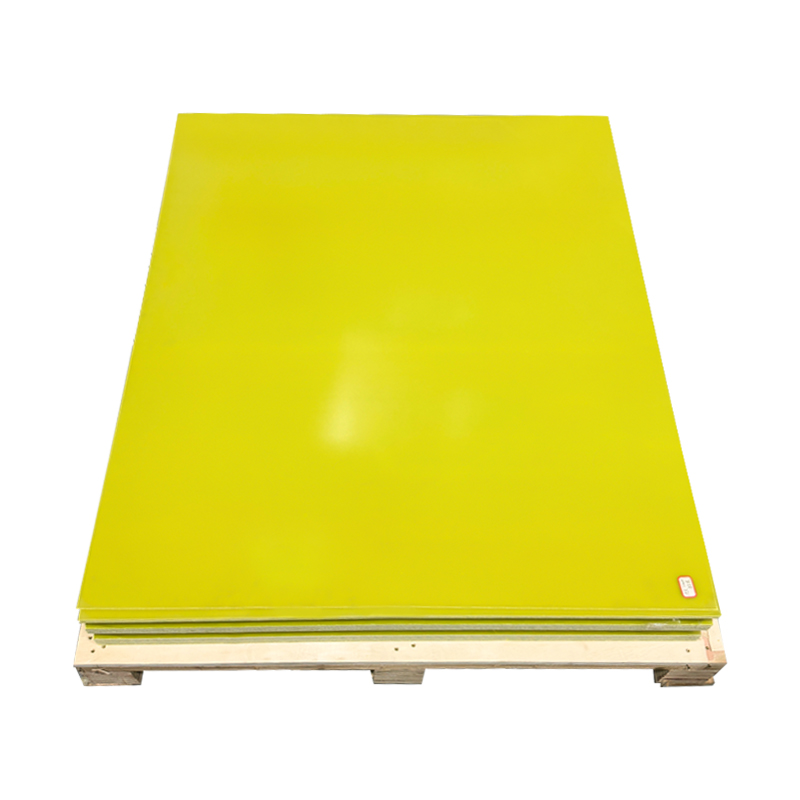
Battery pack designers face the same trade-off in a small envelope: the insulation plate has to meet working voltage requirements while still fitting the pack. A well-controlled laminate with a documented UL94 V0 rating, consistent thickness, and clean cut edges is the correct baseline. For this reason, our epoxy glass fiber insulation plate is designed for battery, electrical equipment, and PCB fixture applications, with thickness selection driven by the working voltage rather than by guesswork.
 Custom Epoxy Resin Glassfiber Insulation Board Manufacturers, FactoryWe Offer Custom Epoxy Resin Glassfiber Insulation Board, Jiangyin Dongli New Materials Technology Co., Ltd Is China Epoxy Resin Glassfibe...View Product →
Thermal Behavior and Dimensional Stability
Temperature changes expose the nonlinear side of sheet thickness even more clearly. There are two separate mechanisms to manage.
First, a glass epoxy laminate is a poor heat conductor compared with metals and ceramics. Thermal resistance across the sheet increases with thickness, so a thick spacer between a busbar and an enclosure keeps the enclosure cooler but makes the laminate itself run hotter. In a battery module or a motor controller, verify the continuous operating temperature of the resin system, not just the short-term rating.
Second, the laminate contracts differently through the thickness than in the plane during cooldown from the cure temperature; through-thickness expansion is typically several times higher than in-plane expansion. The resulting internal stress grows with thickness, which is why thick plates are more prone to warpage and can change flatness after material is removed during machining. A thick sheet can look flat in the warehouse and then bow after profiling. Dimensional drift of this kind is one of the most frequent quality failures in epoxy fiberglass parts.
The thermal ceiling is established at the prepreg stage. A flame-retardant epoxy glass system with a glass transition temperature in the 130-180°C range typically supports continuous service around 120-155°C, depending on the grade. Instead of relying on a generic "insulation board" description, specify an epoxy prepreg with a documented glass transition temperature and flammability rating, because that is where the predictability of the finished laminate is determined.
 Custom Epoxy Carbon Fiber Prepreg Manufacturers, FactoryWe Offer Custom Epoxy Carbon Fiber Prepreg, Jiangyin Dongli New Materials Technology Co., Ltd Is China Epoxy Carbon Fiber Prepreg Manufac...View Product →
Machinability and Fabrication Tolerances
Thickness also changes how a sheet behaves in the CNC shop. Sheets below about 2 mm are easy to cut but deflect under clamping pressure. Sheets above 8 mm hold their shape well but introduce heat, tool wear, and delamination problems.
Drilling a thick laminate means long contact between the tool and the glass-reinforced resin. The heat softens the epoxy, the drill can wander, and the exit side is prone to burrs and delamination. For holes deeper than about 6 mm, use sharp carbide drills, moderate spindle speeds, and step drilling, or drill from both sides with a sacrificial backing board to protect the last plies.
Milling and profiling also release internal stress. After a large area is removed from one face, a thick sheet can warp beyond its specified flatness tolerance. This is a classic procurement risk: the raw sheet passes incoming inspection, but the finished part does not. Thickness tolerance and flatness deserve the same attention. A standard laminate typically ships with a thickness tolerance around ±0.1 mm to ±0.2 mm, with thicker sheets toward the looser end. If the design needs a precise stack height, write the tolerance on the drawing and confirm that flatness is measured in a free state. This is also where working with a full-process in-house manufacturer makes a difference, because lamination cycles, resin content, and pressing parameters can be tuned upstream instead of leaving all the risk to the machine shop.
- Confirm the nominal thickness tolerance before ordering; never assume an unstated default.
- Request flatness data measured on a flat surface, not with the sheet clamped or held down.
- If the part has deep holes or thin webs, ask about drilling quality and edge finish capability.
- For large parts requiring very flat surfaces, ask whether secondary grinding or sanding is available.
How to Choose the Right Thickness
There is no universal correct thickness for an epoxy fiberglass sheet. Use a short calculation sequence instead of rules of thumb.
- Define the minimum breakdown voltage with a safety factor and select the nominal thickness from the supplier data sheet.
- Check flexural stiffness against the deflection limit at the expected mechanical load; increase thickness if deflection is too high.
- Evaluate the thermal environment. If the sheet must conduct heat away, use the minimum thickness that still satisfies the electrical and mechanical checks. If it must block heat, confirm the continuous service temperature of the resin.
- Review machinability. If the part needs deep holes, thin walls, or tight flatness, limit the thickness to what can be processed reliably, or arrange secondary finishing with the supplier.
- Balance weight and cost. Each additional millimeter adds material and shipping expense, so choose the smallest thickness that passes all previous checks.
One common mistake is stacking thin sheets to approximate a thick plate. Stacked sheets invite air gaps, voids, and partial discharge at the interfaces, and the adhesive film between layers becomes the insulation weak point. If the design requires a 12 mm deck, specify a single molded 12 mm laminate rather than a bonded stack of thinner sheets.
Standard thicknesses commonly available include 0.5, 1.0, 1.5, 2.0, 3.0, 4.0, 5.0, 6.0, 8.0, 10.0, and 12.0 mm, with custom sizes possible at reasonable production volumes. When the priority is high stiffness at low weight, for example in moving fixtures or vehicle-mounted equipment, a carbon fiber composite plate delivers comparable rigidity at a fraction of the mass, although its electrical insulation profile differs and its material cost is higher. If you are evaluating that direction, our overview of lightweight engineering with composite panels compares the two design approaches in more detail.
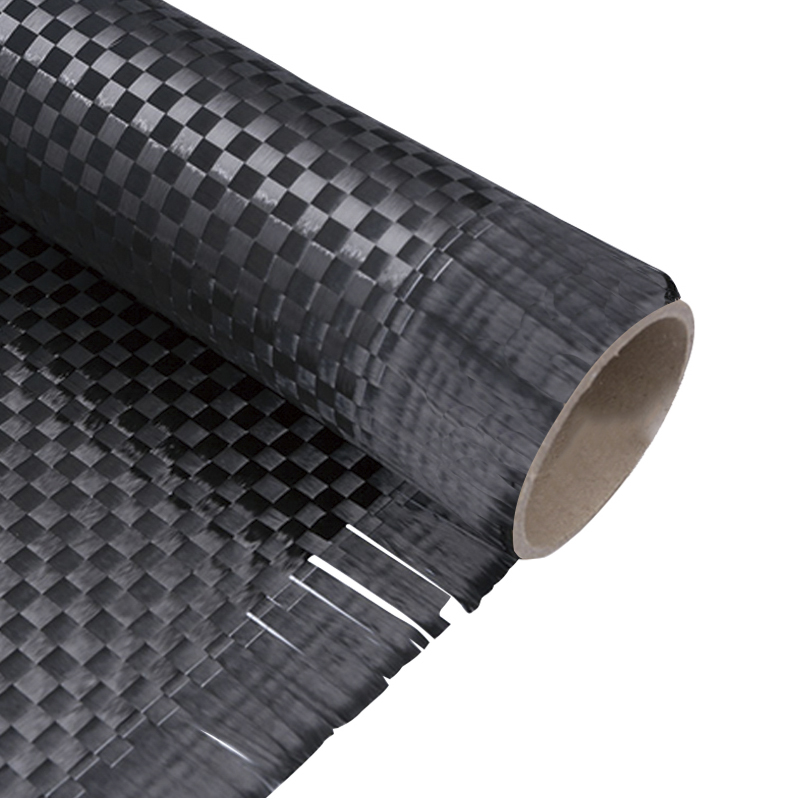
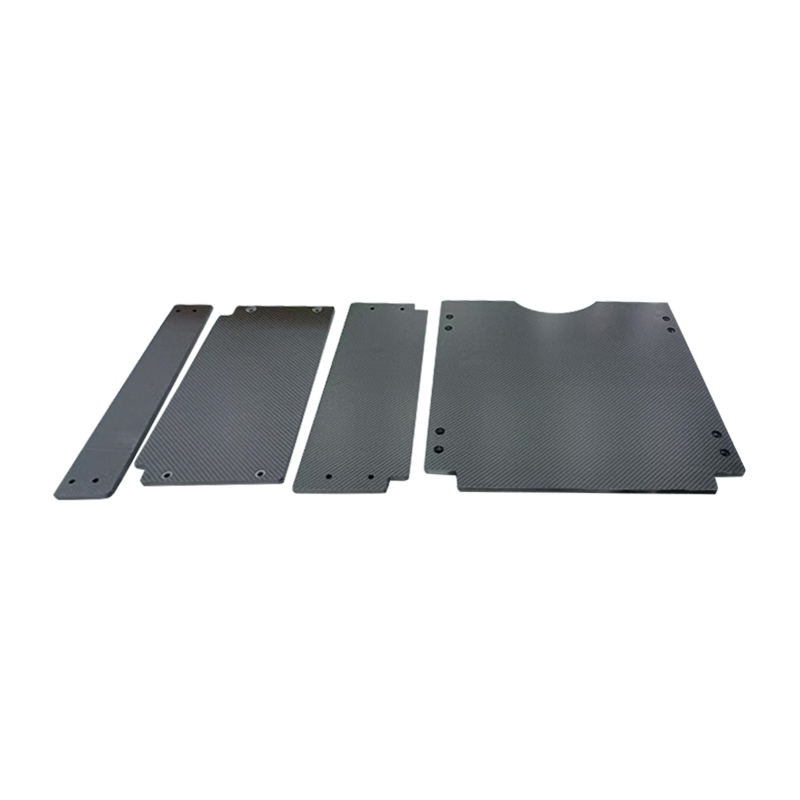 Custom 25-250 Thickness, Lightweight Yet Rigid Carbon Fiber Sheet/Panels/Plate MWe Offer Custom 25-250 Thickness, Lightweight Yet Rigid Carbon Fiber Sheet/Panels/Plate, Jiangyin Dongli New Materials Technology Co., Lt...View Product →
Conclusion
Thickness converts an epoxy fiberglass sheet from a fragile insulating layer into a rigid structural plate, and it changes nearly every important property along the way. Stiffness rises with the cube of thickness, breakdown voltage climbs at a slower rate, dielectric strength per millimeter falls, thermal resistance and warpage risk increase, and machining becomes harder. The reliable way to choose is to calculate from the working voltage, expected load, thermal environment, and fabrication constraints, then verify the supplier's data sheet and production capability. Following that sequence will prevent the three most common failures: cracked fixture parts, marginal insulation at working voltage, and warped plates that fail dimensional inspection.
 +86-13961668677
 No. 61, Xingyuan Road, Jiefang Village, Gushan Town, Jiangyin City, Jiangsu Province, China.