 Get In Touch
 English
 中文简体
 عربى
 Tiếng Việt

Content
A cutting table running 620 mm blanks takes 62.0 percent of the width out of a 1,000 mm carbon fiber fabric roll and 97.6 percent out of a 1,270 mm roll. Same fiber, same part, same operator, two very different material bills.
Roll width is the first production decision on a composite line and the last one that gets documented. Weave, tow size and areal weight are specified in detail, then whatever width the supplier stocks gets accepted. On a part that nests two abreast, that unexamined number decides whether 38 percent of every roll becomes trim or 2.4 percent does.
What follows covers how delivered width is defined, which widths are actually stocked, how to run the utilization calculation before ordering, and which process limits override the part drawing.
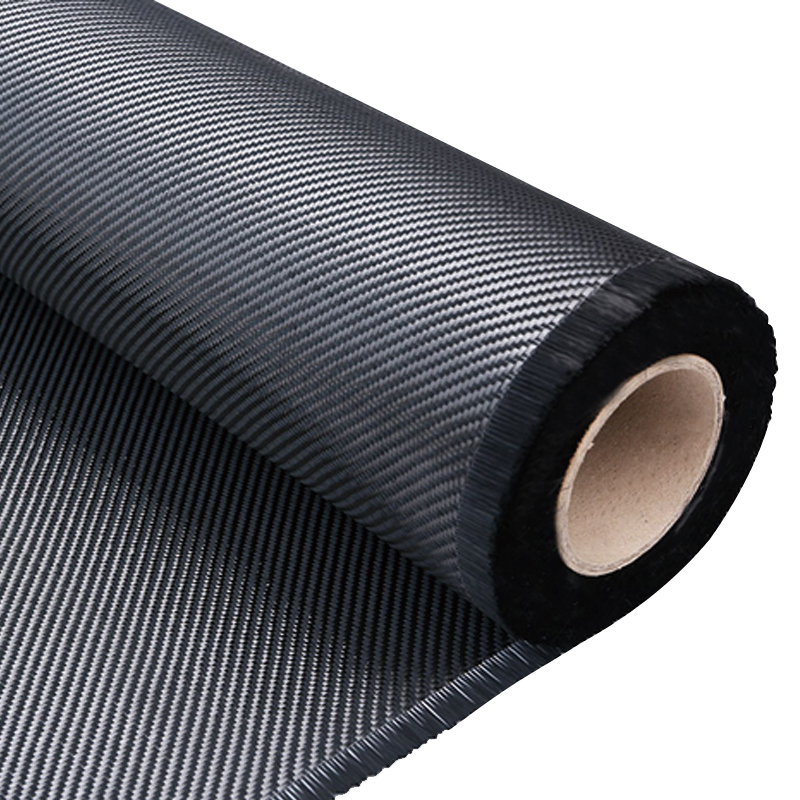
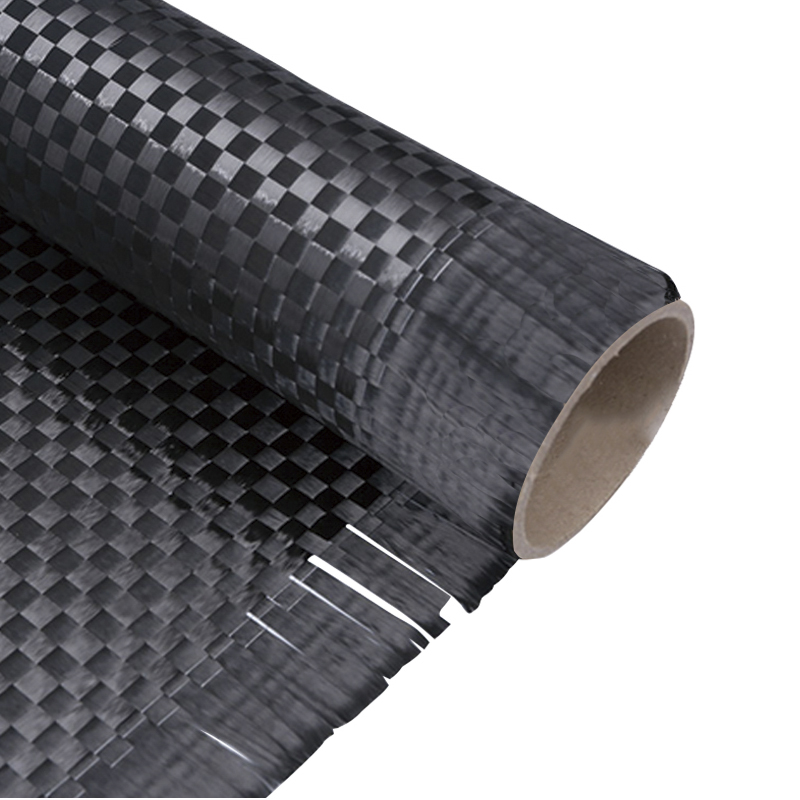
Roll width is the usable cross-web dimension of a delivered carbon fiber fabric roll, measured selvedge to selvedge under the supplier's stated conditioning and tension, after any edge trimming the supplier performs. It is not automatically the nominal width printed on a quotation.
What Roll Width Physically Controls
Roll width decides three things at once: how many blanks fit across the web, whether the roll fits your cutting table or molding machine, and how much fabric you pay for but never laminate.
Nesting is unforgiving. A 620 mm blank cuts two abreast on a 1,270 mm roll, using 1,240 mm and trimming 30 mm. The same blank cuts one abreast on a 1,000 mm roll, wasting 380 mm on every row of every roll. Nothing about the fiber changes between those two cases; only the roll does.
Machine fit is the second control. A 1,270 mm roll needs a cutting table and an unwinding stand that accept 1,270 mm plus clearance, and a press platen or RTM cavity narrower than the roll forces slitting or pre-cutting before the fabric reaches the mold.
Nominal width versus usable width
These two figures are frequently different, and the buyer pays for the gap. Weaving produces a mother roll with a selvedge; trimming and slitting remove part of it, so a quotation can list the weaving width while the roll label carries a smaller trimmed width. Establish which one is certified, and put the tolerance in writing, because width tolerance appears in commercial specifications as a percentage of nominal, as a fixed figure in millimetres, or as a minimum-width guarantee. Those three are not interchangeable when a blank sits 10 mm from the web edge.
| Parameter | What it defines | Effect on production | What to confirm in writing |
| Nominal width | Width stated on the quotation | Sets price per linear metre only if it equals delivered width | Whether the figure is weaving width or delivered width |
| Usable width | Selvedge-to-selvedge width after trimming | Sets nesting efficiency directly | Certified width printed on the roll label |
| Width tolerance | Permitted deviation from nominal | A blank within 10 mm of the web edge can fall outside the roll | Tolerance value and the measurement method |
| Roll length | Metres of fabric per roll | Controls changeover frequency and splice count | Metres per roll and whether splices are permitted |
| Core internal diameter | Bore size of the roll core | Must match the unwinding stand mandrel | Core ID and whether a plug is supplied |
| Roll mass and diameter | Total mass and outside diameter | Sets handling limits and creel capacity | Maximum roll mass for the width ordered |
| Selvedge condition | Whether edges are trimmed straight | Untrimmed edges vary in width and fray during cutting | Trimmed edges or as-woven edges |
Two suppliers can both quote 1,270 mm carbon fabric and deliver products that differ by 25 mm of usable web. On a 620 mm blank, 25 mm is the difference between a two-up layout and a one-up layout.
Where Commercial Roll Widths Come From
Carbon fiber fabric is woven at a fixed reed width and converted to narrower rolls by slitting, so any width outside the supplier's stock list carries a conversion charge and a lead-time penalty.
Stock widths cluster around 1,000 mm and 1,270 mm (50 in), with 1,200 mm and 1,250 mm supplied in some constructions and wider mother rolls available for large flat panels. Slit tapes for tape laying, tube rolling and narrow ply cutting come off the same mother roll.
Conversion is where the cost sits. Slitting a 1,270 mm mother roll into 300 mm tapes yields four tapes and 70 mm of edge trim with no structural use, and that trim is priced into the tape. Heavy tow behaves the same way: a 12K plain weave run on a wide loom can be slit to any narrower width, but the trim loss does not disappear.
Buy the stock mother roll width
- Lowest price per square metre, no conversion charge
- Shortest lead time and simplest repeat ordering
- Best when blanks nest across 1,000 mm or 1,270 mm
- Needs table, creel and rack space for the full width
Buy pre-slit narrow rolls
- Fits narrow molds, tape heads and hand layup stations
- Adds a slitting charge and extra lead time
- Carries the edge trim loss inside the unit price
- Confirm whether slitting is in-house or subcontracted
For a part that runs for years, price a custom slit width against the stock roll plus your own table time. The conversion charge is added to every roll, not to every part.
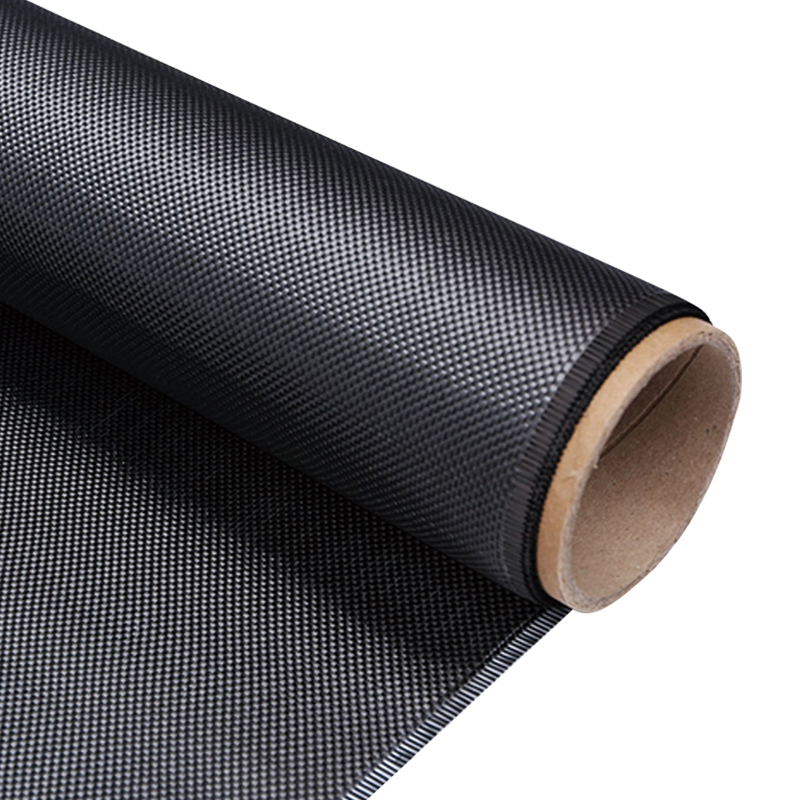
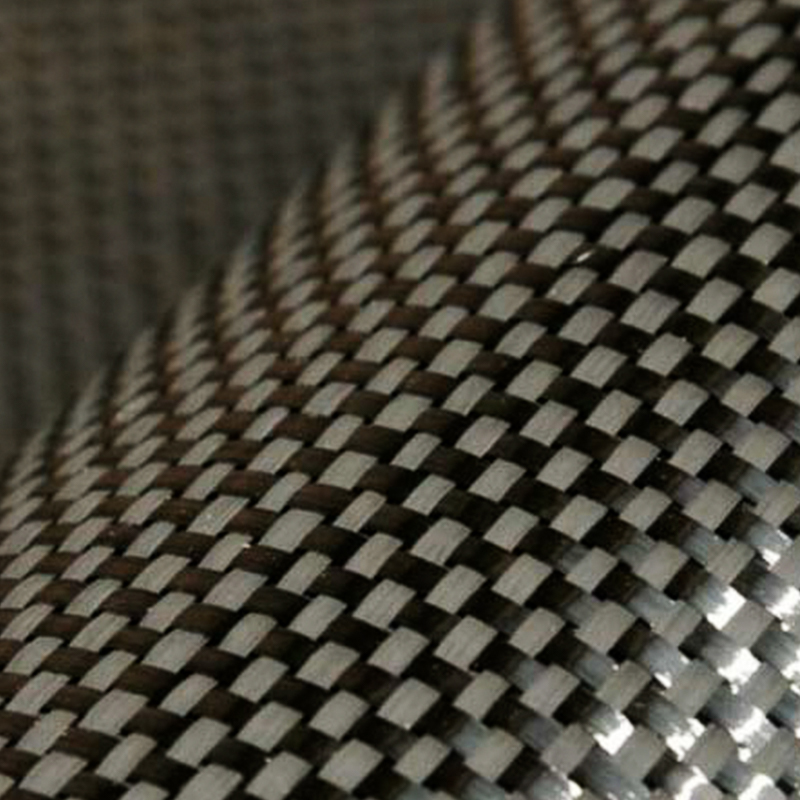 Custom 1K/3K/12K Carbon Fiber Plain Weave FabricCompare custom slit widths with stock roll options for this balanced plain weave carbon fabric, available in 1K, 3K, and 12K tows.View Product →
Width Utilization: A Worked Example
For a 620 mm blank, width utilization is 62.0 percent on a 1,000 mm roll, 97.6 percent on a 1,270 mm roll and 82.7 percent on a 1,500 mm roll.
Illustrative example. Assumptions: blank 620 mm x 450 mm, one blank per row on the 1,000 mm roll and two abreast on the 1,270 mm and 1,500 mm rolls, zero gap between blanks and no edge trim allowance. Utilization equals blanks across multiplied by blank width, divided by usable roll width.
Mass makes the decision concrete. A 200 gsm roll at 1,270 mm x 100 m holds 25.4 kg of fabric. Running the same 100 m on a 1,000 mm roll with one 620 mm blank per row leaves 380 mm unused on every row, which is 38 m2, or 7.6 kg at 200 gsm. On the 1,270 mm roll the trim is 30 mm per row: 3 m2, or 0.6 kg.
Add a 15 mm trim allowance to each edge of a 620 mm blank and the two-up layout needs exactly 1,270 mm of usable width, with no tolerance headroom left. Width tolerance is not paperwork; it is the difference between a layout that runs and a layout that scraps.
Process Limits That Override Part Geometry
The molding or laying process sets a hard width ceiling that the part drawing cannot negotiate, so process limits are checked before the nesting layout is finalized.
| Process | Width driver | Practical consequence |
| Hand layup and wet layup | Cutting table size and operator reach | Wide rolls reduce ply joints; no hard ceiling on width |
| Vacuum infusion | Bagging film width and table size | A roll wider than the bag forces ply joints inside the flow path |
| Resin transfer molding | Cavity dimensions and preform cutting | A width that yields the preform in one piece removes a joint line |
| Press molding | Platen size | A ply wider than the platen cannot be loaded flat |
| Tube rolling | Mandrel diameter against fabric width | Narrower rolls wrap tighter radii with less wrinkling |
| Automated tape laying | Tape head width, typically 150 mm or 300 mm | Course count and edge overlap change with tape width |
| Fiber placement | Tow width, typically 3 mm to 13 mm | Slit tow width consistency drives layup defects |
When geometry forces a narrower roll
Compound curvature is the reason to accept a lower utilization figure. A 3K twill weave drapes over double curvature with less wrinkling than a heavy plain weave of the same areal weight, so a narrower twill roll at 70 percent utilization can outperform a wide heavy fabric that produces bridging and rework. Reject plies and cut-out wrinkles are the cost that never appears in a price per square metre.
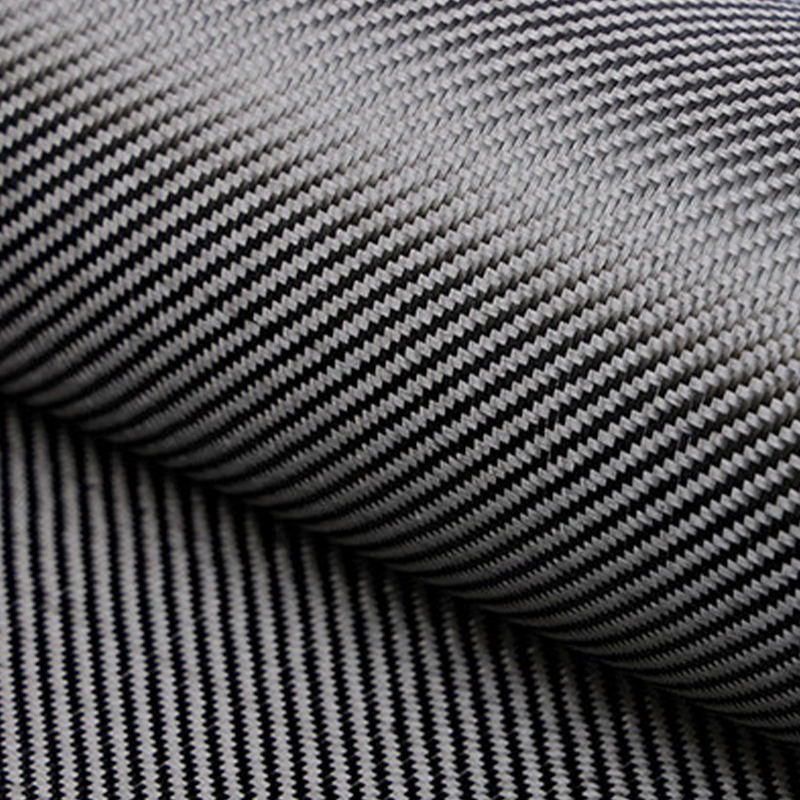 Abrasion-Resistant High-Temperature Carbon Fiber Twill Weave FabricFor compound-curvature parts, this 3K/6K twill fabric offers drape and high-temperature resin compatibility while reducing wrinkles and rework.View Product →
A Six-Step Width Selection Procedure
Run the six steps in order; each one can eliminate a candidate width before a purchase order is placed.
- Fix the blank drawing and fiber orientation before nesting. Ply orientation constrains rotation on the roll, and a blank that cannot be rotated loses half of its nesting options.
- Nest at three candidate widths using the usable width, not the nominal width, and record utilization as a percentage for each candidate.
- Add edge allowance and tolerance. Add your own trim allowance on both edges, then subtract the stated tolerance. If the blank sits within 10 mm of the limit, tolerance decides the layout.
- Check the machine ceiling. Cutting table, platen, cavity, bagging film width and mandrel length remove candidates that nesting liked.
- Confirm roll length, core ID and splice policy. Two splices in a 100 m roll cost more downtime than a shorter roll with none.
- Cut a trial roll. Cut the real ply shapes, measure trim, and compare measured utilization against the calculated figure before releasing the balance of the order.
When the laminate uses unidirectional plies instead of woven fabric, width sets course spacing rather than nesting. Unidirectional reinforcement is laid in parallel courses, so width determines how many passes cover the part and how much overlap is paid for at each edge.
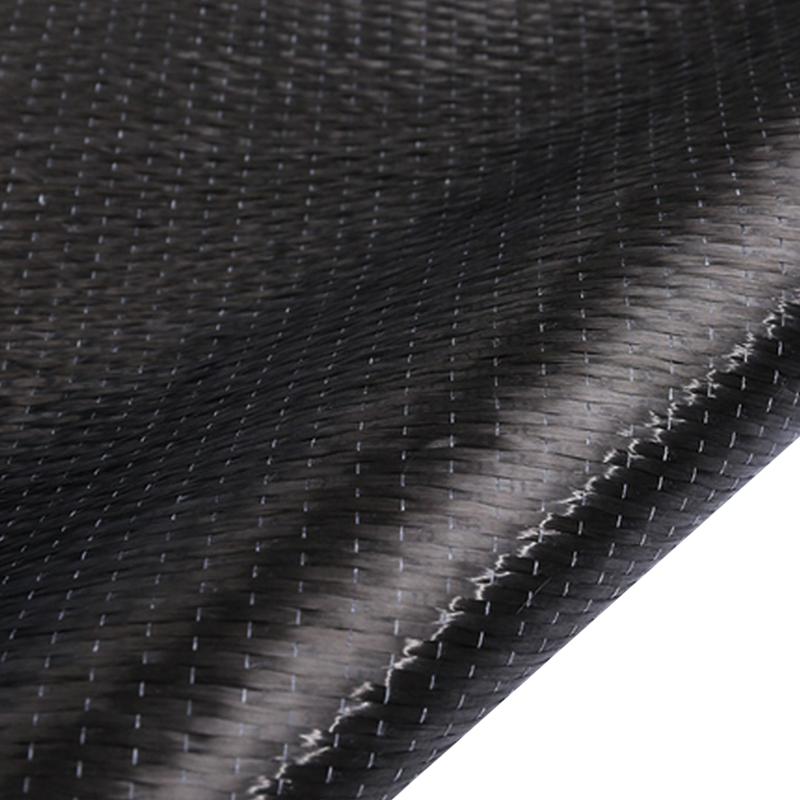 Highly Flexible Carbon Fiber Unidirectional UD Reinforcement FabricFor layouts using parallel UD courses, width controls pass count and edge overlap; this flexible reinforcement conforms to curved substrates.View Product →
Width selection is a nesting calculation first and a materials decision second. The fiber only enters the conversation after the layout is fixed.
What to Verify Before the Roll Ships
Before a roll order is released, verify the certified width, the mass per unit area, the roll length, the splice count and the commercial terms, because a width dispute cannot be settled after the roll has been cut.
- Inspection certificate stating certified width and mass per unit area. Test methods such as ASTM D3774 for width and ASTM D3776 for mass per unit area are widely referenced for woven reinforcement; confirm the method and the conditioning shown on the certificate you receive.
- Roll label matching the certificate: roll number, width, length, areal weight and core internal diameter, which is commonly 76 mm (3 in) on textile rolls.
- Splice statement: how many splices per roll, and whether splices are permitted in the ply being cut.
- Commercial terms: minimum order quantity per width, slitting charge, lead time for non-stock widths, and the width tolerance written into the purchase order.
- Storage plan: rolls horizontal on a rack, out of direct sunlight and away from temperature cycling, with the protective wrap left in place until use.
Write the usable width and its tolerance into the purchase order, then measure the first roll at goods-in. A measurement takes minutes; a width dispute after 300 cut plies costs the roll.
Direct Answers on Roll Width Selection
Is a wider roll always more efficient?
No. Width only pays when blanks nest across it. A 700 mm blank fits one abreast on a 1,000 mm roll for 70.0 percent utilization, and one abreast on a 1,270 mm roll for 55.1 percent, because two abreast would need 1,400 mm. The narrower roll wins until the blank is small enough to nest two across.
Should the purchase order state nominal or usable width?
State usable width plus a tolerance, and ask for the certified value on the inspection certificate. Nominal width can describe the weaving width before selvedge trimming, and on a 620 mm blank that gap decides whether a 1,270 mm roll delivers a two-up layout with 30 mm to spare or not at all.
What does a custom slit width actually cost?
Slitting adds a conversion charge, edge trim with no structural use, and longer lead time, and it is priced per roll rather than per part. For annual volumes in the hundreds of metres, compare a stock 1,270 mm roll cut on your own table against a pre-slit roll at a higher unit price before committing.
How does areal weight change the width decision?
It changes handling rather than nesting. A 200 gsm fabric at 1,270 mm x 100 m weighs 25.4 kg; the same roll in 400 gsm weighs 50.8 kg. Once roll mass passes a comfortable single-operator lift, buyers shorten the roll instead of narrowing it, which raises changeover frequency on the line.
 +86-13961668677

 No. 61, Xingyuan Road, Jiefang Village, Gushan Town, Jiangyin City, Jiangsu Province, China.
