 Get In Touch
 English
  中文简体
中文简体 عربى
عربى Tiếng Việt
Content
Inside a typical 10 kV distribution transformer, the epoxy fiberglass sheet is invisible and permanently load-bearing. It appears as punched strips between winding layers, as spacer bars holding oil ducts open, as end rings absorbing axial clamping force, and as terminal boards routing high-voltage leads. Every position repeats the same requirement: insulate, hold dimension, survive the thermal class, and keep a clean machined edge.
What Epoxy Fiberglass Sheet Is
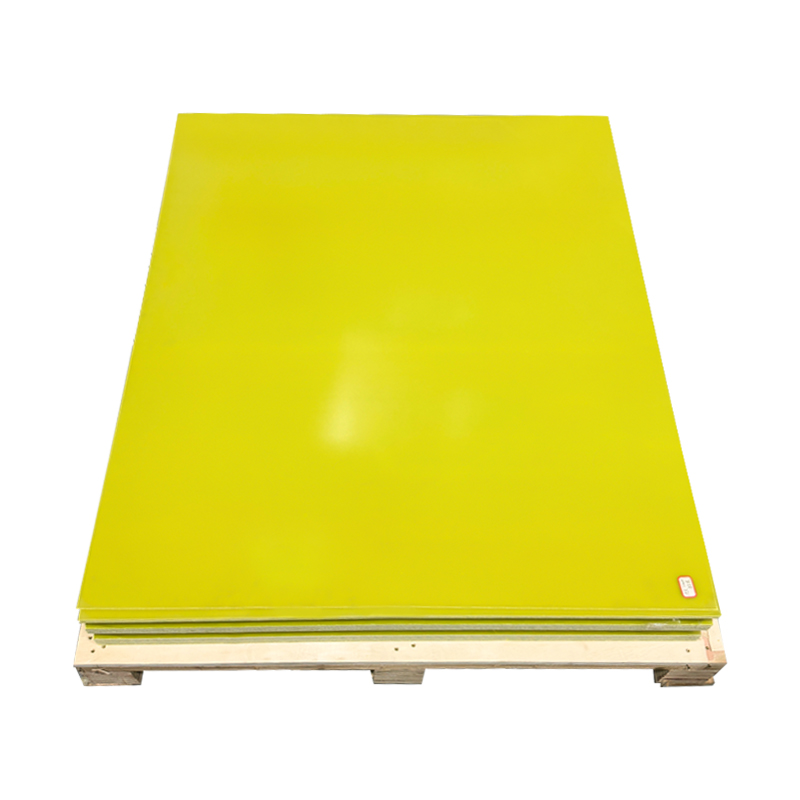
Epoxy fiberglass sheet is a rigid thermoset laminate of woven E-glass fabric and epoxy resin, cured under heat and pressure into boards from about 0.1 mm to more than 50 mm thick.
Definition: an epoxy fiberglass sheet (also called epoxy glass laminate, FR4-type, or G10) is produced by impregnating woven E-glass cloth with epoxy resin, stacking the plies, and consolidating them at 130-170°C under several megapascals of pressure until the resin cross-links into a solid thermoset panel.
Each ply is typically 0.05-0.25 mm thick, and the cured board contains roughly 38-45 percent resin by weight. IEC 60893-3-2 classifies the family as EP GC (epoxy resin, continuous glass filament). The non-flame-retardant board is called G10; the flame-retardant version is FR4 with a UL94 V0 rating.
How the Material Is Classified
The IEC designation defines what a buyer can verify at incoming inspection. EP GC 201 is the general electrical grade, EP GC 203 adds mechanical strength, EP GC 204 delivers strong electrical performance in humid conditions and is the closest typical match to FR4, and EP GC 205 adds fire resistance. A certificate listing only G10 or FR4 leaves too much room for interpretation.
Why Transformers Need It
Transformer engineers specify epoxy glass when insulation must also carry mechanical load, hold tolerance through thermal cycling, and pass routine dielectric and partial-discharge tests.
Pressboard and aramid paper are compliant and easy to wrap. Epoxy glass is rigid, dimensionally stable, and punchable to shape, which makes it the structural insulation family. The properties that matter in service:
- Dielectric strength across the laminate. A 1-3 mm sheet handles inter-layer and line-to-ground stress in most distribution and medium-voltage designs.
- Stable dissipation factor. Power-frequency tan-delta stays low and repeatable, keeping stray loss predictable as the unit ages.
- Dimensional stability. Punched strips and machined rings remain flat after years of oil immersion or resin impregnation.
- Moisture and oil resistance. Water absorption below 0.5 percent protects creepage distances in humid substations.
- Flame retardance. FR4-type boards are UL94 V0, limiting fire propagation during faults.
- Machined edge quality. Clean drilling and punching without delamination avoids voids that later become partial-discharge sites.
On a 35 kV class winding, factory tests apply a power-frequency withstand of 70 kV and a partial-discharge limit near 10 pC. Both pass or fail on the laminate itself and on the quality of its cut edges.
Thermal and Electrical Limits to Watch
Continuous service temperature is 130-155°C depending on the resin system, but insulation life combines heat, voltage, and time. A hot-spot rise of roughly 10°C can halve expected life, so designers track the hottest point, not the average. The comparative tracking index (CTI) of epoxy glass laminates usually falls between 150 V and 300 V, so creepage distances must fit the site contamination level.
Where It Is Used Inside a Transformer
The sheet appears in every major insulation zone: winding layers, cooling ducts, the clamping system, lead exits, and the tap-changer assembly.
- Layer insulation strips. Punched sheets between winding layers add inter-layer withstand without blocking the oil or resin path.
- Spacer bars and cooling ducts. Bonded slats define the oil duct height; epoxy glass holds its thickness better than pressed fiber under clamping.
- End insulation rings. Rings at the winding ends spread axial short-circuit forces and add creepage path at the overhang.
- Clamping and pressure plates. Full-area rigid plates press windings evenly and keep the core stack square.
- Lead supports and terminal boards. Drilled boards route high-voltage leads with controlled distances and solid mechanical anchoring.
- Tap-changer insulation parts. Precision-machined plates, rods, and tubes carry close hole-to-hole tolerances through the switching mechanism.
Continuous service temperature by common transformer insulation (°C)
Aramid paper runs hotter but is thin and flexible. Epoxy glass is the rigid structural option in the 130-155°C band.
How Epoxy Fiberglass Sheet Is Manufactured
Sheet quality is decided before pressing: the glass weave, the resin system, and the prepreg's resin content set the electrical and mechanical ceiling of the finished laminate.
- Weave the glass fabric. Balanced plain or twill E-glass cloth, 0.05-0.25 mm per ply, with a finish that absorbs resin uniformly.
- Impregnate with epoxy resin. The cloth becomes B-stage prepreg with resin content held near 40 percent; this resin-to-fiber ratio control is the first quality gate for dielectric consistency.
- Stack to target thickness. Plies are layered with seams offset; the stack compresses 15-25 percent during pressing.
- Hot press and cure. Stacks cure at 130-170°C under 3-10 MPa until the glass transition temperature is stable.
- Trim, test, and machine. Panels are tested to IEC 60893, then cut, drilled, or punched to the drawing.
Voids, not the resin, cause most field failures. A void of a few tenths of a millimetre can become a partial-discharge site at 35 kV, so pressing parameters, ply alignment, and cleanliness are what serious buyers audit.
This chain is why vertical integration matters. When one plant weaves the fabric, runs its own prepreg, and presses panels, it controls the variables that create voids. Jiangyin Dongli New Materials Technology Co., Ltd. runs this full chain in-house, from woven reinforcement to epoxy prepreg production and finished panels, which makes batch traceability practical for transformer buyers.
 Custom Epoxy Carbon Fiber Prepreg Manufacturers, FactoryWe Offer Custom Epoxy Carbon Fiber Prepreg, Jiangyin Dongli New Materials Technology Co., Ltd Is China Epoxy Carbon Fiber Prepreg Manufac...View Product →
Specifying the Right Grade and Tolerance
Grade selection starts with the IEC 60893 designation and the flame-retardance class; tolerance and machined-edge requirements come second. The same epoxy prepreg technology that defines aerospace laminates governs the consistency of transformer boards.
| Designation | Distinguishing feature | Typical transformer duty |
| EP GC 201 | General-purpose electrical board | Barriers and lightweight spacers |
| EP GC 203 | Higher mechanical strength | Clamping plates and end rings |
| EP GC 204 | Strong electrical performance in humid conditions (FR4-type) | Layer insulation, lead supports, tap-changer plates |
| EP GC 205 | Enhanced flame resistance | Dry-type units with strict fire-safety requirements |
Selection checklist: confirm the designation, UL94 V0 class, thermal class, and thickness tolerance on the certificate. A typical 3 mm FR4 sheet carries a thickness tolerance of about plus or minus 0.23 mm, and a 10 mm plate about plus or minus 0.5 mm. For punched parts, specify a punching grade and check for delamination at the punch edge.
When FR4-Type Is the Default Choice
For most transformer applications, FR4-type or EP GC 204 is the safe default: UL94 V0 flame retardance, lower water absorption, and clean machining in one board. Non-flame-retardant G10 costs less but is usually limited to sealed, oil-immersed structures where fire class matters less.
Epoxy Glass vs Pressboard and Other Alternatives
Against electrical pressboard, epoxy glass wins on mechanical strength, dimensional stability, and moisture resistance; pressboard wins on price, conformability, and a long-qualified history in oil-impregnated windings.
Choose epoxy glass when
- Insulation carries clamping or short-circuit forces
- Tight machining tolerances are specified (holes, slots, rings)
- The environment is humid or the unit is dry-type
- Flame retardance is part of the specification
Choose pressboard when
- Bulk oil-impregnated barriers are already the qualified design
- Parts must fit curved winding contours
- Cost per kilogram dominates the insulation budget
- Existing type tests and approvals must not change
| Material | Continuous temp | Dielectric strength (typical) | Structural role | Relative cost |
| Epoxy glass (FR4-type) | 130-155°C | 15-35 kV/mm | Rigid, load-bearing parts | Medium |
| Electrical pressboard | 105°C | 10-15 kV/mm | Oil-impregnated barriers and contours | Low |
| Aramid paper | 220°C | 20-30 kV/mm | Thin high-temp layer insulation | High |
| Polyester film | 130°C | 40-60 kV/mm | Flexible interlayer, no structural role | Low |
Most OEMs run a hybrid system: aramid paper or pressboard inside the winding layers, epoxy glass at every position that must stand up and carry load.
Sourcing and Supplier Quality Checks
Qualify a laminate supplier by process control, not by a single datasheet. Ask where the prepreg is made, how voids are controlled, and what the production batch records show.
These checks separate a reliable transformer-grade supplier from one that simply resells imported boards:
- IEC 60893 and GB/T 1303 compliance with the exact EP GC designation
- UL94 V0 file and thermal class shown on the certificate
- Thickness tolerance and flatness reported per batch
- Lot values for dielectric strength, dissipation factor, and water absorption
- Machined samples inspected for fiber pull-out and delamination
- Custom cutting, drilling, and punching confirmed before production
A laminate that passes as a flat sheet can still fail as a drilled part. The holes, slots, and edges decide partial-discharge behaviour, so machining quality belongs in the insulation specification.
Dongli produces its epoxy glass insulation line across a 32,000 square-meter base with constant-temperature workshops and 100,000-class clean areas, keeping weaving, prepreg, pressing, and machining under one roof. Its epoxy fiberglass insulation sheets and boards are rated UL94 V0, and the company supplies standard panels, custom cut sizes, spacer strips, drilled terminal boards, and machined rings against drawings.
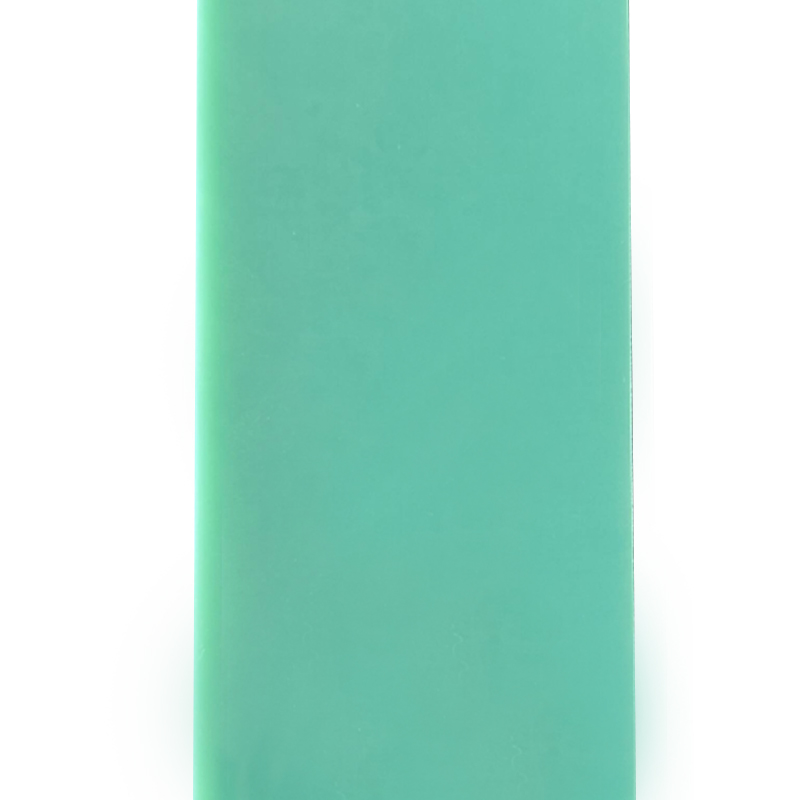 Custom Epoxy Resin Glassfiber Insulation Board Manufacturers, FactoryWe Offer Custom Epoxy Resin Glassfiber Insulation Board, Jiangyin Dongli New Materials Technology Co., Ltd Is China Epoxy Resin Glassfibe...View Product →
Frequently Asked Questions
These four questions cover the sourcing decisions transformer engineers raise most often when evaluating epoxy glass sheet.
What is the difference between G10 and FR4?
G10 is the non-flame-retardant epoxy glass laminate. FR4 adds a brominated epoxy system for a UL94 V0 flammability rating. Both are epoxy glass, but FR4-type material is the usual choice for transformer service because fire safety is part of the insulation design.
Can epoxy fiberglass sheet be used in oil-immersed transformers?
Yes, in structural and spacing roles. Epoxy glass is compatible with transformer oil and holds dimension better than pressboard, but most oil-immersed designs keep bulk winding layers in pressboard or aramid paper and use epoxy glass for clamping plates, lead supports, and tap-changer parts.
What thickness should be specified for transformer insulation?
For distribution transformers, 0.5-3 mm sheets cover most layer insulation and spacer duties; 6-25 mm plates suit clamping structures and terminal boards. The final value depends on voltage class, mechanical loads, and required creepage distances.
Does Dongli supply custom sizes and machined transformer parts?
Yes. Dongli supplies the epoxy glass insulation line in standard sheets and custom cut sizes, including drilled terminal boards, spacer strips, and machined rings, and can adapt laminate thickness and finish to the drawing.
The lowest material price is rarely the lowest insulation cost. Dielectric strength, edge quality, and batch consistency are bought together, and they show up in the factory test report.
 +86-13961668677
 No. 61, Xingyuan Road, Jiefang Village, Gushan Town, Jiangyin City, Jiangsu Province, China.