 Get In Touch
 English
  中文简体
中文简体 عربى
عربى Tiếng Việt
Content
A production engineer qualifying an insulation board for PCB test fixtures has to choose between epoxy fiberglass sheet and phenolic sheet before the first cut on the CNC. The wrong pick shows up as carbonized edges during soldering, dielectric drift after humid storage, or tool wear that climbs faster than the material savings.
Both are thermoset laminates, but they are built from different resin systems and reinforcements, and that changes almost every property that matters in service.
Epoxy fiberglass sheet is a hot-pressed laminate of woven E-glass fabric bonded with epoxy resin. Phenolic sheet is a laminate of cellulose paper or cotton fabric compressed with phenolic resin. The resin and reinforcement choice determines temperature ceiling, dielectric strength, moisture uptake, and machining behavior.
Epoxy glass grades such as FR-4 and G-10 carry high mechanical strength, stable electrical properties, and a continuous service temperature around 155°C. Phenolic grades cost less per sheet and machine cleanly but lose to epoxy glass on heat, humidity, and dielectric margin. Consistency in pressure, resin content, and cure control, the same variables that determine quality in epoxy prepreg and composite processing, separates a reliable insulation board from a marginal one.
Epoxy Fiberglass Sheet vs Phenolic Sheet: Side-by-Side Data
The table below compiles typical published values for the two laminates. Actual figures depend on grade, thickness, and manufacturer, so treat them as screening data, not a final specification.
| Property | Epoxy fiberglass sheet | Phenolic sheet |
| Resin and reinforcement | Epoxy resin with woven E-glass | Phenolic resin with paper or cotton fabric |
| Typical NEMA grades | FR-4, G-10 | XXX paper, C cotton |
| Dielectric strength | 18 to 22 kV/mm | 12 to 15 kV/mm |
| Continuous service temperature | 140 to 155°C | 110 to 130°C |
| Flexural strength | 300 to 450 MPa | 100 to 160 MPa |
| Moisture absorption, 24 hours | 0.1 to 0.3 percent | 0.5 to 1.5 percent |
| Machining behavior | Carbide tooling, abrasive dust, strong edges | Fast with HSS tooling, crisp edges, low tool wear |
| Relative cost per sheet | Medium | Low |
The pattern is consistent: epoxy fiberglass leads on temperature, dielectric strength, flexural strength, and moisture resistance. Phenolic leads on machinability and price.
Thermal and Electrical Performance
Epoxy fiberglass outperforms phenolic in both electrical and thermal duty because the epoxy matrix resists heat aging longer than phenolic resin does.
Continuous service temperature is the first filter. Epoxy glass laminates survive 140 to 155°C without permanent loss of flexural strength. Phenolic paper grades start to degrade near 110 to 120°C, where surface discoloration and edge blistering appear in tightly packed assemblies.
Typical values shown as single points; each metric scales to its own maximum for readability.
Dielectric strength is the maximum electric field a laminate can withstand before breakdown, expressed in kilovolts per millimeter of thickness. Epoxy fiberglass typically carries 18 to 22 kV/mm; phenolic sits in the 12 to 15 kV/mm range.
If the application runs above 155°C long term, neither laminate is the right answer. High-temperature aramid fiber fabric solutions handle duty that glass-based laminates cannot, while cyanate ester systems cover even higher thermal demands.
Machining and Fabrication
Phenolic sheet machines faster and cleaner, while epoxy fiberglass demands carbide tooling and dust control but delivers a stronger finished edge.
Epoxy fiberglass behavior
- Glass fibers create abrasive dust, so use carbide end mills and drills
- Lower feed rates reduce delamination at hole exits
- Cut edges stay strong and dimensionally stable
- Seal machined edges if the part faces humid service
Phenolic sheet behavior
- Machines fast with standard HSS tooling
- Crisp, clean edges with minimal burr formation
- Excellent drilling and tapping for spacers and bushings
- Particle dust is thermally stable but still needs extraction
Two practical consequences follow. First, phenolic is cheaper to process in high-mix, low-volume shops where tooling cost and cycle time dominate. Second, epoxy glass parts hold tighter tolerances and resist edge chipping in thin sections, which matters for precision fixtures. Both materials generate dust, so a dust collector with HEPA filtration is the rule, and wash hands before handling components.
Moisture, Chemicals, and Long-Term Stability
Moisture uptake is the sleeper difference: phenolic absorbs several times more water than epoxy fiberglass, which shifts dimensions and electrical readings in humid plants.
- Water absorption in phenolic paper grades can reach 1.5 percent in 24 hours, versus 0.3 percent or less for epoxy glass
- Phenolic sheets swell at cut edges after repeated wet-dry cycling, changing clearance in mating parts
- Epoxy glass resists weak acids, alkalis, and common solvents better than phenolic
- Long exposure to high humidity lowers surface resistivity in both materials, but the drop is more severe in phenolic
In environments above 70 percent relative humidity, epoxy fiberglass is the safer insulation choice. Phenolic sheet visibly swells at machined edges after wet-dry cycling, and that swelling cracks thin copper-clad traces and shifts hole positions in stacked assemblies.
How to Choose: Application-Driven Selection
Choose epoxy fiberglass when electrical insulation or exposure above 110°C is the primary requirement; choose phenolic when cost per sheet and fast machining dominate.
- Lithium battery fixtures, PCB clamps, and electrical equipment insulation favor epoxy fiberglass
- Low-voltage spacers, bushings, and mechanical shims in dry shops favor phenolic
- Soldering fixtures and wave-solder tooling should use epoxy glass for heat endurance
- Structural fixture bases favor carbon or glass laminates over paper-based phenolic
For standard insulation duty in lithium battery fixtures, PCB clamps, and electrical equipment, epoxy glass fiber insulation plates with a UL94 V-0 rating are the practical starting point. When a fixture base also carries structural load, a carbon fiber composite plate can replace a thicker epoxy laminate at lower weight, which matters when operators handle panels repeatedly through a shift. For battery-pack protection covers where impact resistance and insulation interact, composite battery pack enclosures use the same thermoset tooling and offer a production path beyond flat sheet.
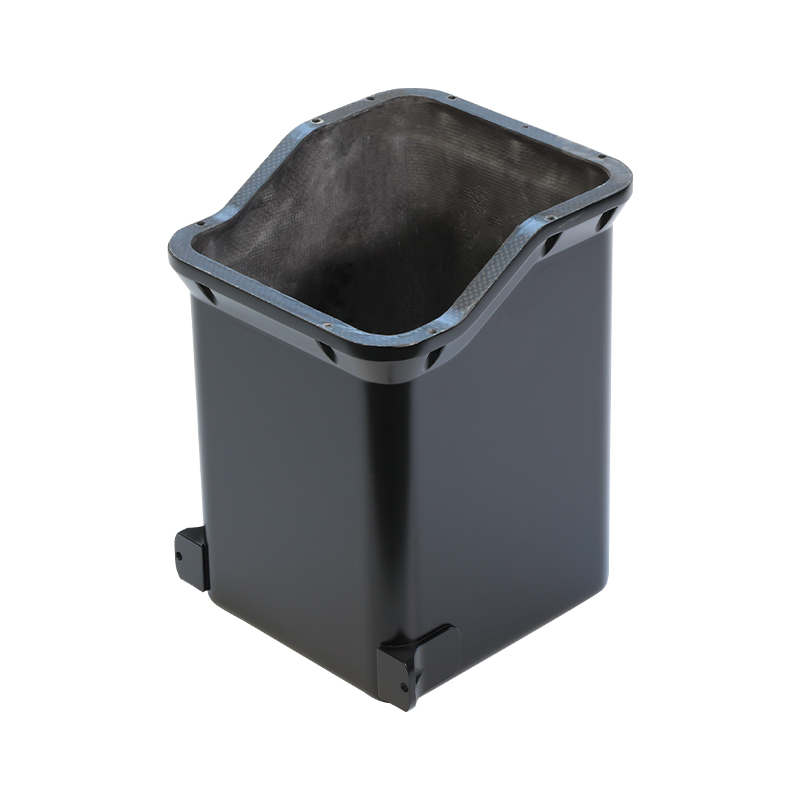 Custom Carbon Fiber Battery Box Manufacturers, FactoryWe Offer Custom Carbon Fiber Battery Box, Jiangyin Dongli New Materials Technology Co., Ltd Is China Carbon Fiber Battery Box Manufacture...View Product →
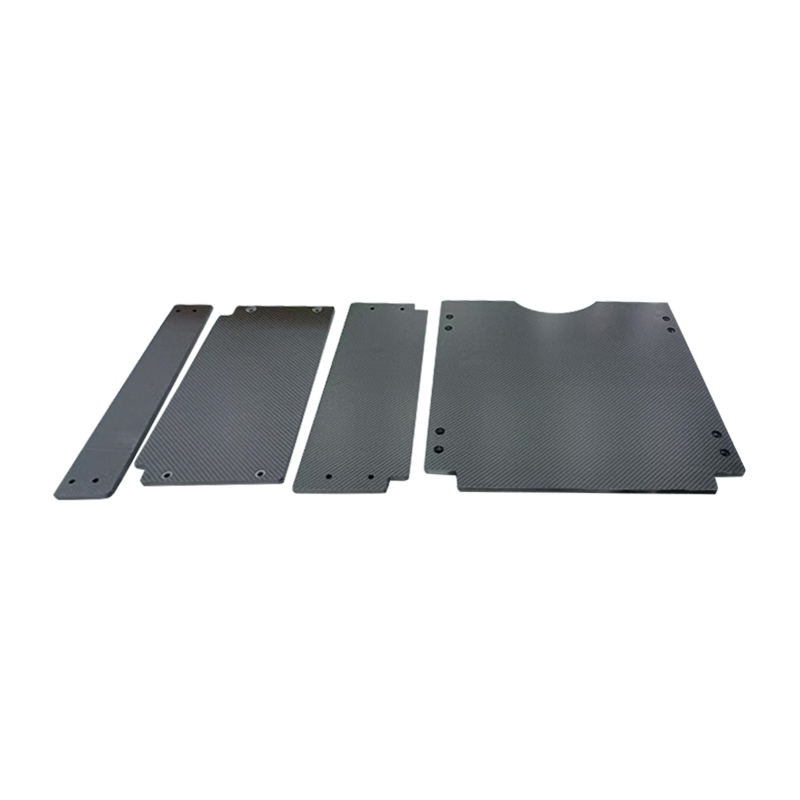 Custom 25-250 Thickness, Lightweight Yet Rigid Carbon Fiber Sheet/Panels/Plate MWe Offer Custom 25-250 Thickness, Lightweight Yet Rigid Carbon Fiber Sheet/Panels/Plate, Jiangyin Dongli New Materials Technology Co., Lt...View Product →
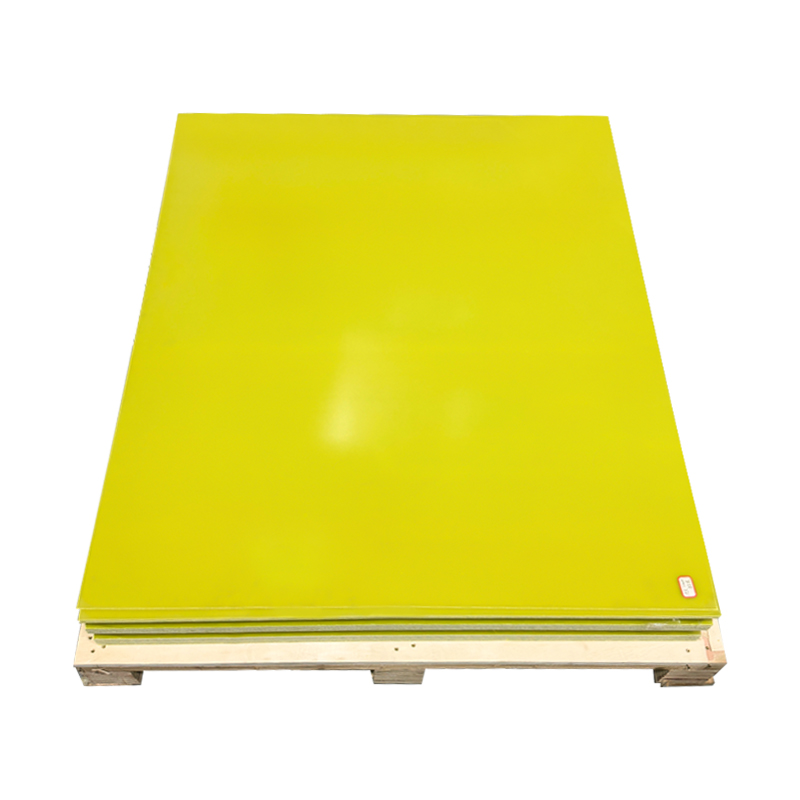
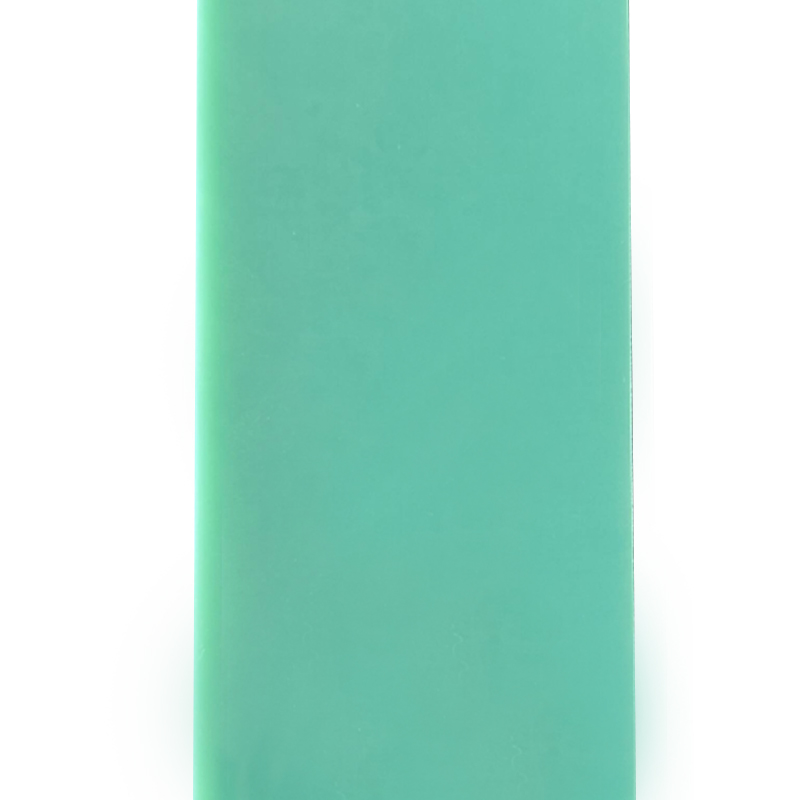 Custom Epoxy Resin Glassfiber Insulation Board Manufacturers, FactoryWe Offer Custom Epoxy Resin Glassfiber Insulation Board, Jiangyin Dongli New Materials Technology Co., Ltd Is China Epoxy Resin Glassfibe...View Product →
Understanding where lightweight composite panel design applies helps separate insulation-only parts from structural ones before you commit to a sheet thickness.
Choose epoxy glass when
- Continuous temperature exceeds 110°C
- Dielectric requirements are above 15 kV/mm
- Parts face humidity, solvents, or washdown
- Edges must hold tolerance under mechanical load
Choose phenolic when
- Temperature stays below 100°C
- Voltage class is low and insulation margin is generous
- High-volume CNC production drives tooling cost
- The part is a spacer, bushing, or non-structural insulator
Jiangyin Dongli New Materials Technology Co., Ltd. manufactures epoxy glass insulation boards and carbon composite panels in a 32,000-square-meter facility with full-process control, so sheet performance can be validated from fiber fabric to finished laminate.
Frequently Asked Questions
Epoxy fiberglass is the better default for electrical and thermal applications; phenolic is the better default for low-cost, low-temperature mechanical parts.
Can phenolic sheet replace epoxy fiberglass in an existing fixture?
Only if operating temperature stays below 100°C and the dielectric margin is generous. Otherwise expect shorter life, edge swelling in humidity, and dimensional drift that changes hole alignment over time.
Is phenolic sheet flammable?
Both material families are available in flame-retardant grades. A UL94 V-0 rating exists for epoxy glass and for certain phenolic grades, but always verify the rating at the exact thickness you plan to use, because thin sections can behave differently from thick ones.
Which laminate is better for high-volume CNC production?
Phenolic cuts faster with standard HSS tooling, so it wins on cycle time and tool cost. Epoxy glass requires carbide tooling and slower feeds; choose it only when thermal, electrical, or moisture requirements force the upgrade.
How do I verify the dielectric rating of a sheet before ordering?
Ask the supplier for dielectric strength at the thickness you intend to use, confirm the test method, typically ASTM D149, and check whether the value was measured at 50 percent relative humidity or after moisture conditioning.
 +86-13961668677
 No. 61, Xingyuan Road, Jiefang Village, Gushan Town, Jiangyin City, Jiangsu Province, China.